Who owns an AI-generated Character? You, by contract. Copyright covers what you made.
The short answer
Usually you do by contract, but copyright protects only what a person made.
In the US, the Copyright Office says prompts alone are not enough, while your writing, your edits and your selection and arrangement can be protected. A trademark can protect a Character’s name and look as a brand. Have a lawyer check anything you sell.
Not legal advice. A lawyer should review this before you rely on it or sell anything.
Likeness: never a real face.
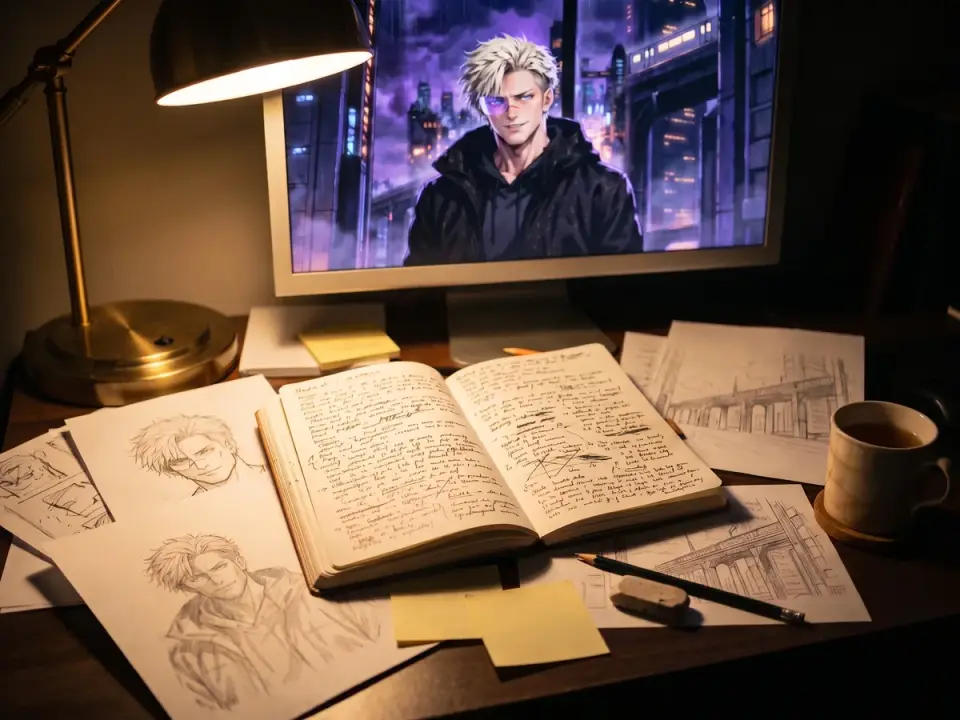
 JettHalcyon City, the courier
The bible, the sketches, the choices: a person’s work
- The tool’s terms
Who owns the output, by contract. Here: “you own your Outputs and may use them for personal or commercial purposes”.
Read each tool’s terms before you sell.
character.app Terms, 12 Nov 2026 - Copyright
What a person authored: writing, edits, selection and arrangement; not “the mere provision of prompts”.
Keep the bible, scripts and your choices on record.
US Copyright Office, 29 Jan 2025 - Trademark
A name and design used “on merchandise as brand signifiers”.
Selling under the name? Ask a trademark lawyer.
Duke Center for the Public Domain - Likeness
A real person’s face, voice and name: never theirs without “explicit, written consent”.
Build on your own face, or someone’s with consent.
character.app Content Policy
- Keep your work in one WorldStudioLive
- Put it under your namePublic pagesInvite only
- Rules for who may use itNext
The US rulings
US courts: a person must be the author.
A machine cannot hold copyright, the courts say. Work a person makes with AI can still be protected, for the parts the person authored.
Today: a person authors.
1 human author
needed for US copyright, though work made “with the assistance of artificial intelligence” can still be protected.
Allen v. Perlmutter, on an AI-assisted image, was still pending on its docket on 15 Nov 2026.
- US Copyright Office
Zarya of the Dawn: the text and the arrangement are protected; the Midjourney images are not.
Copyright Office letter, 21 Feb 2023 - D.C. Circuit
Thaler v. Perlmutter: “the Copyright Act requires all work to be authored in the first instance by a human being.”
Opinion, 18 Mar 2025 - Supreme Court
Declines to hear Thaler v. Perlmutter: “Petition DENIED.”
Docket 25-449
See the four layers side by side
| Layer | What it protects | What you do | Primary source |
|---|---|---|---|
| The tool’s terms | Ownership of the output, by contract | Read each tool’s terms; some limit commercial use unless you pay | character.app Terms; Kling’s Terms |
| Copyright | What a person authored: writing, edits, selection and arrangement | Keep your human work on record | US Copyright Office, Jan 2025 |
| Trademark | A name or design used as a brand in trade | Ask a trademark lawyer before you sell under the name | Duke Center for the Study of the Public Domain |
| Likeness | A real person’s face, voice and name | Use your own, or someone’s with written consent | character.app Content Policy |
Sources: character.app; Kling AI; US Copyright Office; Duke Center for the Study of the Public Domain; CourtListener. Dates under Sources.
Three dead ends
What does not make it yours.
A raw output on its own, someone else’s face, and a tool whose terms you never read.
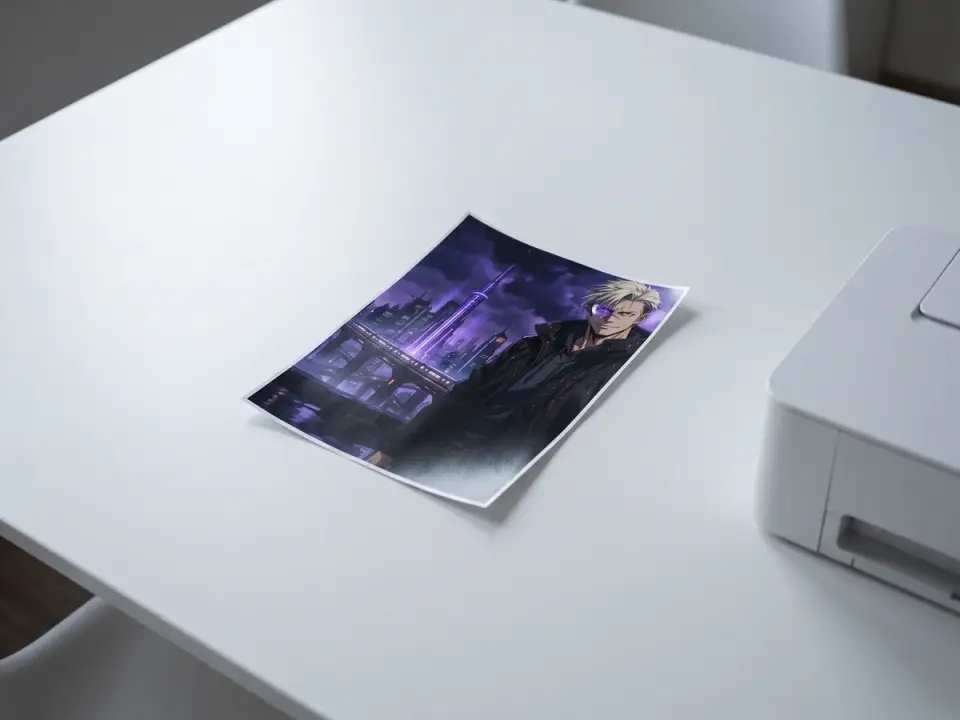 Not protected on its own
A raw output, on its own.
The Copyright Office: “prompts alone do not provide sufficient human control to make users of an AI system the authors of the output” (report).
 A real face, no consent
Your own faceWritten consent
Someone else, unaskedBuilding on a real person.
The Content Policy forbids simulating a real person’s face or voice “without their explicit, written consent”.
 ExampleRead the terms first
Selling before reading the terms.
Kling’s terms bar commercial use of output “without our written permission”, unless you are a paying member (Kling).
Questions
Can I copyright an AI-generated Character?
Not the parts a machine decided. In the US you can protect what you authored: your writing, your drawings, your edits, and how you selected and arranged material. Prompts alone are not enough, the Copyright Office says. Keep a record of your own work.
Who owns what I make on character.app?
You do, by contract: subject to each provider’s terms, the Terms say “you own your Outputs and may use them for personal or commercial purposes”. They also say similar outputs may be made for others. Ownership by contract is not copyright, so keep your own work on record.
Can I trademark my AI Character?
A trademark protects a name or design used as a brand on goods or services. Duke’s public domain centre notes that trademark rights cover character names and designs used “on merchandise as brand signifiers”. If you sell under your Character’s name, ask a trademark lawyer.
Did the Supreme Court decide AI authorship?
No. It declined to hear Thaler v. Perlmutter on 2 March 2026, leaving in place the D.C. Circuit’s ruling that the Copyright Act requires a human author. That court also said the rule does not bar protecting work made with the help of AI.
Can someone copy my AI Character?
They may copy what is not protected, so build what is: a written World, a recognisable name used in trade, and a record of your edits and choices. A lawyer can tell you what you can enforce.
Is the law the same outside the US?
No, and it is changing. This page covers US sources only. Check the law where you sell, with a lawyer there.
Sources
Each checked against the source on 15 Nov 2026, unless the entry says otherwise.
- Terms of Service, section 5: Your Inputs and Your Outputs, character.app, Last updated 12 Nov 2026.
- Content Policy, section 4: Real People, Celebrities, and Public Figures, character.app, Last updated 3 May 2026.
- Copyright Office Releases Part 2 of Artificial Intelligence Report (NewsNet Issue 1060), US Copyright Office, 29 Jan 2025.
- Copyright and Artificial Intelligence, Part 2: Copyrightability, US Copyright Office, Jan 2025.
- Zarya of the Dawn (Registration # VAu001480196), letter, US Copyright Office, 21 Feb 2023.
- Thaler v. Perlmutter, No. 23-5233, opinion, US Court of Appeals for the D.C. Circuit, Decided 18 Mar 2025.
- Docket No. 25-449, Thaler v. Perlmutter, Supreme Court of the United States, Petition denied 2 Mar 2026.
- Allen v. Perlmutter, 1:24-cv-02665 (D. Colo.), docket, CourtListener, Last filing 9 Jun 2026.
- Public Domain Day 2026, Duke Center for the Study of the Public Domain, Undated page.
- Kling AI Terms of Service, sections 4.4 to 4.6, Kling AI, Last updated 21 Apr 2026.
- Kling AI Terms of Paid Service, section 3.1.2, Kling AI, Released 10 Oct 2026.