CHARACTER APP · GUIDES
Make your own show, step by step.
Practical guides: write the premise, meet your Cast, direct the Scenes, cut the episode. Every guide ends one tap from the Studio.
How it works the platform, explained visually
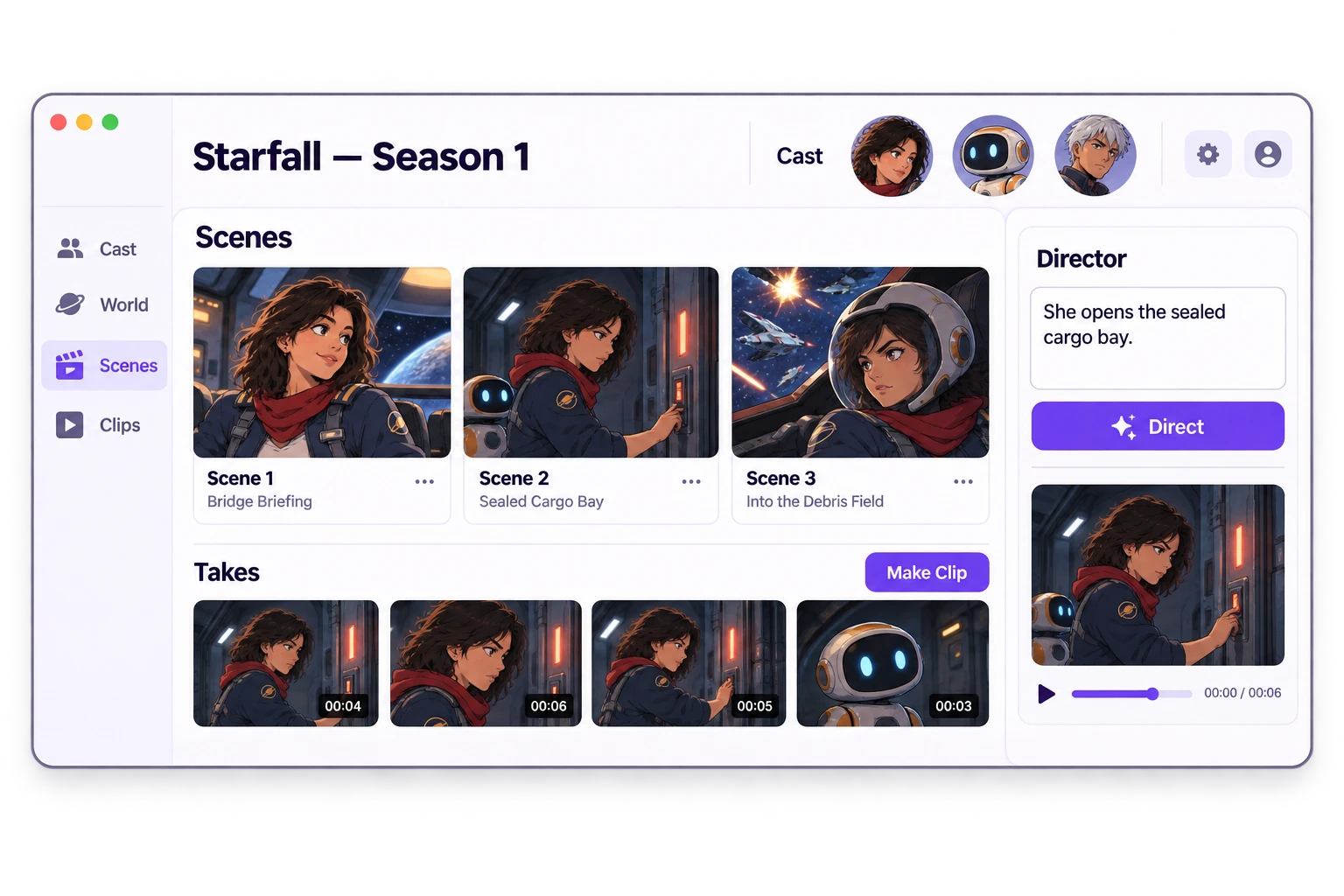 How Character App worksCharacter App turns a sentence or a photo into a running series. You describe the idea or drop a picture; the Studio draws your Character, builds a World around them — the Cast, the Look, and the Bible that remembers — and a Director turns one line of direction into Scenes, Takes, and a finished Episode. The whole path to a first Episode takes about ten minutes, and it is free to start.
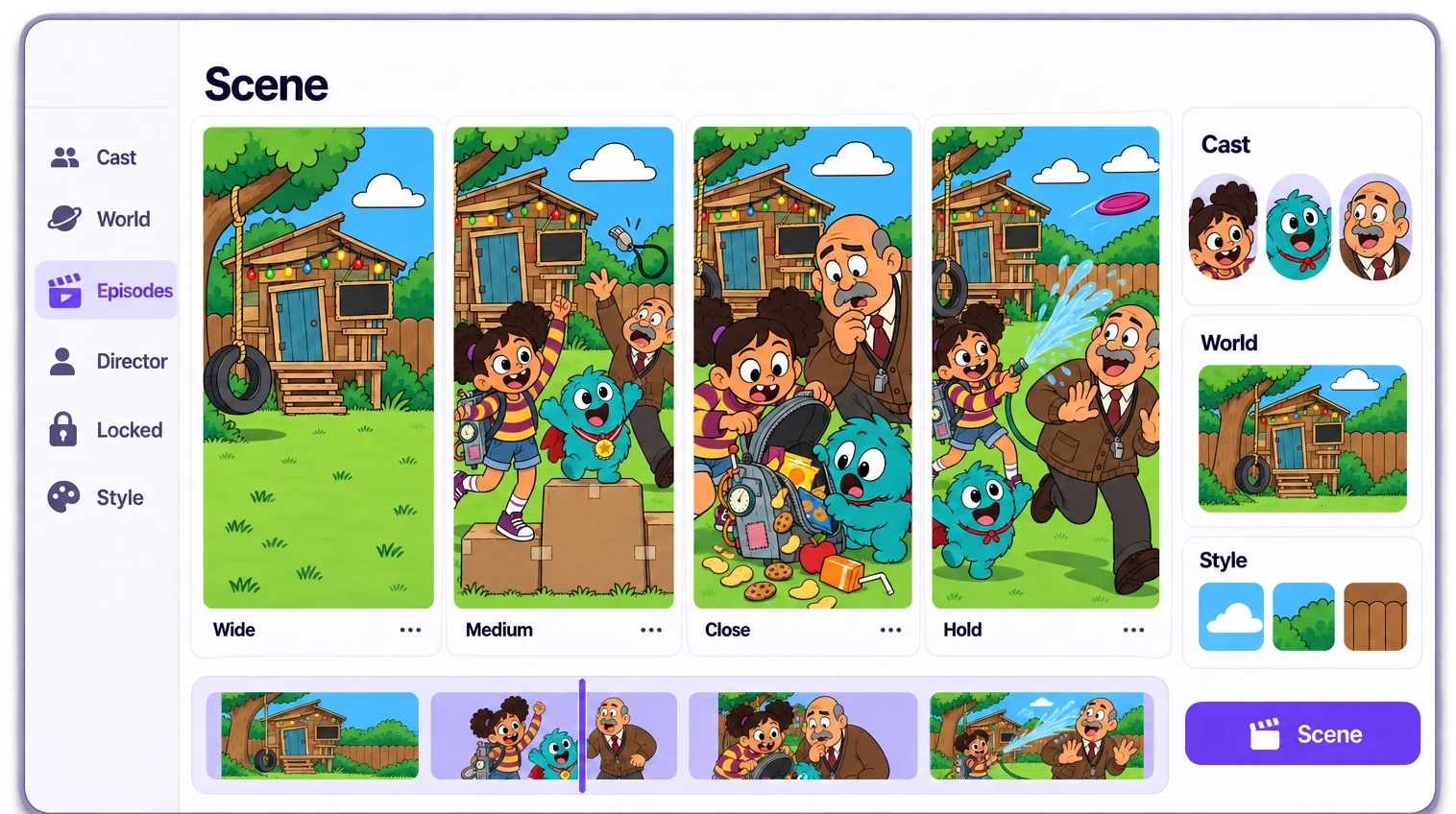
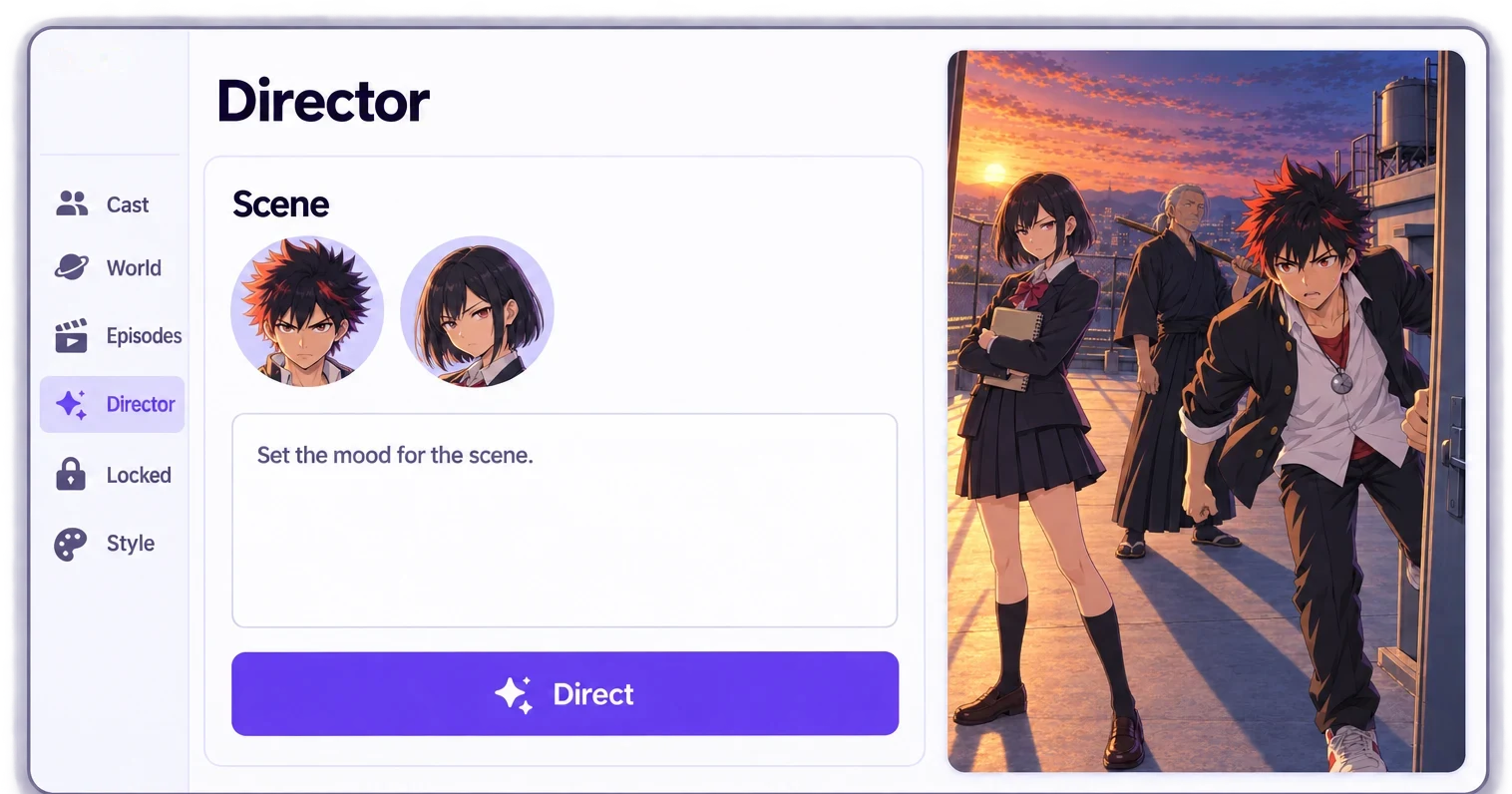 How the Director worksThe Director is the Studio’s conversational planner: you write one line about what should happen, it drafts an outline of Scenes, you push back in plain words until it reads right. Approving the outline draws the Scene Images; filming a Scene makes a Take you keep or retry. You direct with sentences — the Director handles the translation into a production plan.
 Your first Episode in ten minutesTen minutes is enough for a first Episode in Character App. The path: one line of premise at the front door, one photo (or an invented lead), a Character drawn and kept, a World built around them, one line of direction to the Director, Scenes drawn, and a kept Take assembled into the Episode. Most of the ten minutes is watching it work — your job is about six small decisions.
 Plans and the free tierEvery account has the free Studio — currently one World build, one Character a day, 4 Lite Images a day, with no card required. A plan unlocks Clips and Film and includes monthly Credits: Starter at $19.99, Creator at $39.99, Pro at $99.99 a month. Images and Story pictures use Credits or the daily Lite allowance — they never require a plan.
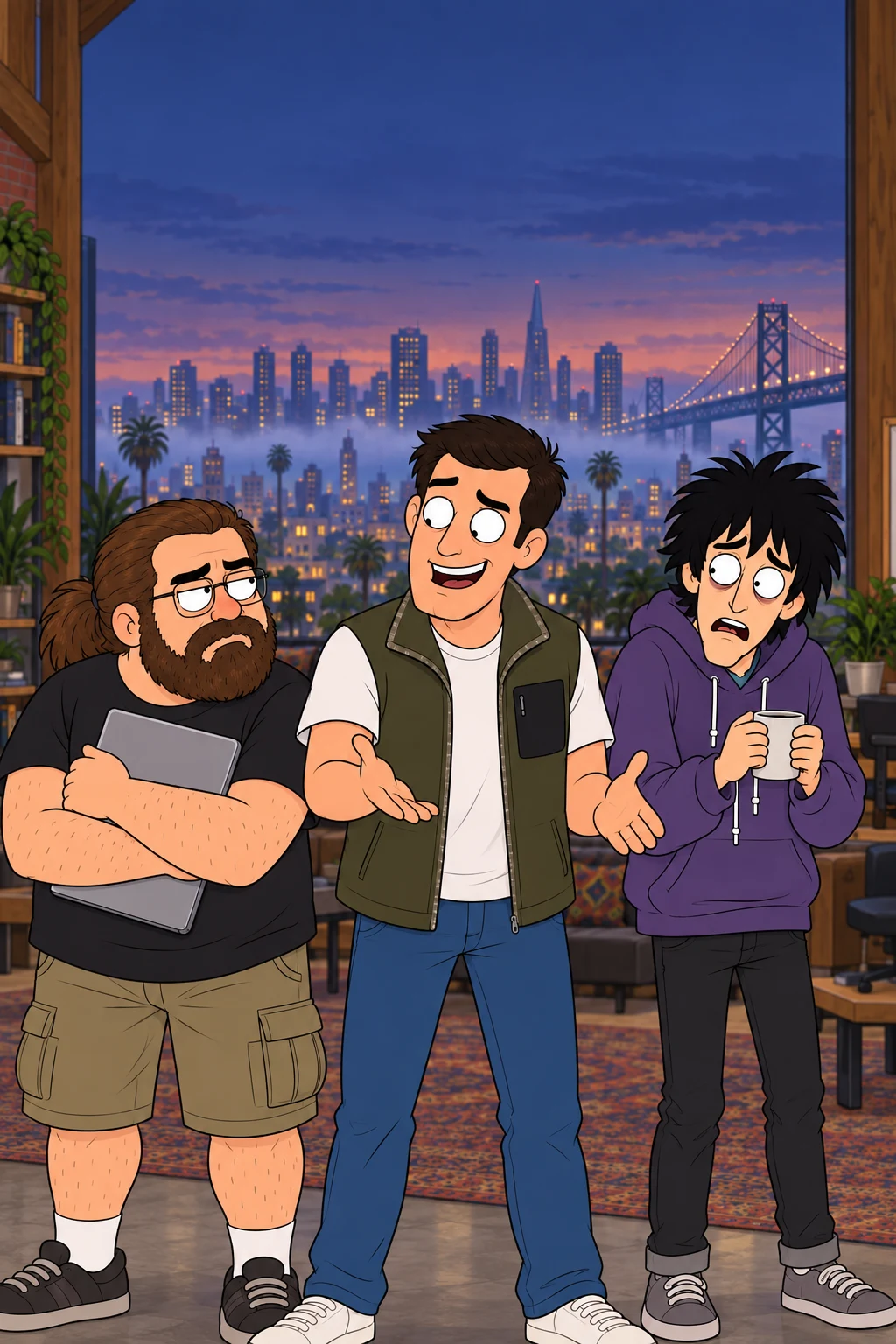 Scenes, Takes, Clips, EpisodesCharacter App has five production nouns and they nest: a Scene is one dramatic moment, a Take is one filmed attempt at it, a Clip is the take you kept, an Episode is kept Clips assembled in order, and a Season is the run of Episodes. Knowing which layer you’re working on tells you what a change costs — direction edits are free, draws and films are priced.
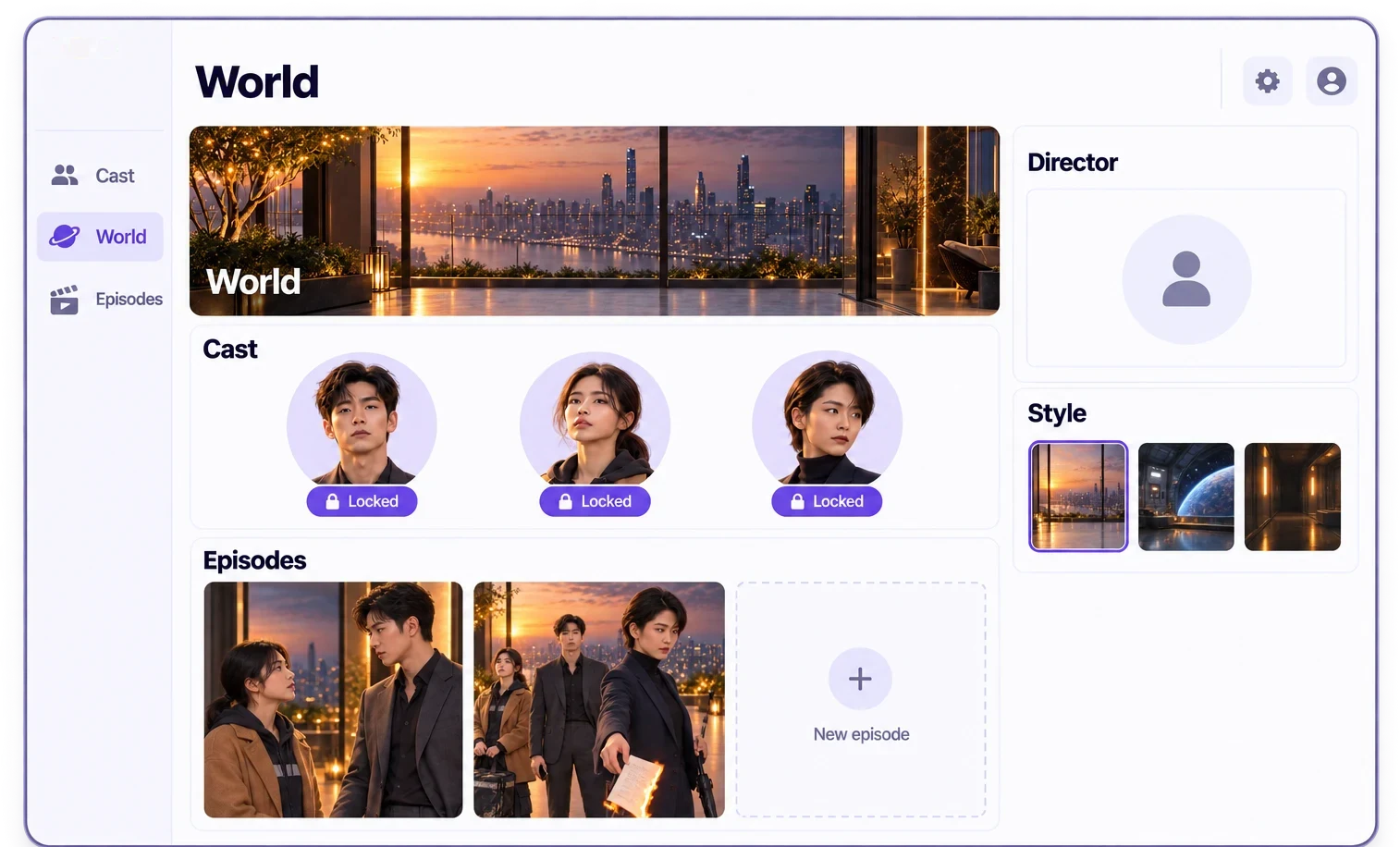 Web app vs iPhone appCharacter App is one Studio on two surfaces: the web app runs in any browser at character.app, and the iPhone app — “Character App: AI Video Studio” — is on the App Store. Both sign into the same account, so your Worlds, Cast, and Episodes are the same objects on either. The web is where the fullest Studio lives; the iPhone app puts the same Studio in your pocket.
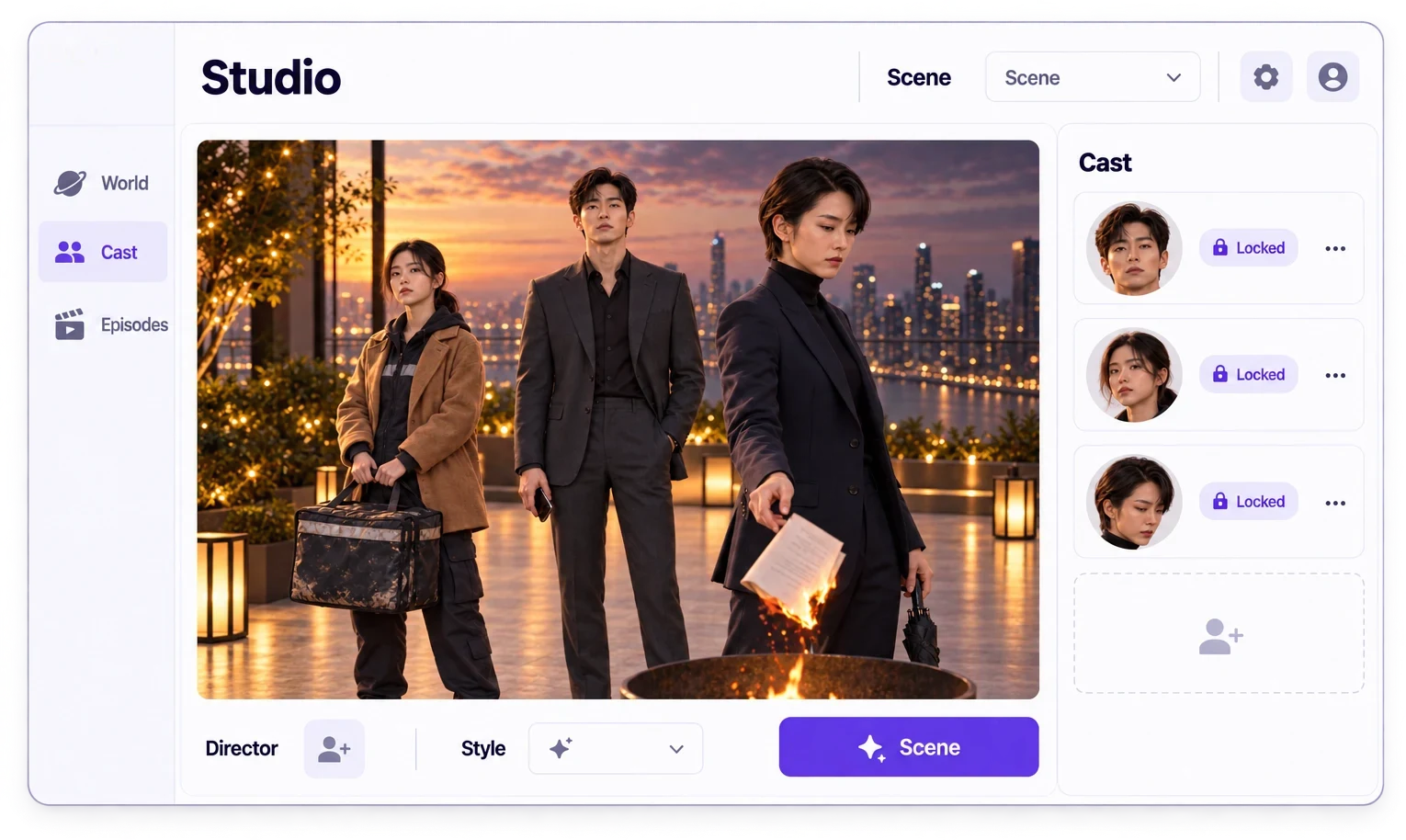 What is a Cast?A Cast is your World’s roster of recurring people: each member is a drawn Character with a locked look, a name, and whatever the Bible remembers about them. Because every Scene draws from the same locked reference, your Cast looks like themselves in episode nine the way they did in episode one — that’s the whole reason the Cast exists.
- What is a World?A World is the container your series lives in: the place the Cast returns to, the Look every Image follows, the Episodes you’ve made, and the Bible that remembers what happened. You build one in minutes — usually by accident, on the way to your first Character — and every Episode after that is easier and more consistent because it exists.
 What you can makeCharacter App makes serialized, character-driven video: sitcoms, vertical dramas, cartoons, anime, graphic novels, fantasy series, satire, and 3D animation — in 9:16 phone-first or 16:9 widescreen. The same pipeline powers all of it: a Cast that stays on-model, a World that remembers, and a Director that turns sentences into Episodes. The genre only changes the Look and the rules it plays by.
Tier 1 start here — the ten most-asked how-tos
 Make a sitcom about yourselfMake a multicam sitcom where the lead is you and the scene-stealer is your pet — one candid photo and one line of premise gets you a styled Cast, a World that looks like your living room, and a first Scene in about ten minutes. A watchable Episode 01 is one evening of directing. No camera, no crew, no writing experience — just the grudge your cat already holds.
 Write a vertical drama cliffhangerA cliffhanger is a promise: one image that makes the next episode necessary. Six types reliably work in vertical drama — the reveal, danger, decision-point, return-of-the-thing, the unanswered question, and the visual sting — and this guide teaches each with stills from a real 9:16 series, then walks you through writing your own: setup, turn, held shot. You need a premise and ten minutes.
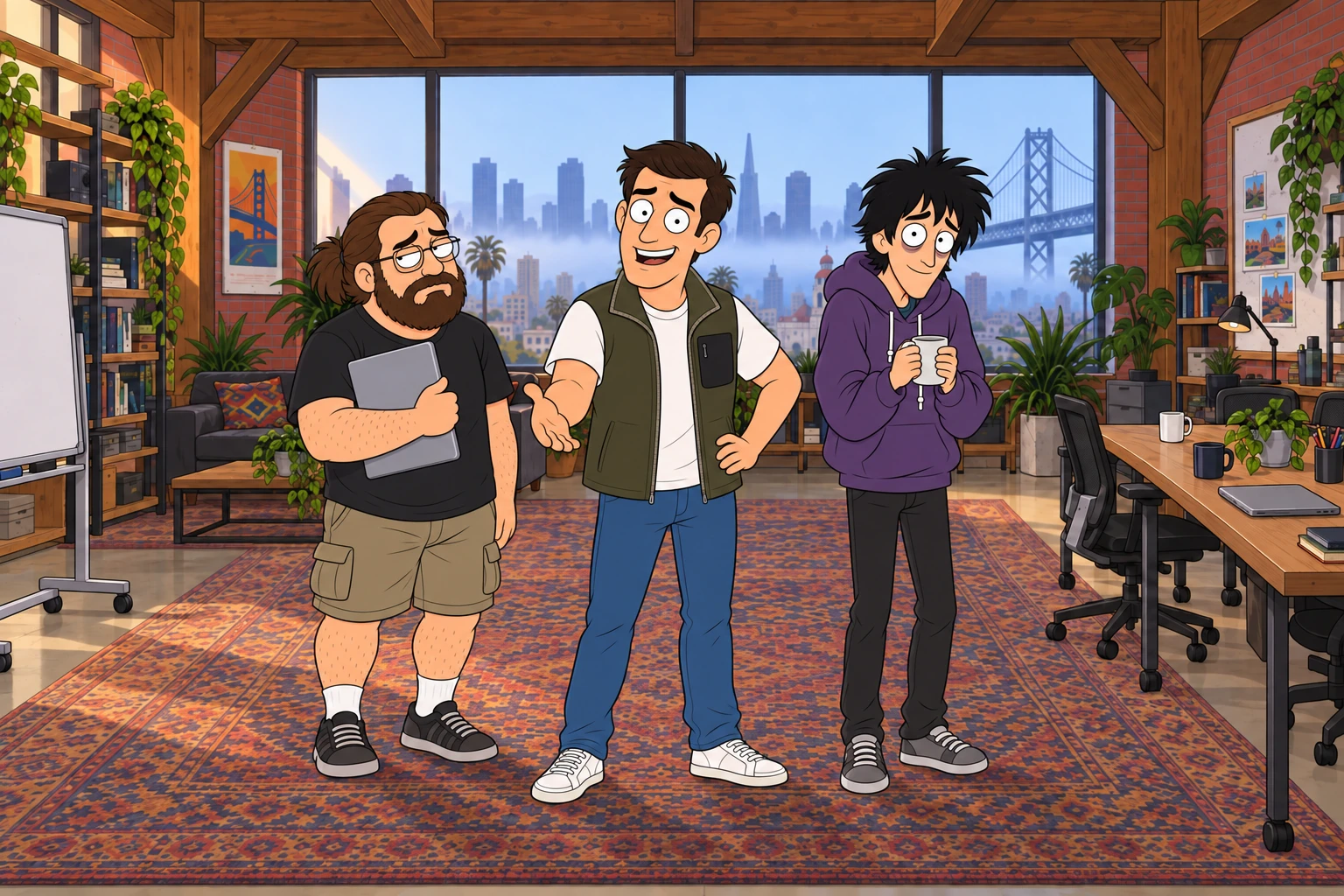
 Make your own cartoon showMake an original adult cartoon series — your own characters, your own city, episode after episode with the same look. You design a small cast once (two or three friends, each readable in silhouette), lock a warm flat 2D style, then direct episodes one Scene at a time. No drawing, no animation software: the Studio draws, you decide what happens. First Cast takes about ten minutes; a first episode, one evening.
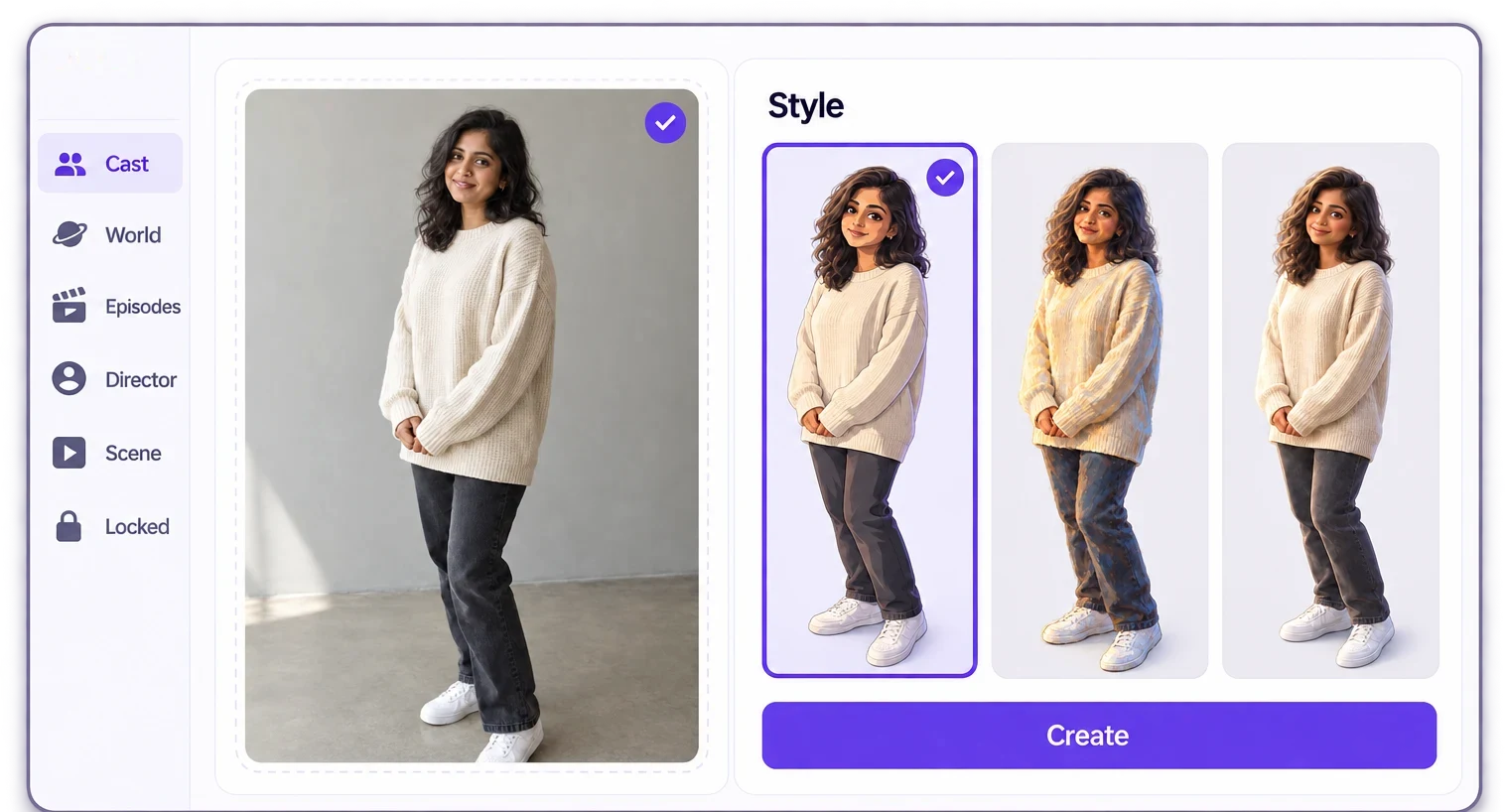
 Create an anime character from a photoTurn a photo of yourself (or a willing friend) into a recurring anime character: one candid shot becomes a Cast card with your actual face, readable in every episode. The work is five minutes — upload, approve the style, pick the hair and wardrobe details that carry your identity, lock the Cast. After that the character can appear in any world the Studio builds — slice-of-life now, mecha later.
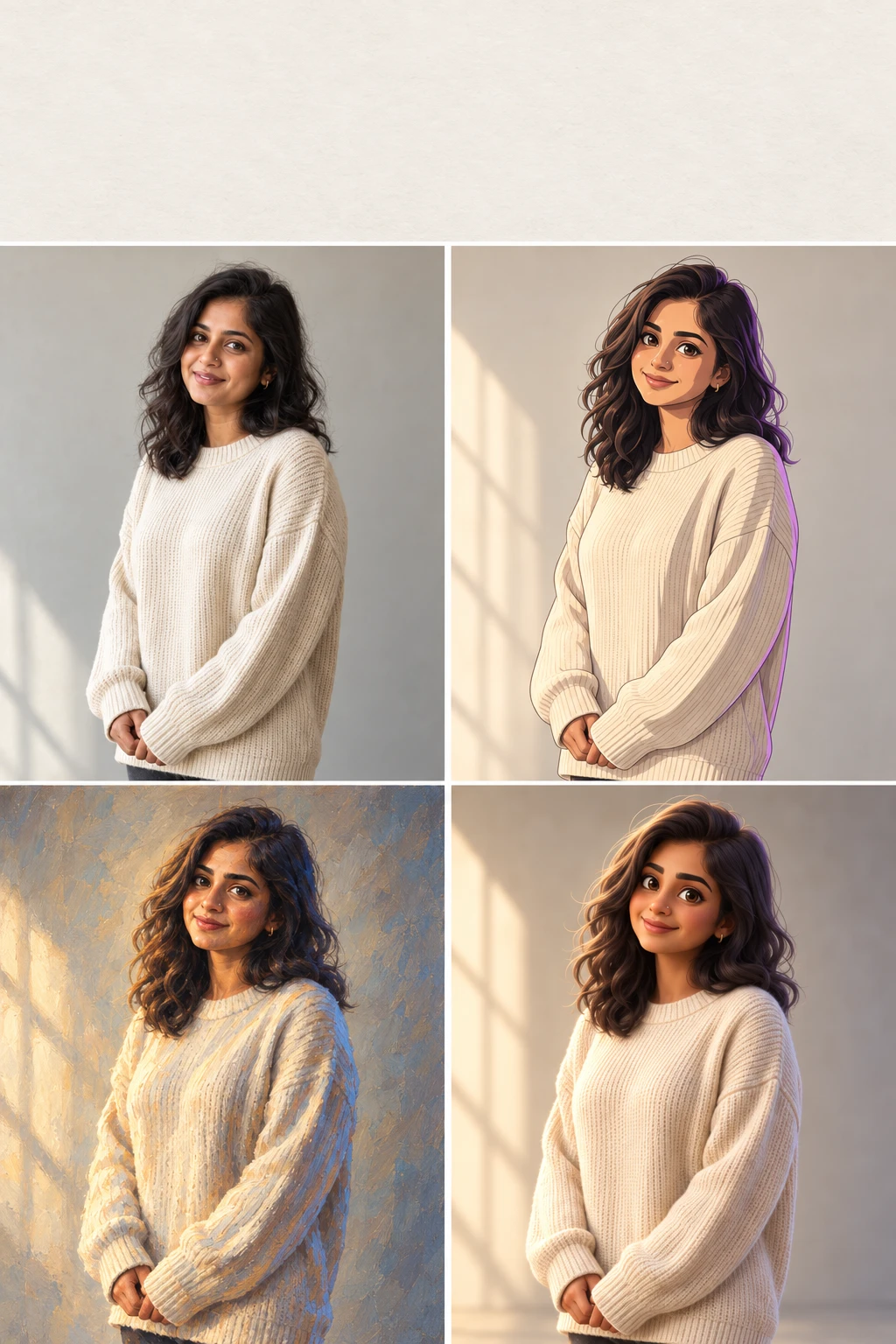 Build a consistent castKeep the same face, proportions, and costume in every episode — the fix isn’t better prompts, it’s architecture. Build a Cast once in the Studio (a card per character, with a reference and one locked identity detail), then reuse it forever instead of re-describing people per scene. Fifteen minutes of setup buys a season of consistency — the same lead in anime, fantasy, or live-action style stays recognizably them.
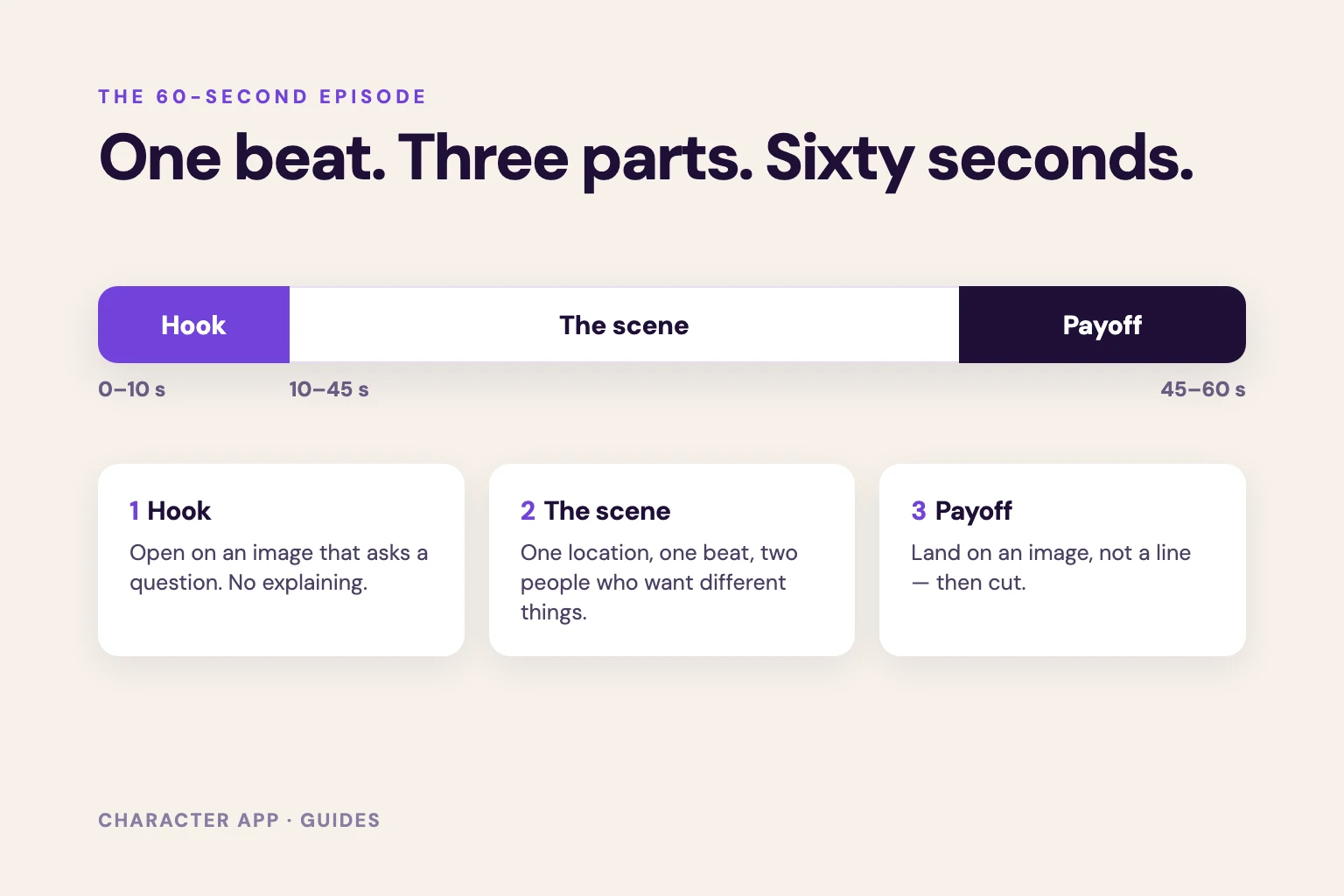 Write a 60-second episodeSixty seconds is a complete episode if you stop treating it like a short film. The structure is three beats — a hook in the first five seconds, one scene doing one thing, and a payoff that either lands the joke or opens a loop — plus roughly eight shots of seven seconds each. You need a premise and one page of notes; the Studio handles shots and timing. A finished episode takes about thirty minutes.
 Storyboard a vertical sceneStoryboard a vertical scene before you direct it: sketch the beats as a shot list so the scene plays in 9:16 instead of a cropped 16:9. Vertical framing changes everything — faces carry more, backgrounds carry less, and the frame stacks instead of spreads. This guide walks a worked scene through the Scene Planner: pick the five shots, order them, hold the last one. Takes about twenty minutes.
- Direct AI actors with textDirecting an AI actor is writing a stage note, not a prompt: a good direction line names who, where, what changes, and the one held beat — then lets the Director stage it. Bad lines describe moods ("make it dramatic"); good lines describe actions ("she reads the letter twice before looking up"). This guide breaks the line into five parts and shows the fixes for the five most common misses. First real direction takes minutes.
- From one photo to a seasonThe whole pipeline, end to end: one photo becomes a Cast card, a Cast card drops into a World, the World produces episodes, and episodes accumulate into a season with its own poster. No camera, no animation software, no writing background — each stage feeds the next, and each stage is one decision. A Cast card takes five minutes; a season is a few evenings of directing.
 What is a story world?A story world is the container a show lives in: the sets the cast returns to, the rules the story keeps, and the memory of what already happened. Without one, every scene is a fresh start — new room, re-rolled faces, no continuity. With one, episode six knows what episode two left behind. Building a World in the Studio takes about ten minutes and pays off for the entire season.
Tier 2 the next ten — naming, outlining, cost, dialogue
- Cast vs. World vs. SeriesCharacter App is built from a few named parts: a Cast is your characters, a World is the container that holds them and remembers what happened, and a Series is the show that runs inside a World. Episodes are made of Scenes, Scenes of kept Takes — the Clips. Once the nouns are clear, the build order is too: premise, Cast, World, first Episode. Five minutes of reading; the whole product.
 How much a show costsMaking a show costs what its Scenes cost — and you see every price on the button before you press it. The free Studio currently covers a World build, a Character a day, and up to 4 Lite Images a day, no card. Paid work runs on Credits: an Image is 4–12, a 5-second Clip from an Image is 15 at the default model, and plans unlock Clips and Film. Here’s the honest arithmetic.
 Build a fantasy worldA fantasy world for a series needs less than a novel’s — one place the cast returns to, one rule the magic keeps, and one secret the season is about. That’s the whole foundation; lore grows as episodes demand it. This guide builds a working World in about fifteen minutes using the Waystone Tavern — a crossroads inn run by an archivist — as the worked example.
 Make a 3D animated showA stylized 3D show is the feature-film look — soft volumes, cinematic light, faces with real warmth — without the rigging, the render farm, or the software. In Character App the look is a World property: set it once, and every Scene keeps the same rendering rules and the same cast. This guide builds one from premise to pilot using “Substrate Row,” a transit-city drama, as the worked example.
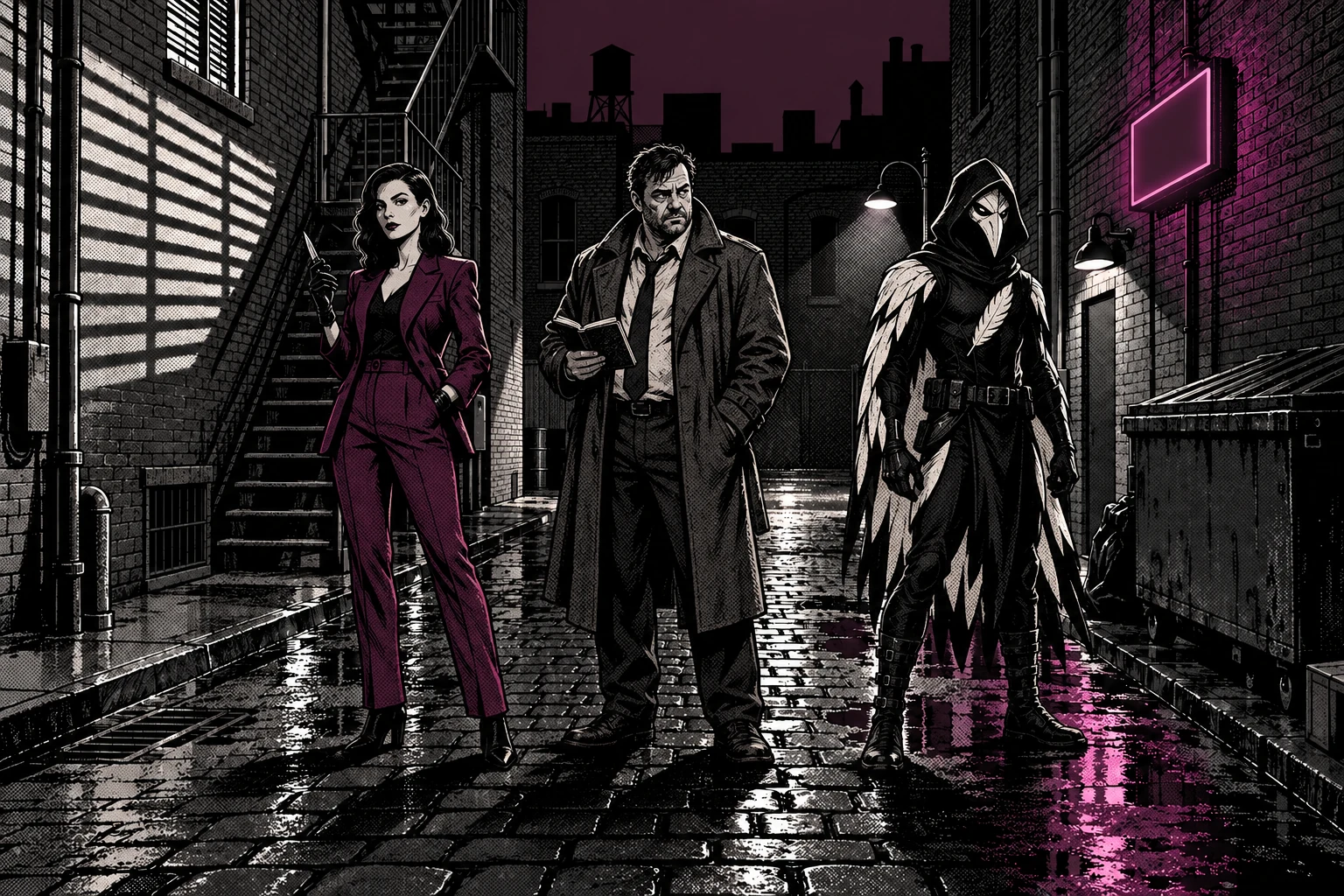 Make a graphic novel seriesA graphic novel series is a hero, an ink style, and an issue structure — an ongoing comic where the same detective walks into a new case every issue and the same shadows follow. No drawing required: you write the premise and the issues, the Studio inks the World and keeps the Cast on-model. This guide builds one using a noir series — Frank the detective, Ivy, and the Magpie — as the worked example.
- Make an adult animated satire showAn adult animated satire needs three things: a target worth roasting, a cast of archetypes who never break character, and a look flat enough to stay deadpan. In Character App, one premise populates the World and the Cast, then you air a new absurdity every week with the same faces. This guide builds the whole machine — target, ensemble, tone, the weekly engine — using the startup satire “Rate Limited” as the worked example.
- Name your showA show name has one job: make the right person stop scrolling. The method below takes about ten minutes — pull the promise out of your premise, run it through five naming patterns, then put each candidate through the search-and-say-it test. You need a one-line premise and nothing else. By the end you’ll have a title that survives a thumbnail and a search bar.
- Outline an episode (beat sheet)An episode outline is five lines: a logline, three beats, and a last image. Write it before any Scene exists — ten minutes of outlining saves an afternoon of takes that don’t add up. This guide walks the method scene by scene, with a fill-in beat sheet you can reuse for every episode. What you need: a premise and fifteen minutes.
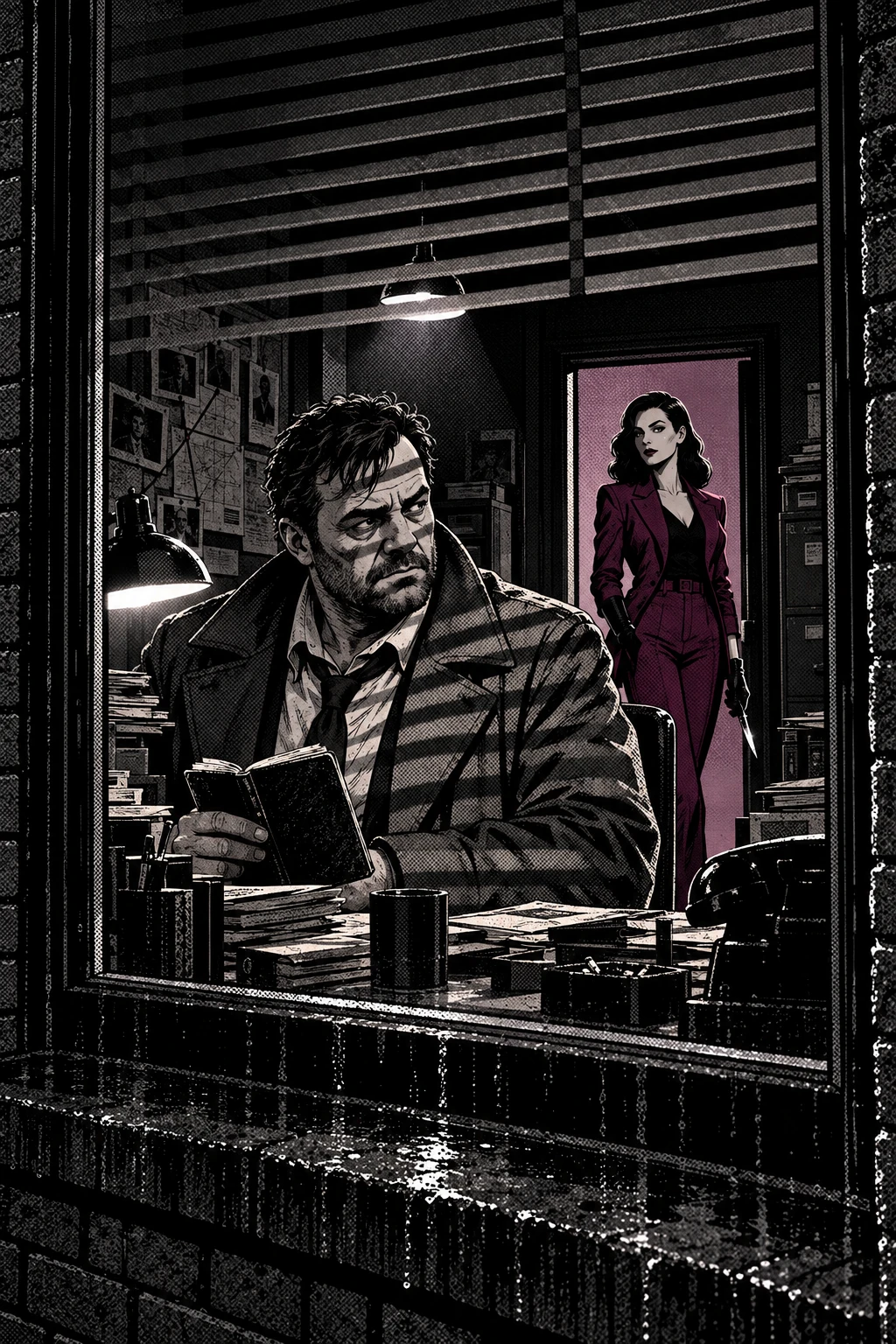 Write a cold open that hooksA cold open is the first three seconds: the frame that either stops the scroll or loses it. The method is counterintuitive — start mid-event, withhold the explanation, and choose the first frame before you write anything else. This guide breaks the technique into five steps with worked cold opens across three genres. What you need: a scene, and the discipline to start it late.
- Write dialogue for AI actorsAI dialogue sounds stiff for a fixable reason: it’s written like prose, and people don’t talk in prose. The fixes are mechanical — contract everything, let them interrupt, put the real meaning under the line instead of in it. This guide rewrites a stiff exchange line by line, then shows how the direction tells the actor where to breathe. What you need: a scene and two people who want different things.
Tier 3 deeper cuts — arcs, finales, gags, likeness
- Use your own photo and likenessYes — your own photo is the intended input, and the rules around it are explicit. When you add an Image and press Draw, you confirm you can use that likeness; the photo goes to the AI partners that draw your character, and what comes back is a cartoon likeness, never a realistic photo. The consent is recorded once per account and you can revoke it in Account settings at any time.
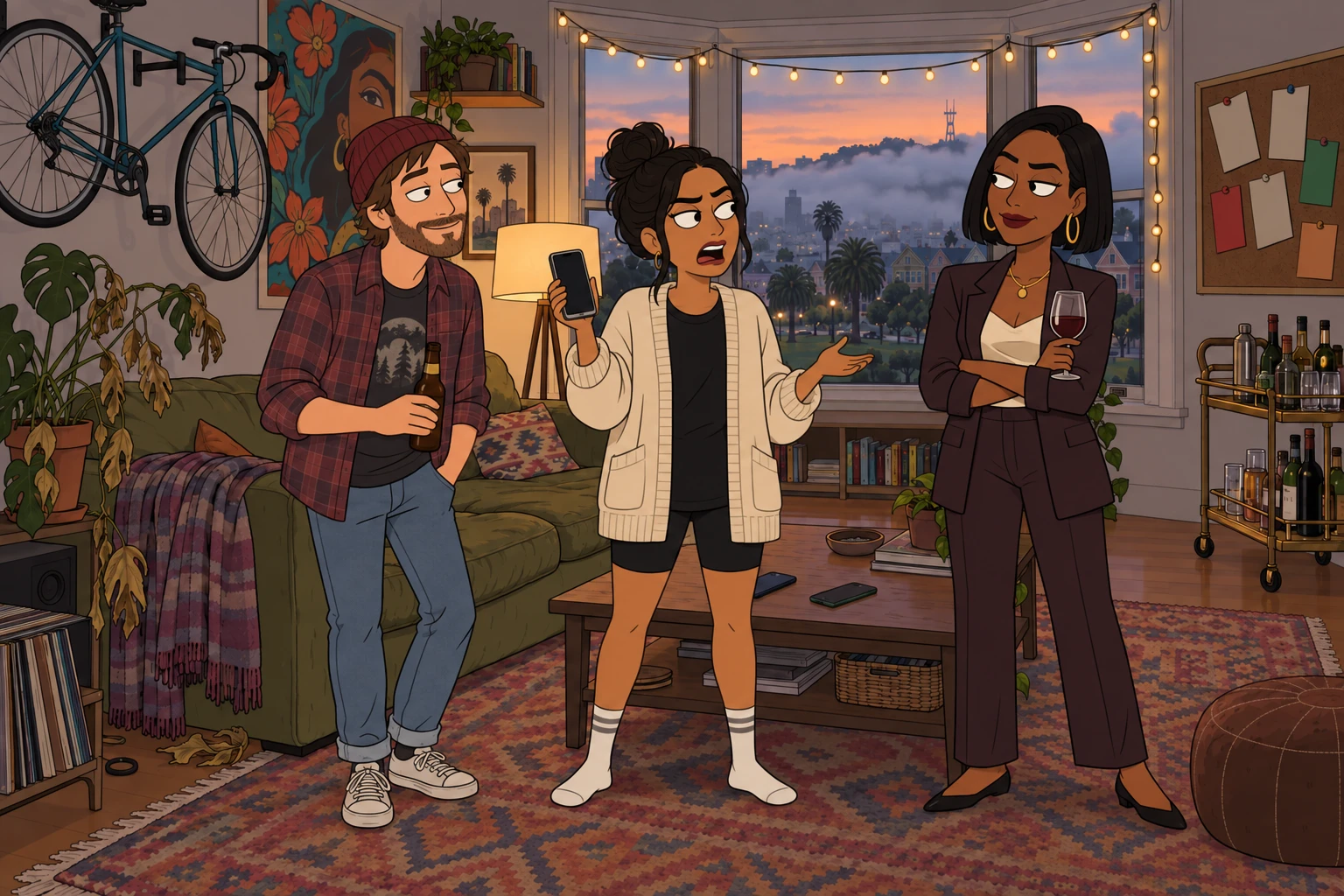 Build a running gagA running gag is a contract with the viewer: the same small thing, arriving on schedule, getting funnier each time it almost repeats. The pattern is three beats — plant it quietly, repeat it with a twist, break it at the payoff — and the whole trick is keeping the thing small enough to survive a season. Here’s the seeding method.
- Cast a vertical drama villainA vertical-drama villain isn’t a monster — they’re the person who wants the same thing as your lead and is willing to pay a price your lead won’t. The casting method: give them a real want, make every cruel act explainable, keep exactly one redeeming crack, and cast a face that reads as trustworthy until it isn’t. Then lock the look so the mask survives the season.
- Design a title cardA title card is your show’s three-second signature: the name, the look, and the promise, in one frame that never changes. In Character App you make it a fixed beat — write it once as a direction line, reuse it every episode, and let the card carry the branding your episodes share. Five decisions cover it: what it says, what it looks like, where it lives, when it plays, and when it earns a variation.
- Design a workplace comedy ensembleA workplace comedy isn’t about a workplace — it’s a machine for colliding three kinds of people who can’t leave: the planner who believes in the mission, the problem-maker who detonates the plan, and the observer who sees all of it. Cast those three roles with faces and flaws, give the room a weekly ritual, and the episodes write themselves.
- End a series wellA finale works when it’s the episode only this season could produce: the question the whole run kept asking, finally answered on screen. The method is audit, not invention — list what the season promised, pay the oldest promise first, pick one of three ending shapes, and land on an image, not a speech. Five steps, three patterns, one held frame.
 Pick your show’s genreGenre is a promise about how an episode ends: a sitcom lands on a laugh, a drama on a gasp, a satire on a wince. You pick it by naming the feeling your idea keeps producing — not by counting which genre has more fans. This guide runs the decision in five moves: the feeling, the cast shape, the world, the ending, the test episode.
 Plan a season arcA season arc is one promise the whole season keeps: a question episode one asks and the finale answers. You don’t need a series bible — you need a destination, one midpoint turn, a job for each episode, and a running list of what’s true now. This guide walks the lightweight version — five moves, ten minutes, and every episode starts leaning toward the ending.
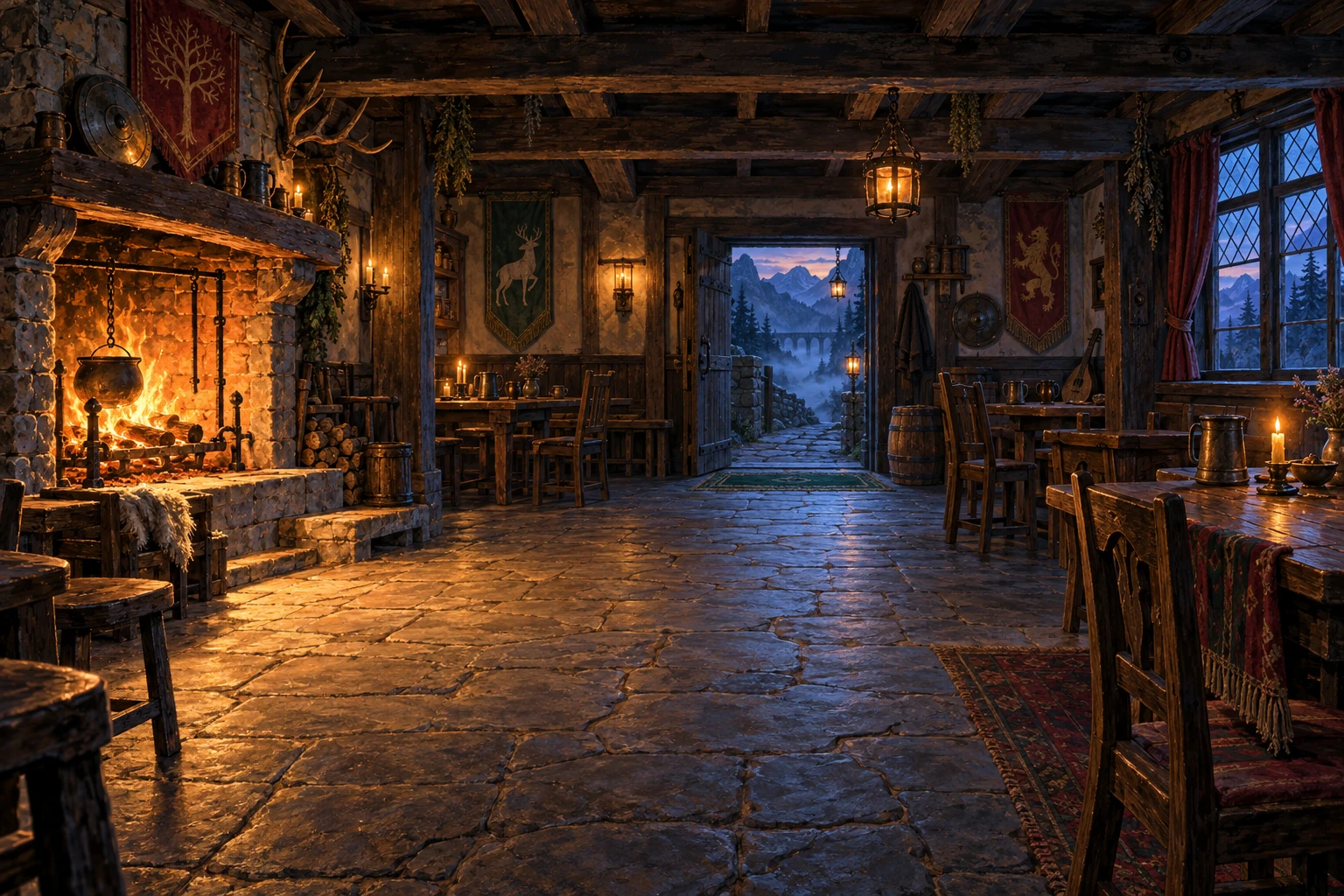 Turn a fandom idea into your own showLoving a world is the start of a show, not the show. The method is extraction: write down the energy you actually want — the party dynamics, the exploration, the betrayal at the keep — then rebuild it with your own names, faces, and rules until nothing on screen points back at the thing you love. Five steps from “inspired by” to “entirely mine.”
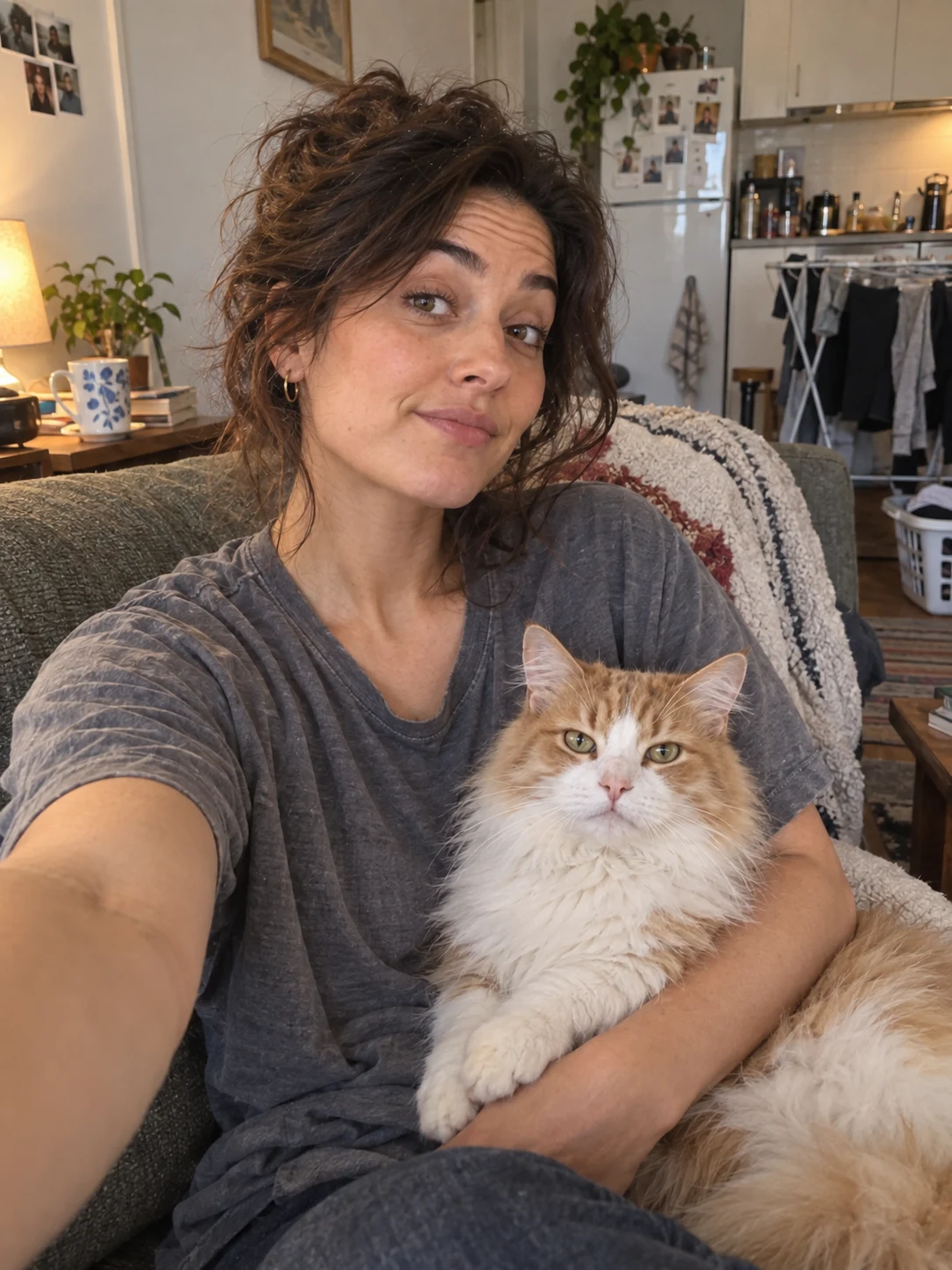 Turn a real story into an episodeThe best first episode is usually something that actually happened — to you. The method isn’t transcription, it’s adaptation: find the one moment everything turned, change every fact that needs changing, keep every feeling that doesn’t, and give the story the ending life forgot to deliver. Five steps take it from memory to a finished Episode, with the consent guardrails built in.
More guides are on the way. For the genres themselves, browse all genres.