character.appby charactrMake my show

How the Director turns a line into a Scene

Updated September 13, 2026 · 6 min read

The Director is the Studio’s conversational planner: you write one line about what should happen, it drafts an outline of Scenes, you push back in plain words until it reads right. Approving the outline draws the Scene Images; filming a Scene makes a Take you keep or retry. You direct with sentences — the Director handles the translation into a production plan.

What it is
The planning conversation
Input
One line of direction
Output
Outline → Scenes → Takes
Spend gate
Draw the scenes / Film It
Studio surface
Director
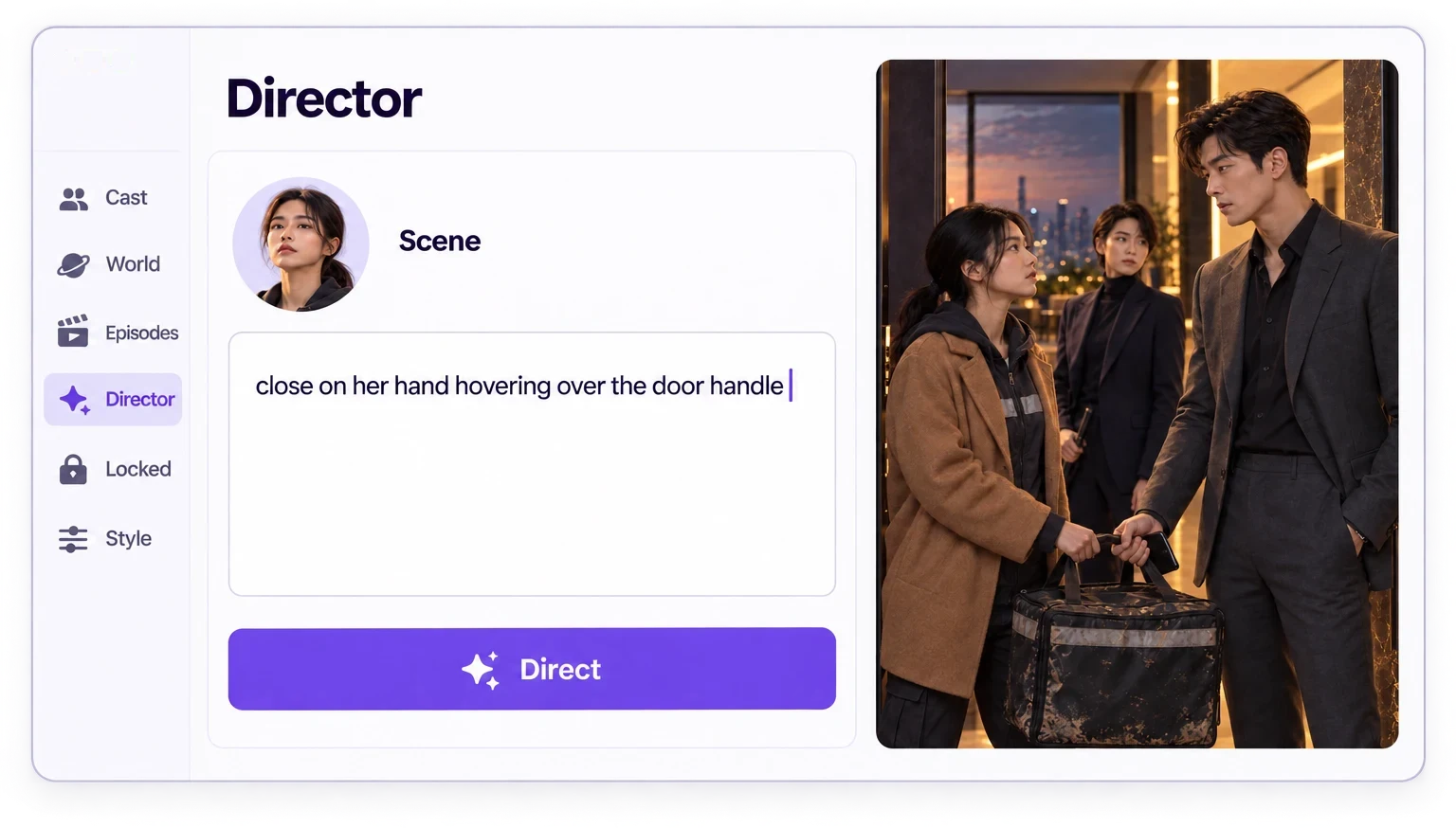
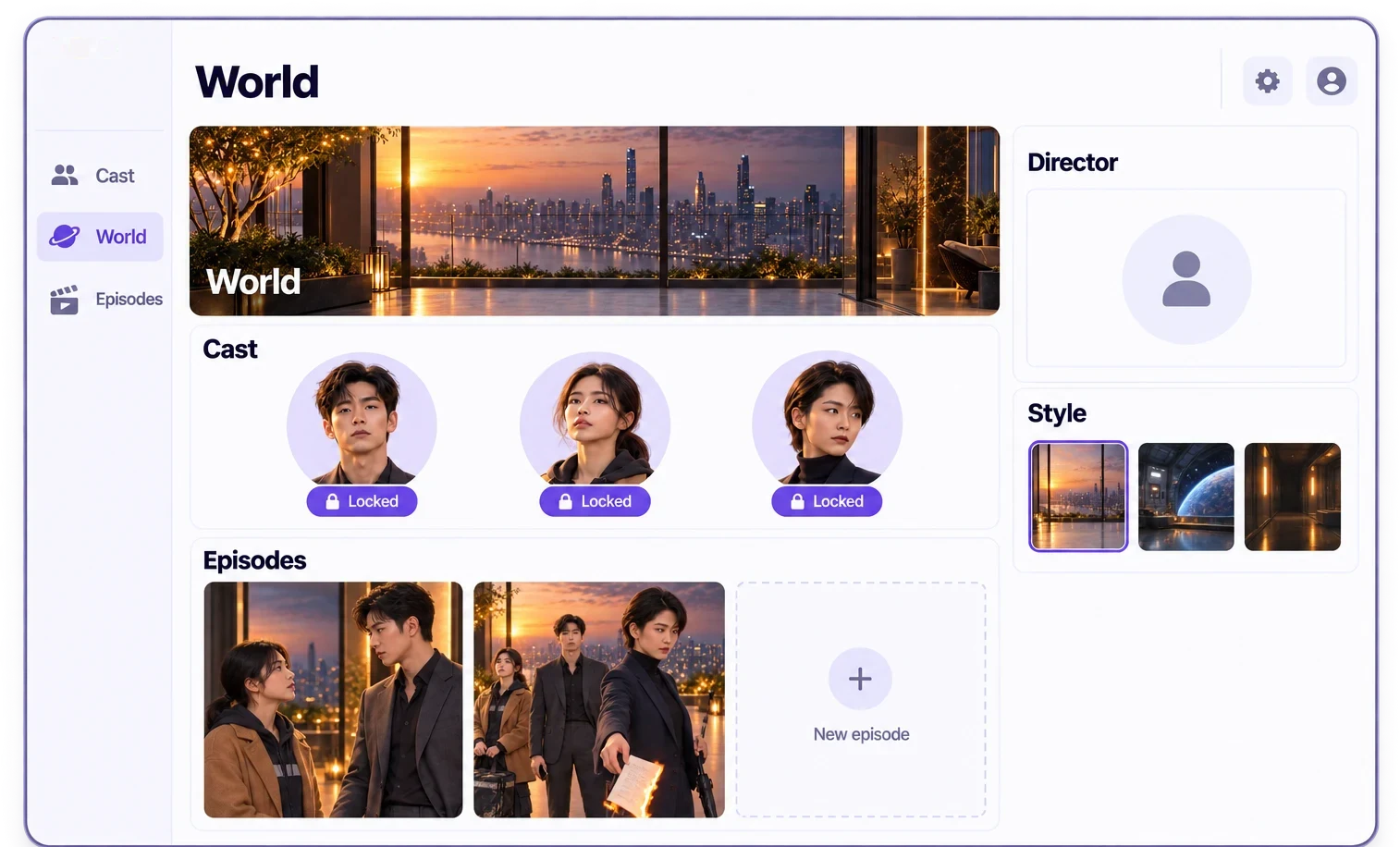
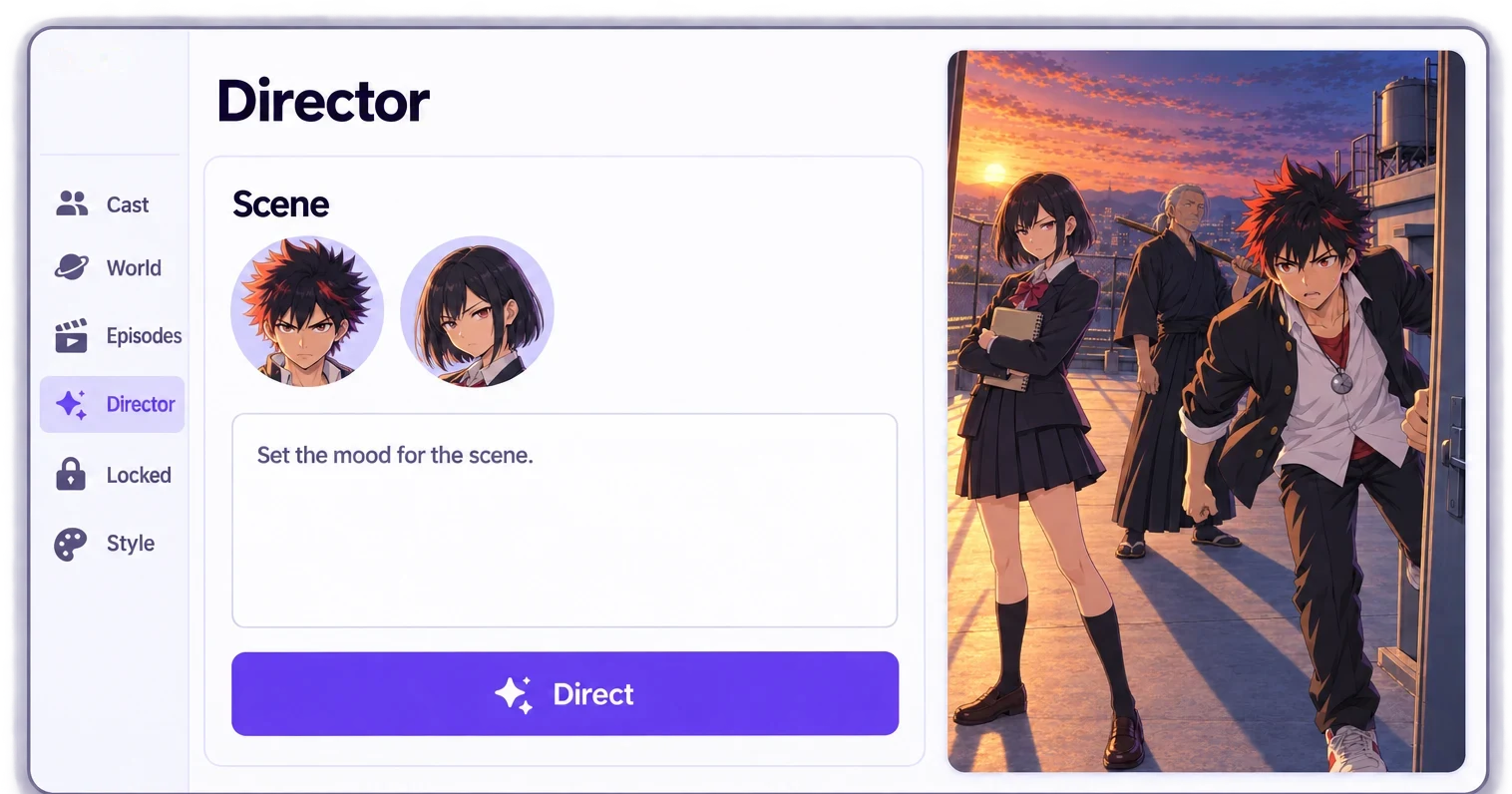
The Director screen — Cast members tagged into a Scene, a direction field, and the current preview.
The Director’s whole interface is a line: tag who’s in it, write what happens, press Direct.

Made this way

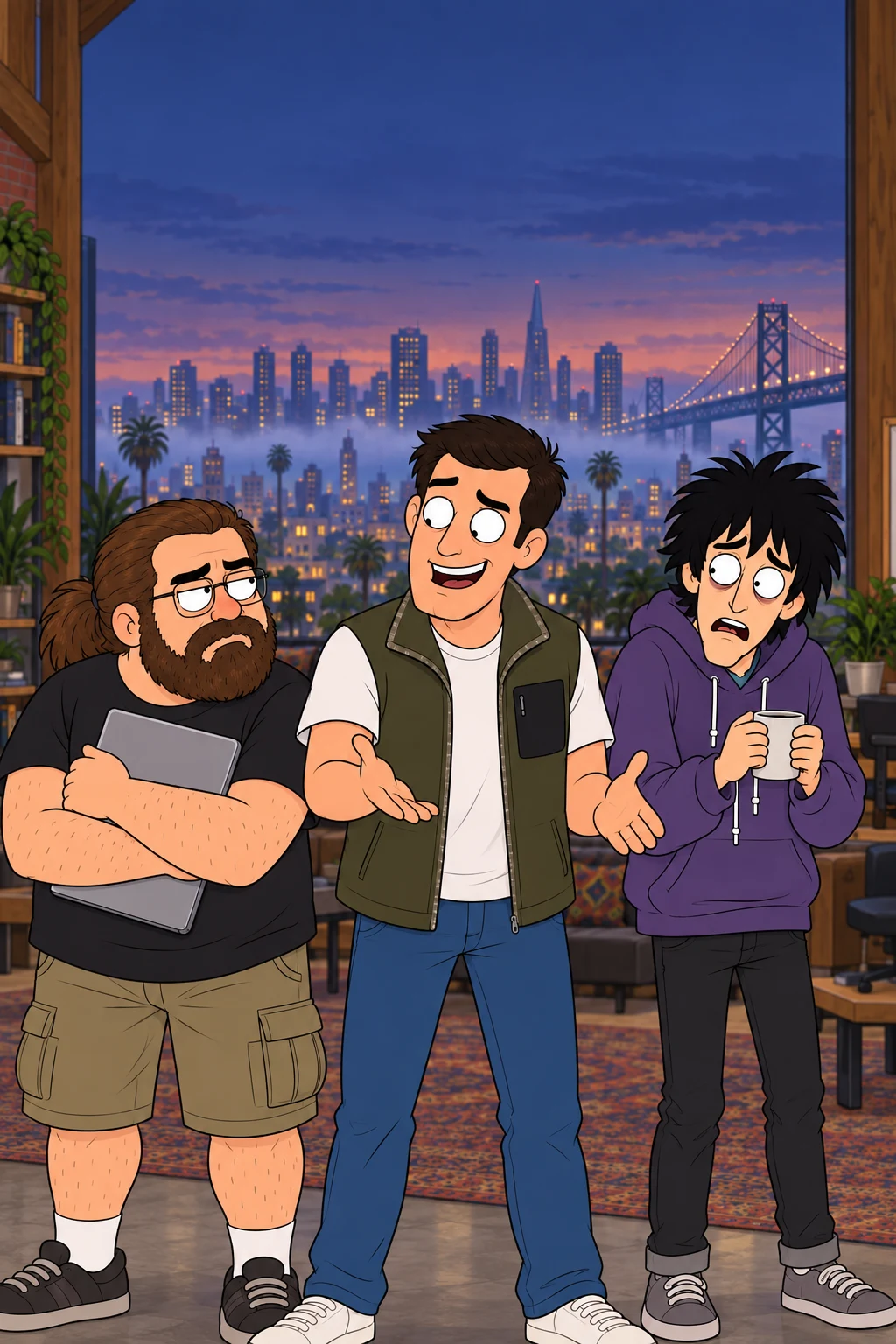
  • A directed Cast member mid-pose — the kind of performance a strong direction line produces.
    Direction that names visible behavior.
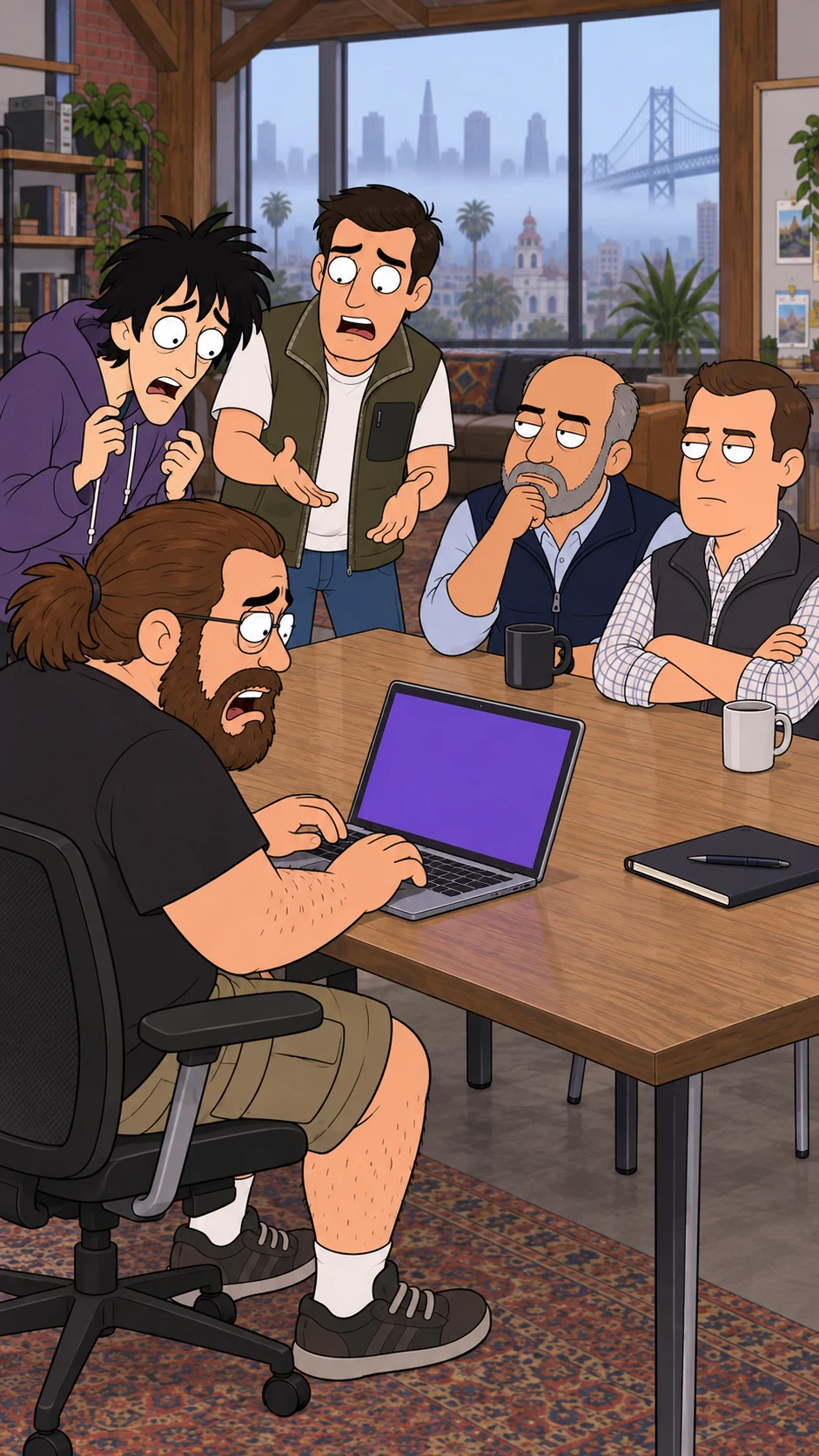
  • A Scene landing its punchline — the payoff frame of a direction that specified the joke’s turn.
    A directed payoff — the line said where to land.
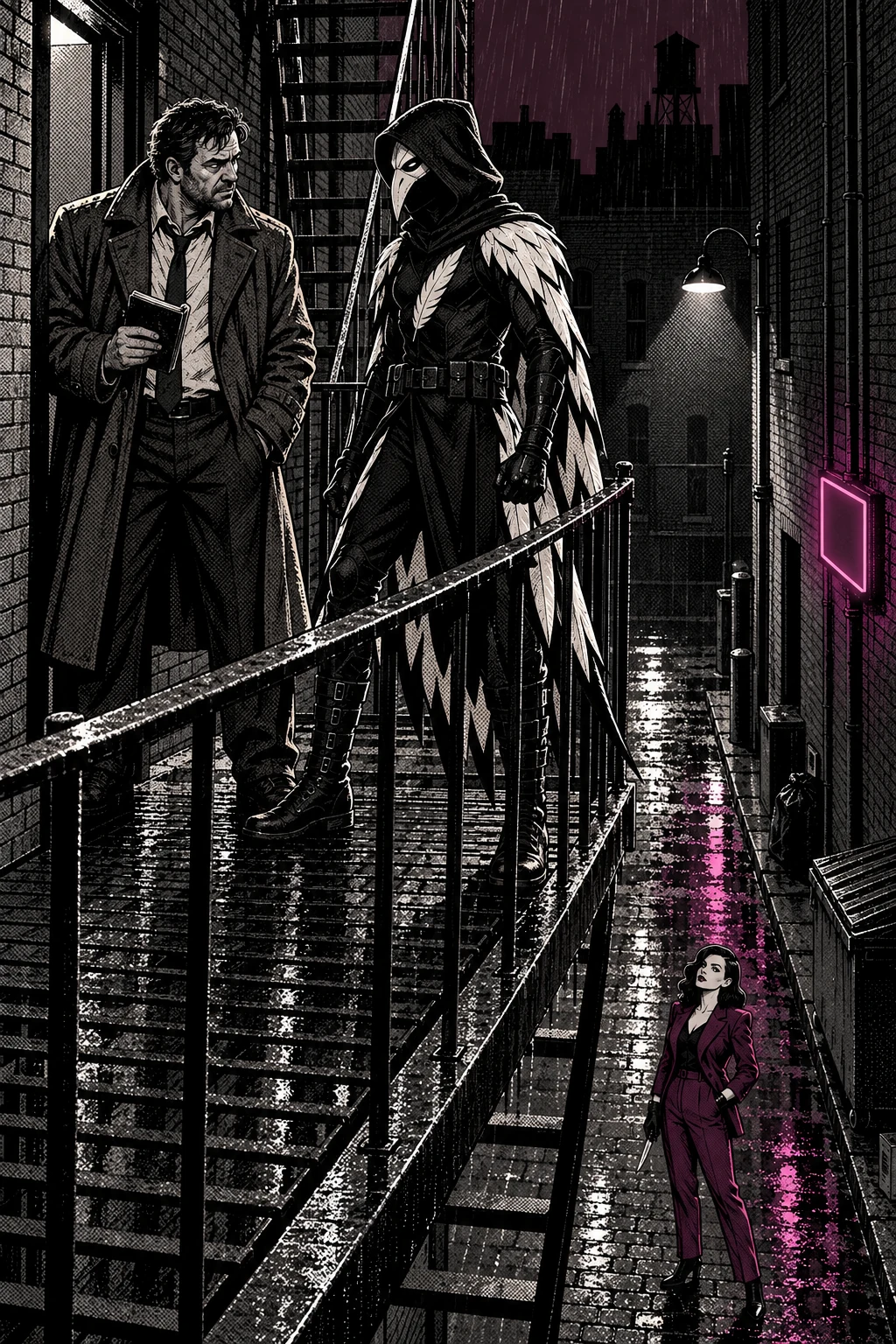
  • A graphic-novel Scene with a held composition — direction that specified the camera.
    Direction can name the framing, too.

Generated in Character App · example stills, not a live product demo

Common mistakes

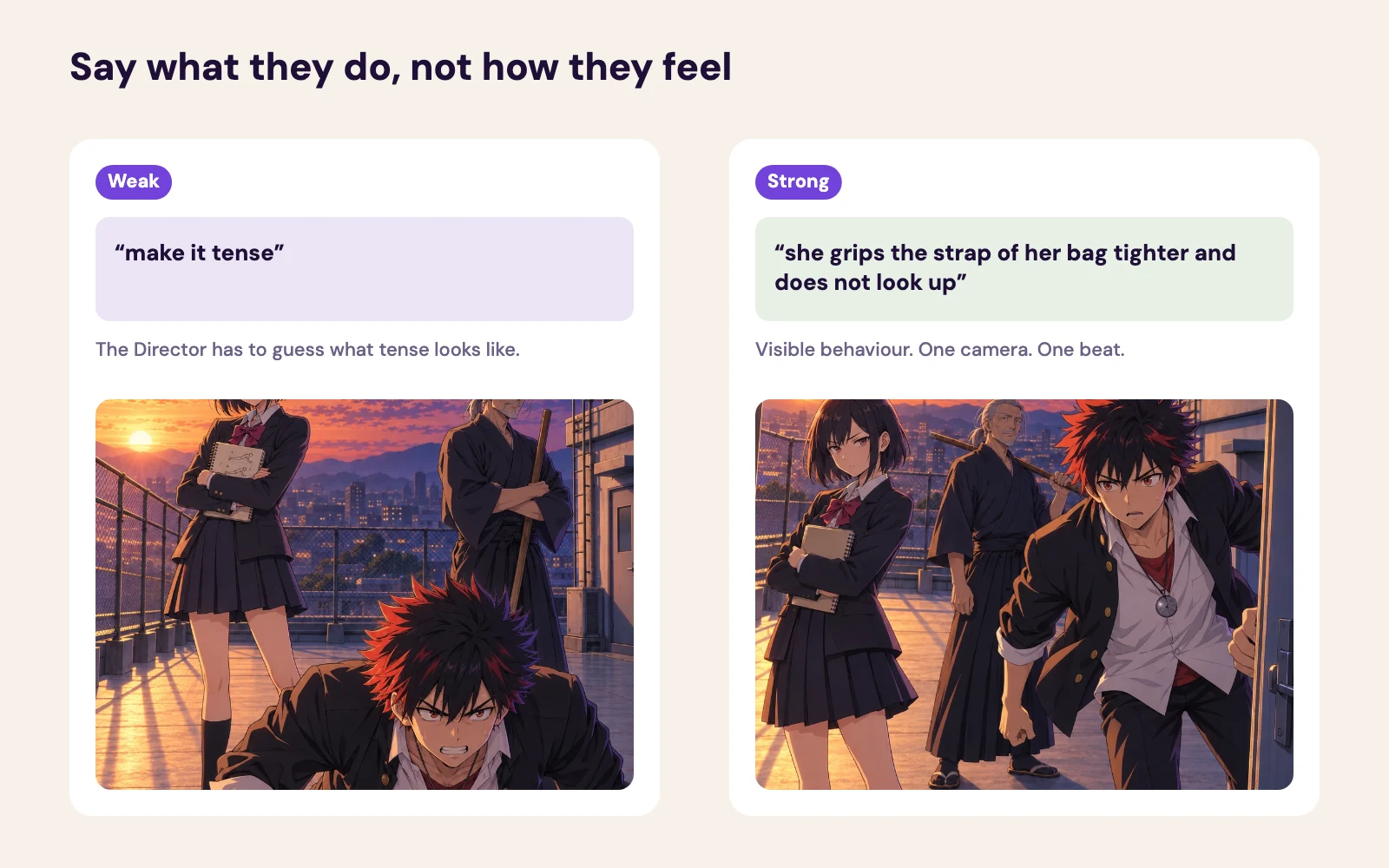
  1. Directing feelings instead of behavior. “Make it emotional” can’t be staged; “she rehearses the sentence twice, then says something else” can. Give the frame something to show.

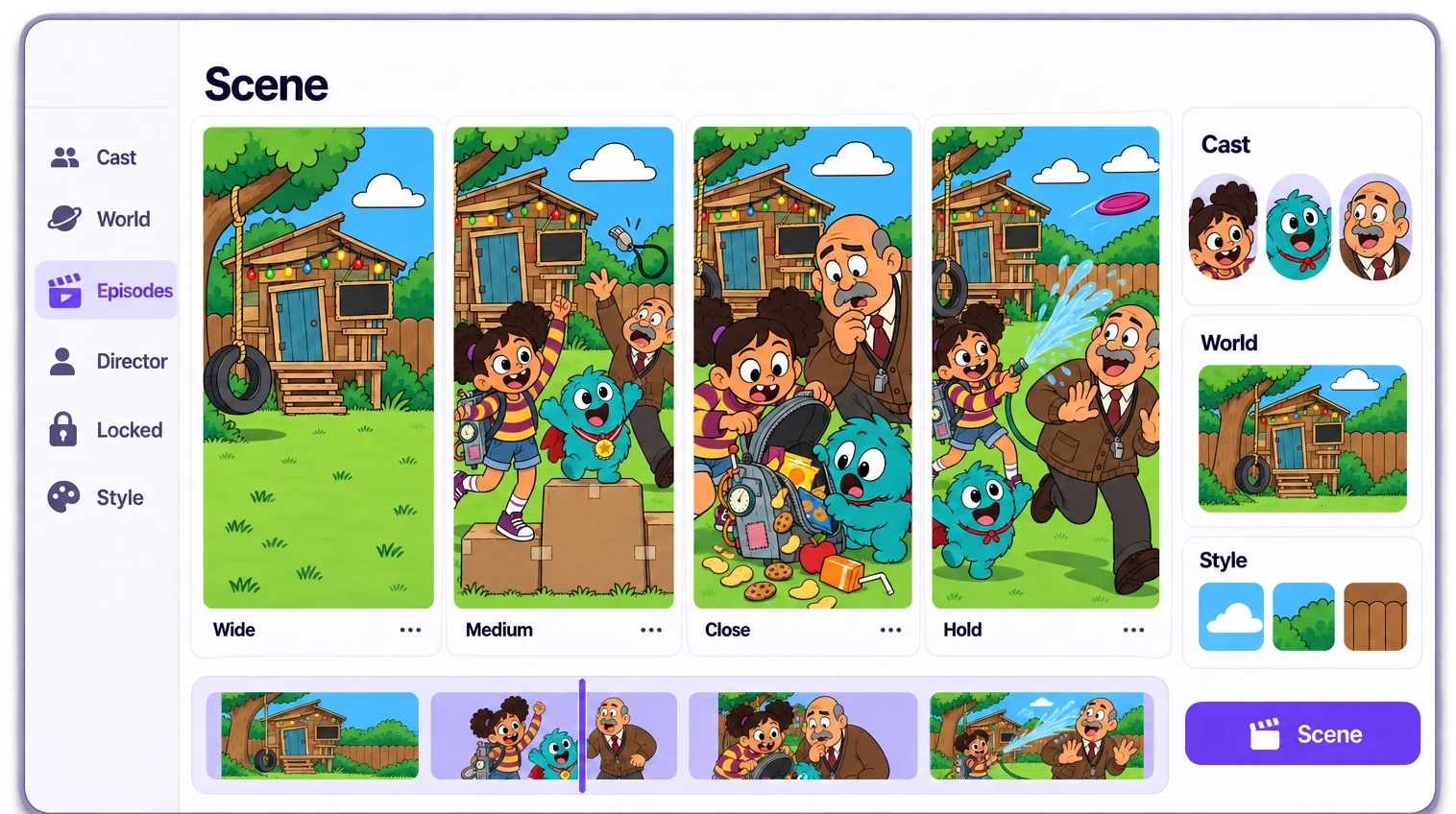
  2. Cramming the whole episode into one line. The Director works best in passes — outline first, then per-Scene direction — so corrections land where they belong instead of rewriting everything.

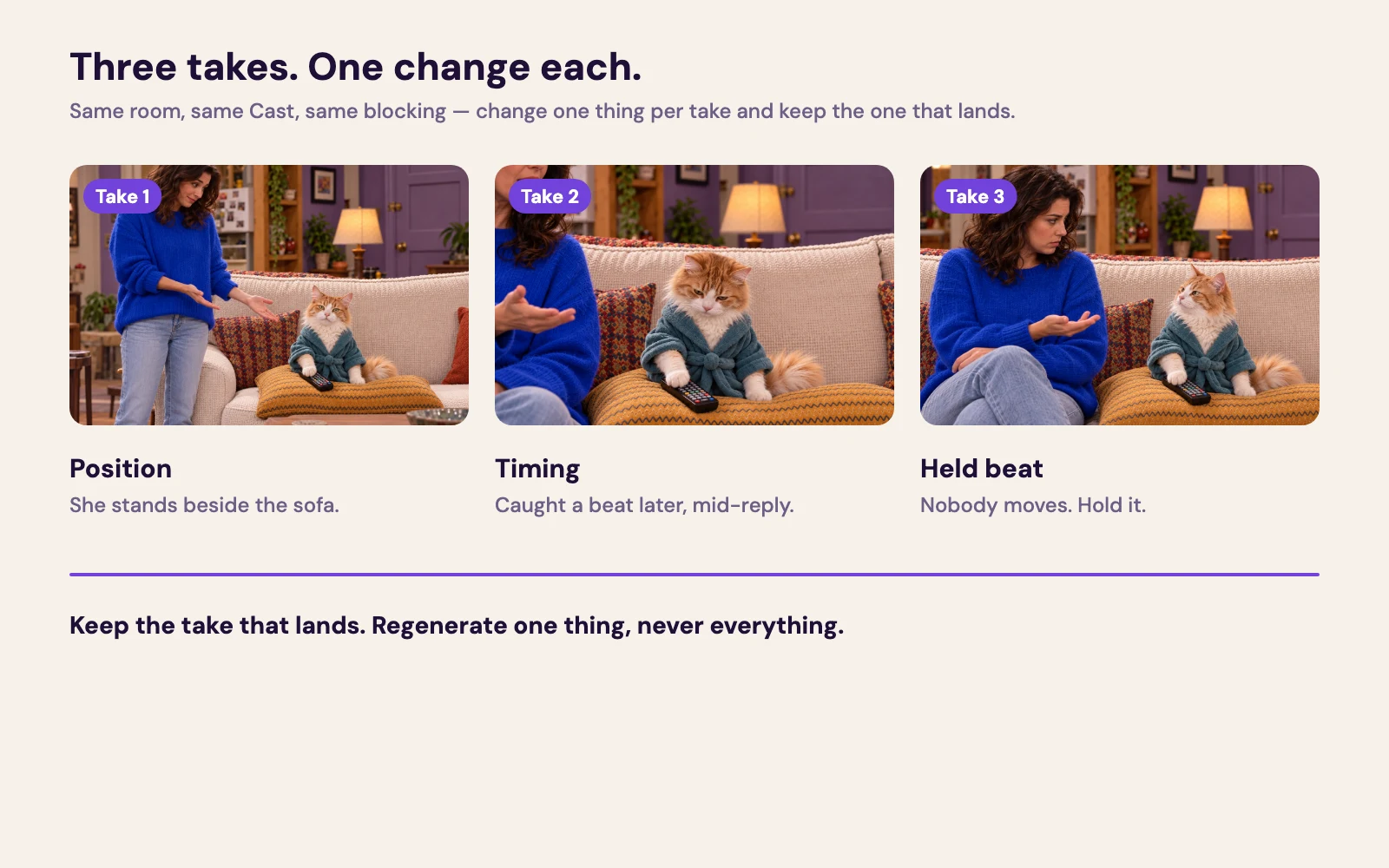
  3. Keeping the first take out of politeness. The retake loop is the tool: a take that’s almost right deserves a sharper line and another try, not a place in the Episode.

  4. Forgetting to tag the Cast. Untagged Scenes guess who’s present — tagging the members is how the right faces end up in frame.

  5. Arguing after the spend. The outline stage is free; the Scene Image and Film stages cost. Fix the plan while it’s still words.

Questions

Is the Director a chatbot or a production tool?

Both, in that order: it’s a conversation that ends in a real plan — outline, Scenes, drawn Images, filmed takes. The chat is the interface; the output is production.

What makes a good direction line?

Who, what, how — the Cast members in frame, the visible action, the feel. Specific beats of behavior beat adjectives: “avoids eye contact, pockets the letter” directs better than “suspicious.”

Does the Director remember past Episodes?

It works from the World’s context — the Cast, the Bible, and recent Episode history — so callbacks and consequences can carry forward. It proposes; nothing becomes canon until it lands in the record.

Can I skip the Director and build Scenes myself?

Yes — the Studio’s manual surfaces let you write Scene direction directly. The Director is the fast path and the brainstorming partner, not a required gatekeeper.

What does using the Director cost?

The conversation and the outline are free — words aren’t spend. Drawing Scene Images uses Credits or the daily Lite allowance; filming Clips is the priced step, shown exactly before you approve.

Your nextScene startswith you.

Make something you’ve always wanted to be in.

TRY THIS

Explore plans & Credits