What Is a Vertical Drama?
By Character App Team · · Updated · 14 min read
A vertical drama is a story told in short vertical (9:16) episodes that you watch on your phone, usually one to two minutes each. Every episode ends on a hook, so you tap the next one. Vertical drama videos are mostly watched in apps like ReelShort and DramaBox; Character App is where you make your own.
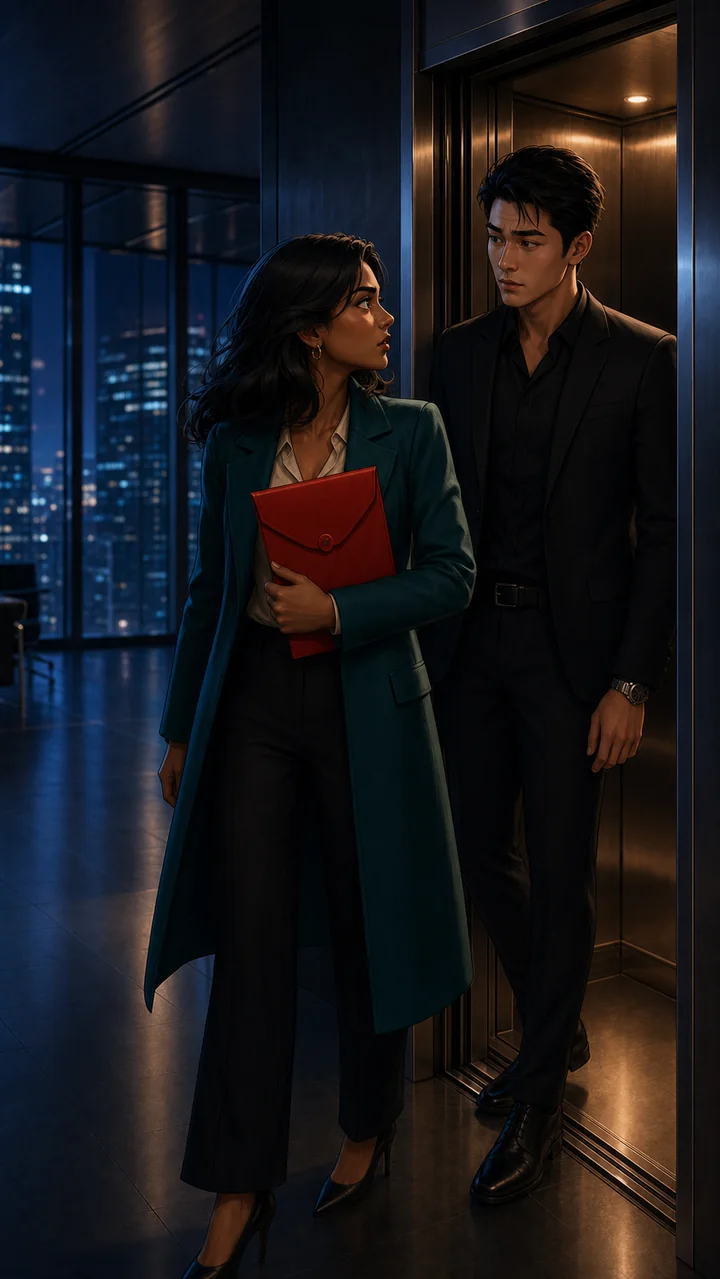
What is a vertical drama?
A vertical drama is a scripted story told in short episodes for the phone. Each episode is framed in 9:16, runs about one to two minutes, and ends on a cliffhanger. A series stacks dozens of these episodes into one long story, so you keep tapping to the next one.
Vertical drama videos are those episodes: each one is a clip you can watch on its own, and a vertical drama series is the whole run of them. A series looks like one story and one recurring cast, split into dozens of episodes of a minute or two, with an open question at the end of every episode. If you are wondering what are vertical dramas, that is the short answer: serial stories made for a phone held upright.
You will also see the same format called a microdrama, a micro-drama, a short drama, a micro-series, or a vertical show. The Chinese term is duanju, which means short drama. People use these names for the same thing: tiny episodes, vertical framing, and one story that carries on from episode to episode.
The part that matters most is the serial. A single funny clip on TikTok is one moment. A vertical drama has the same characters, an ongoing plot, and a cliffhanger at the end of every episode, so episode 20 only makes sense if you watched episode 1. The stories are fast and pulpy: secret billionaires, revenge, hidden identities, fake engagements that turn real.
- Frame: 9:16 vertical, made for a phone held upright
- Episode length: about one to two minutes (Deloitte describes 60 to 90 seconds)
- Series length: often 60 to 100 episodes
- Structure: one story, one recurring cast, a cliffhanger on every episode
- Genres: romance, revenge, family secrets, thriller, fantasy, and mixes of them
Vertical drama in numbers
The format at a glance, from two outside sources (last checked 2026-10-06). Each figure measures something different, so do not add them together; the detail is in "The numbers behind the boom" further down.
- Short-drama app downloads, Q1 2026: more than 850 million worldwide, up 140% year on year (Sensor Tower)
- In-app purchase revenue, Q1 2026: about $750 million, up 20% (Sensor Tower)
- Daily time in short-drama apps, April 2026: 25 minutes on average (Sensor Tower)
- In-app micro-series revenue forecast: about $3.8 billion in 2025 and $7.8 billion in 2026 (Deloitte)
- Episode length: 60 to 90 seconds in Deloitte's description; one to two minutes in most catalogs (Deloitte)
Make your own vertical drama with AI
You can make your own vertical drama with AI, with no cast or crew, in an AI short drama generator. In Character App you make your Characters from a photo or a few words, pitch the episode in one sentence, and the AI Director writes the Scenes, casts your Characters and films them as 9:16 Clips. You pitch it. AI directs it.
Got a moment you would rather act out yourself? Film it on your phone and use Star in a clip to put your Character in it, up to 30 seconds. Drawing Characters and Images is free every day; filming Clips needs a plan, and every Clip shows its price before you press.
- Start with a vertical drama character generator: a photo, a few words or both, in live-action, anime, 3D or cartoon
- Pitch the episode in one sentence and ask for a cliffhanger; the AI Director writes the Scenes
- Film the Scenes as 9:16 Clips, or turn on Auto-film and it films them for you
- Same Cast, new trouble next episode: an AI series maker keeps the Characters and the facts in your World
How a vertical drama works
The viewer is always one swipe from leaving, so the format front-loads tension and never lets it sag. Almost every episode runs on the same three beats, and you can see them in any series you watch.
- The hook (first three seconds): open on a problem, a reveal or a question, not on setup. If the first three seconds give no reason to stay, the swipe wins.
- The turn: one emotional beat per episode, such as a betrayal, a confession or a reversal. One clean turn, not a whole act.
- The cliffhanger: cut at the moment of most tension, before anyone answers. The open question is what gets you to tap the next episode.
Built for a tall screen
A 9:16 frame has no room for wide shots, so vertical dramas shoot close and centered: faces, hands, a phone screen, an envelope. Reaction shots do a lot of the storytelling. That is why the format leans so hard on close-ups and short bursts of dialogue.
The skills that work on TikTok carry over: a strong first frame, tight pacing, expressive faces. The extra thing a series needs is characters the audience recognizes for dozens of episodes. If a lead looks like a different person in episode 12, viewers notice.
Why people binge them
Episodes are short enough to watch in a gap in your day, and each one ends before the answer, so the next tap is easy. A series is usually written as a ladder of reveals: an injustice in the first few episodes, a climb in the middle, a big reveal near the end, and a final twist that sets up the next season. The cliffhanger on every episode does the rest.
For a deeper look at how writers plan these endings, see /blog/vertical-drama-hooks-cliffhangers, which has 30 original hook and cliffhanger pairs, and /blog/vertical-drama-script-template for a fill-in episode structure.
A one-minute episode, beat by beat
Here is how a single episode of a revenge drama might be built. It is an original example written for this page, not a scene from a real series. The numbers are a rough guide: real episodes bend them, but the order almost never changes.
- 0:00 to 0:03, the hook: a woman is escorted out of the office she helped build, while everyone watches and nobody speaks.
- 0:03 to 0:20, the pressure: her former partner announces her replacement, and we learn what she is losing. One clear problem, no backstory dump.
- 0:20 to 0:45, the turn: she stops at the door and recognizes the replacement's necklace as the one her late mother wore. The audience's belief about who is the villain changes.
- 0:45 to 1:00, the cliffhanger: the replacement says her name quietly and slides a key across the table. The episode cuts before we learn what the key opens.
- Next episode, 0:00: it opens on the key in her hand, so the viewer gets the payoff and a new problem in the same breath.
Where to watch vertical drama videos
Most people watch vertical dramas in dedicated apps. These apps are built like a streaming service for the format: you scroll a catalog, pick a series and tap through the episodes. Sensor Tower names DramaBox and ReelShort as the two biggest by in-app revenue, each at close to $140 million in the first quarter of 2026.
The apps below are the ones we checked on 2026-10-06. Each name has an official link in the Sources and verification list at the bottom of this page, so you can open the real site or App Store listing instead of a look-alike. This is a starting list, not a review or a ranking. Catalogs, prices and which episodes are free change often, so check each app before you start a series.
- ReelShort: made by Crazy Maple Studio. This is the official site.
- DramaBox: a catalog of short series across romance, revenge, fantasy and more. This is the official site.
- GoodShort: a short drama catalog with iPhone and Android apps. Official site linked in Sources.
- DramaWave: vertical series and movies from Skywork AI. App Store listing linked in Sources.
- TikTok, YouTube and Instagram: search the words "vertical drama" or a genre name. Some creators post whole short series straight to these feeds.
How to pick a series to start with
There are thousands of series, so a few simple habits save time. Pick a genre first, because the hook changes a lot between romance and thriller. Watch the first episode and ask one question: did I want the second one? If yes, you have found a good fit. If you were bored by minute one, the rest rarely gets better, and you can drop it.
Check how the app charges before you get attached. Pricing differs by app and changes over time, so read the app's own screen before you pay for anything. Stick to the official apps and listings in Sources, since re-uploads of series on social feeds may be copies posted without the makers' permission.
Watching is not the same as making
The apps above are places to watch series that studios made. Character App is a place to make your own series, and it is not a catalog of other people's shows. If you want a side-by-side of the two, read the guide ReelShort vs DramaBox vs making your own.
Vertical drama vs TV, film and TikTok skits
A vertical drama sits between a TV show and a TikTok skit. It borrows the serial story from TV and the phone feed from short video, and drops whatever does not fit a phone.
Vertical drama vs TV
A TV episode is horizontal and usually runs from half an hour to an hour. It can open slowly because it expects you to stay on the couch. A vertical drama is 9:16 and about one to two minutes, and it assumes you might leave at any second, so every second has to earn its place. A vertical drama series often runs 60 to 100 of these short episodes.
Vertical drama vs film
A film tells one story in one sitting with a beginning and an end. A vertical drama tells one story in many small pieces, and almost every piece stops on purpose before the answer. Film uses wide shots and long takes. Vertical drama uses close, centered shots because the screen is tall and small.
Vertical drama vs TikTok skits
A skit is one self-contained moment. A vertical drama is serialized: recurring characters, an ongoing plot, and continuity that makes episode 20 depend on episode 1. Both live in the same vertical feed, so a vertical drama has to survive the same swipe-first attention, with a long story carried on top.
The numbers behind the boom
Last checked 2026-10-06. These are third-party figures, not our own data. Each one measures something different (a forecast, a quarter, a production guide), so do not add them together. The links for each are in Sources and verification at the bottom of this page.
- Deloitte forecasts in-app micro-series revenue of about $3.8 billion in 2025 and $7.8 billion in 2026, which it calls more than double. It expects the US share to fall from about half of global revenue in 2025 to 40% in 2026. This is a forecast, published 2025-11-18.
- Sensor Tower reports more than 850 million short-drama app downloads worldwide in the first quarter of 2026, up 140% on the year before, and roughly $750 million in in-app purchase revenue, up 20%.
- In the same Sensor Tower report, DramaBox and ReelShort each earned close to $140 million in in-app revenue in the first quarter of 2026, and average daily time in short drama apps reached 25 minutes by April 2026, up 85% from January 2025.
- One industry production guide (Vitrina) puts a typical Western series budget at $100,000 to $300,000, for 60 to 100 episodes of 60 to 90 seconds. It says a 100-episode series can shoot in about 10 days in China. Treat this as a rough range, not a quote.
Where the format came from
Wikipedia traces the format to China around 2018, on short-video apps such as Douyin and Kuaishou, and says Chinese regulators recognized it as its own genre in 2020. It reached English-language audiences through apps built on the same idea. ReelShort, run by Crazy Maple Studio, and DramaBox became two of the best-known names.
Who makes vertical dramas
Most of the series in the big apps come from production companies that shoot with real actors, fast and in bulk. Vitrina's guide describes shoots that run 12 to 13 script pages a day, against 3 to 5 for traditional drama, which is how a whole series fits in a short shoot.
A second group is new: independent creators who use AI to draw and film their own series without a cast or crew. That is the group Character App is built for. It changes who can make a series, not what a good one needs. You still need a strong hook, a cast people recognize, and a cliffhanger worth tapping for.
Vertical drama examples and genres
Vertical drama is a format, not one genre. The hook changes with the genre, and the close-up and the cliffhanger stay the same. These are the lanes you will see most. The premises below are original, written for this page.
Romance
The fake engagement, the contract marriage, the heir in disguise, the rival who turns out to be the love interest. Romance is the biggest lane. Example hook: a woman agrees to pose as a stranger's fiancée for one dinner, then finds her name already printed on the invitations.
Revenge and family secrets
Humiliated at the gala in episode 1, back with a new name and a plan by episode 3. Or the will, the second family, the papers in the bottom drawer. Example hook: the youngest daughter is left one dollar, and the lawyer slides her a second sealed will.
Thriller and mystery
A threat with a face, a countdown or a prop. Keep the mystery small enough to understand in one glance. Example hook: a commuter gets a photo of herself taken from inside her own train car.
Fantasy and animated drama
A vertical drama does not have to be live action. Fantasy kingdoms, stylized 3D worlds and anime-style casts all work in 9:16 as long as the leads stay recognizable. Example hook: the knight everyone thinks is dead walks into his own coronation.
What makes a good one
Whatever the genre, the series that people finish tend to pass the same few tests. You can use them as a viewer to spot a good series, or as a maker to check your own pilot before you post it.
- Can you say the premise in one sentence? If it takes a paragraph, it will take viewers too long to care.
- Does the first frame show a problem? A face in trouble beats a skyline.
- Does each episode change what the viewer believes? One clear reversal per episode is plenty.
- Does the cut land one beat early? Stop before the slap, the answer, the kiss.
- Do the characters look and sound like the same people in episode 12? Consistency is what makes a cast feel real.
See sample episodes
Our vertical drama examples page shows sample episodes made with Character App, each with the premise that started it. The genre pages cover romance, mystery and thriller, fantasy, and 3D animated drama.
Make your own vertical drama
You can make your own vertical drama without a film crew. In Character App you type the premise or start from a photo, create your Cast once, and let the Director plan the Scenes. You draw each Scene as an Image first, film the ones you keep as 9:16 Clips, and assemble the finished episode. The price of every Clip shows on the button before you press it.
The hard part of AI video is keeping your characters looking like the same people from Scene to Scene. That is what the saved Cast is for. References reduce drift, but no tool can promise an identical face on every take, so watch each Scene and make another take when a face or outfit slips.
Right now the workflow makes one short episode at a time, and you reuse the same Cast and World when you start the next one. Filming Clips needs a paid plan: Starter is $19.99 a month with 800 Credits. To start, go to the make your own vertical drama page, or open the AI vertical drama maker. For the full walkthrough, read /blog/how-to-make-a-vertical-drama-with-ai.
- A one-sentence premise with a problem in it, such as a secret, a lie or a rival
- One lead to start: a description, or a photo of yourself or of someone who has said yes
- An ending in mind: the cliffhanger the first episode will stop on
- A place to post it: see /blog/where-to-publish-vertical-drama
Vertical drama words, in plain English
The format has its own small vocabulary. If you read about vertical drama anywhere, these are the terms you will run into.
- Vertical drama: a scripted series in short 9:16 episodes made for the phone.
- Microdrama (or micro-drama): another name for the same format, stressing the tiny episodes.
- Duanju: the Chinese word for short drama, where the format first took off.
- Hook: the first few seconds, built to give you a reason to keep watching.
- Turn: the one reversal in an episode that changes what you believe.
- Cliffhanger: the cut that stops before the answer, so you tap the next episode.
- Series: the whole story, usually dozens of short episodes with the same cast.
- Cast: the recurring characters. In a series, the audience needs to recognize them from episode to episode.
FAQ
- What is a vertical drama?
- A vertical drama is a scripted series made for the phone. Episodes are framed in 9:16, run about one to two minutes, and end on a cliffhanger. A series usually has dozens of episodes that tell one long story with the same characters.
- How long is a vertical drama episode?
- About one to two minutes. Wikipedia gives one to two minutes, and Deloitte describes 60 to 90 seconds. A full series often has 60 to 100 episodes, so the whole story runs a few hours if you watch it straight through.
- Where do you watch vertical dramas?
- Mostly in apps built for them, such as ReelShort, DramaBox, GoodShort and DramaWave, and also in the feeds of TikTok, YouTube and Instagram where some creators post series. Official links for the apps are in Sources and verification at the bottom of this page.
- Is a vertical drama the same as a microdrama or short drama?
- Yes, in practice. Microdrama, micro-drama, short drama, micro-series and duanju all describe a phone-first series in very short episodes. If there is a difference, microdrama stresses the tiny episodes and vertical drama stresses the tall 9:16 frame.
- Can AI make a vertical drama?
- Yes. AI tools can draw and film the Scenes, and you direct them. The hard part is keeping the same faces from Scene to Scene. Character App saves your Cast so each Scene starts from the same references, and you review every take because drift can still happen.
- How do you make a vertical drama?
- Write a one-line hook, build your Cast from a photo or a description, draw and film each 9:16 Scene, end the episode on a cliffhanger, and post it. The step-by-step guide at /blog/how-to-make-a-vertical-drama-with-ai walks through each step, and /blog/where-to-publish-vertical-drama covers where to post.
Sources and verification
- Sensor Tower, State of Short Drama Apps 2026 (June 2026; last checked 2026-10-06)
- Deloitte, TMT Predictions 2026: short-form video series (published 2025-11-18; last checked 2026-10-06)
- Wikipedia, Microdrama: definition and origin (last checked 2026-10-06)
- Vitrina, Micro-drama production guide: episode counts and budgets (last checked 2026-10-06)
- ReelShort, official site (Crazy Maple Studio; last checked 2026-10-06)
- DramaBox, official site (last checked 2026-10-06)
- GoodShort, official site (last checked 2026-10-06)
- DramaWave, App Store listing from Skywork AI (last checked 2026-10-06)