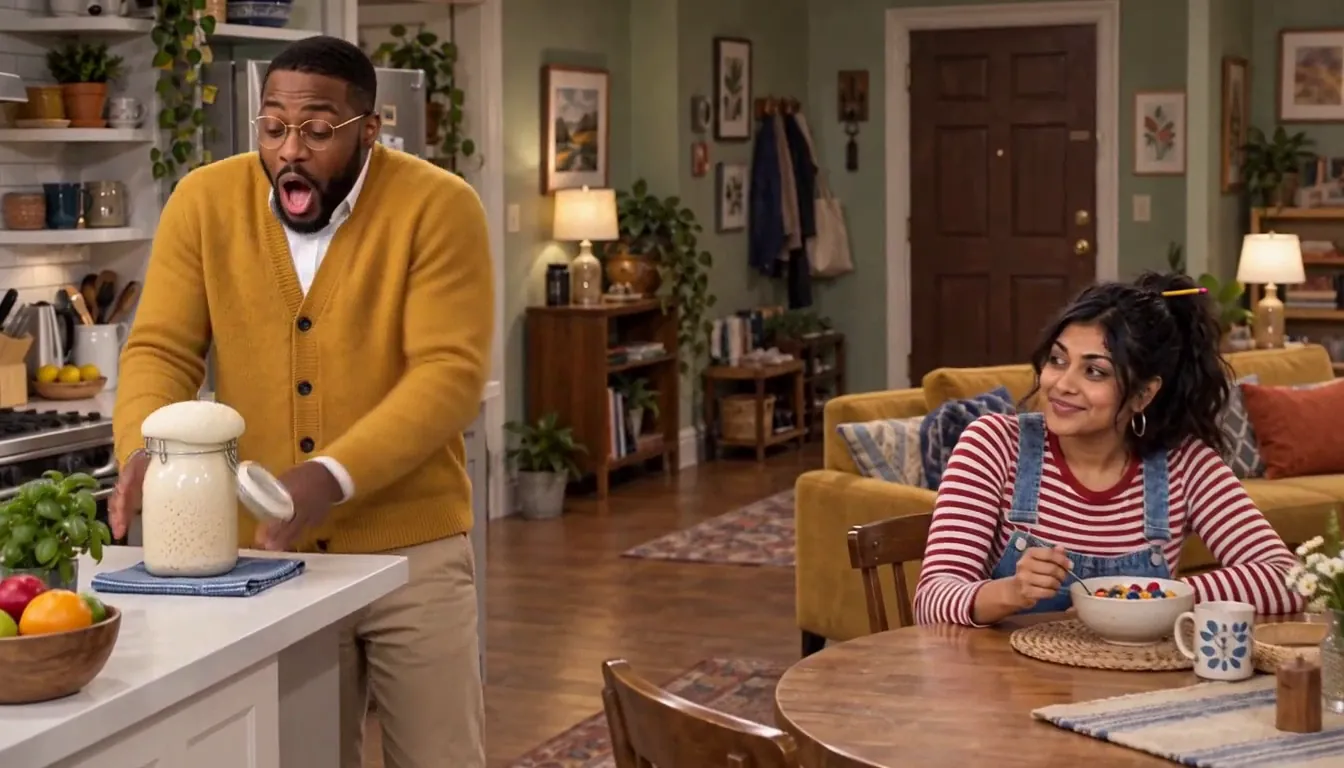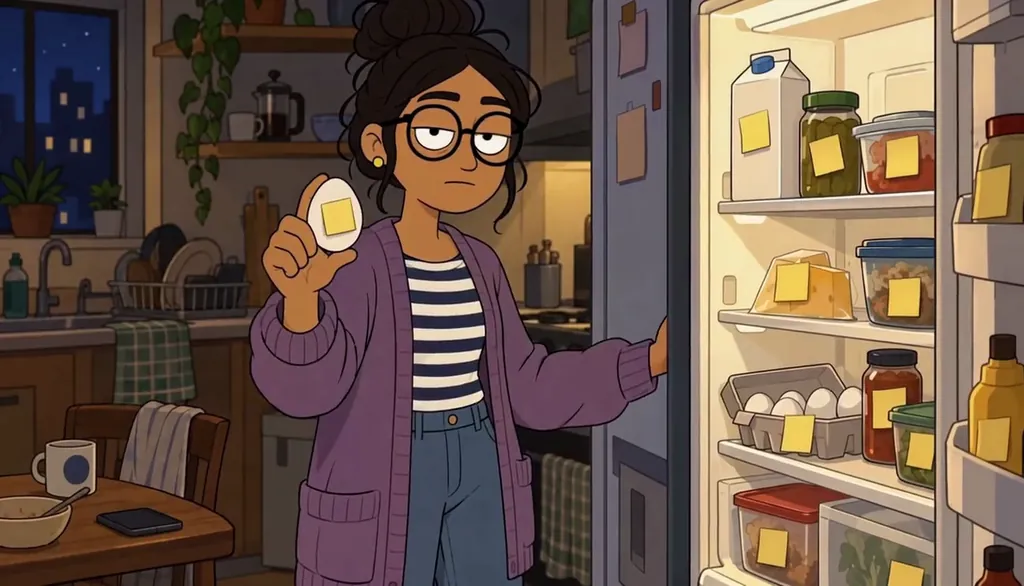
Pick a premise your group chat would recognize
The best adult-cartoon premises are one true thing observed closely: dating in your city, the friend group that debriefs everything, the job nobody can explain at parties. “Three friends dating their way through San Francisco” works because anyone who has done it knows the material writes itself.
Test yours by saying it out loud: if the logline gets a laugh of recognition before you explain it, it will survive a season. One home base helps too — the apartment, the bar corner, the group chat made visible — somewhere the Cast can always drift back to.
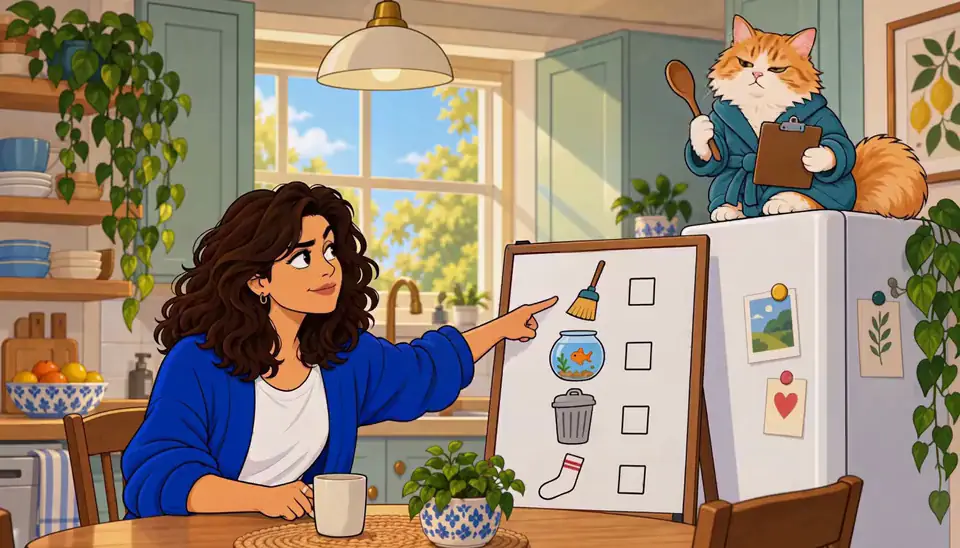
House Rules · The household meeting. Made with H3 Turbo, the Clip model in Character App · fictional sample series Design two or three friends with one silhouette trait each
You don’t need a big cast; you need a readable one. Give each lead exactly one trait you could recognize in pure silhouette: Theo’s beanie, Maya’s piled-up bun, Lena’s blazer-and-wineglass posture. One planner, one romantic, one critic is a complete comedy engine — Situationship runs on those three, and every date they bring home is just a guest star.
If a new character can’t be told apart from your leads at shadow-distance, they don’t have a trait yet — give them one, or fold them into someone who does.
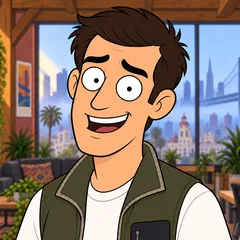
The line it came from: Three friends, one AI startup, one rate limit.
 MilesFounder
 DevEngineer
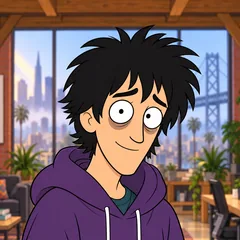 WizProdigy
Rate Limited · one line, and the Cast it drew: three Characters who keep their faces in every Episode. Our own fictional sample series, made in Character App. Lock the flat-cel style before writing a single episode
Pick the show’s look once — warm flat 2D, dusk-over-the-city palette — and let it be a decision you never make again. In the Studio that’s the Style control: set it at the World level and every episode inherits it, which is exactly what makes a run of Clips feel like a show instead of a folder of experiments.
Resist restyling per episode. A viewer should know it’s your show from one frame; that only happens if the frame never changes its rules.
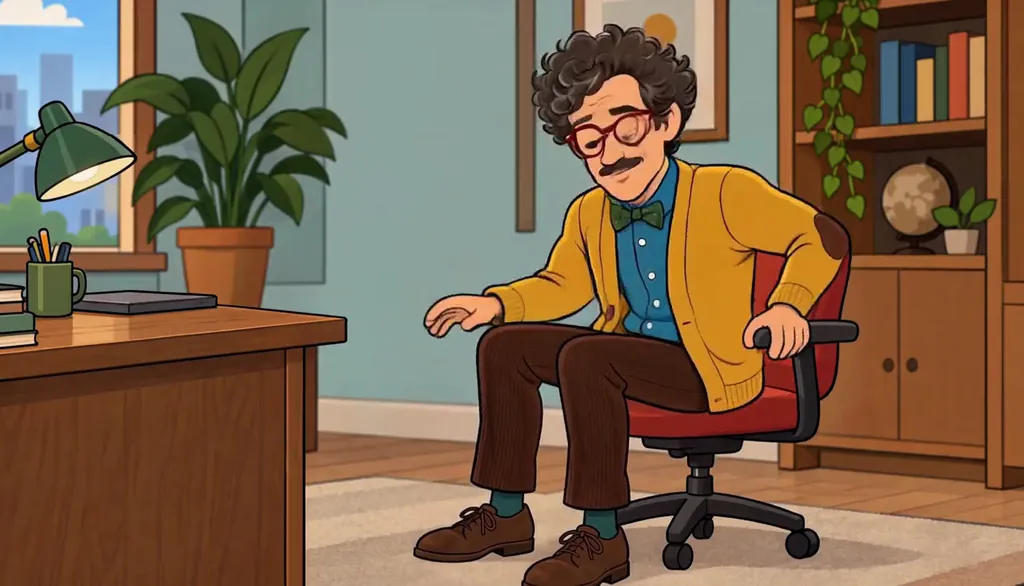
Barnaby Fitch · Swivel chair (cartoon). Original character made for Character App’s character pages with gpt-image-2.5 and H3 Turbo Write episode one’s setup, twist, payoff
A cartoon episode is three moves. Setup: the ordinary thing — Maya rewriting her dating-app bio for the ninth time. Twist: the thing that makes it yours — Theo and Lena turn it into a tribunal, and the version they write as a joke is the good one. Payoff: the image you end on — Maya posting their bio, hating that it works.
If you can name your three moves in one breath, you have an episode; if you can’t, you have a premise still looking for its story. Write the payoff first — it tells you what the setup has to smuggle in.
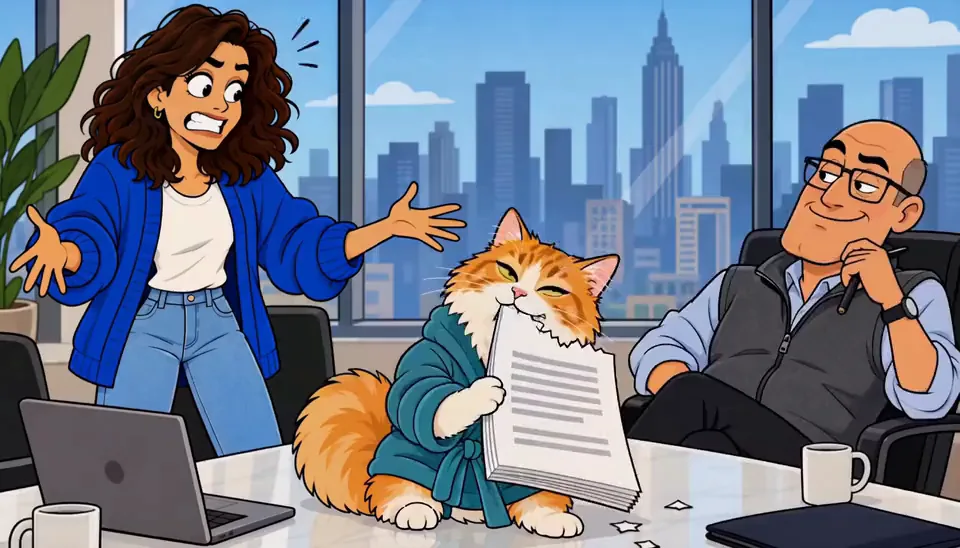
Stealth Mode · The term sheet. Made with H3 Turbo, the Clip model in Character App · fictional sample series Direct the punchline beat
Cartoon timing lives in the reaction, not the action. When the date pushes a cart containing a 40-pack of toilet paper past the appetizer aisle, the joke isn’t the cart — it’s Maya doing the math on what he just told her about himself.
Direct it in the line: “hold on her face reading the label one beat longer than comfortable.” One specific beat per note. If a take lands flat, change the hold before you change the joke — most cartoon misses are timing, not writing.

Milo Fenn · Milo, 2D cartoon. Original character made for Character App’s character pages with gpt-image-2.5 and H3 Turbo Plan episode two before episode one’s glow fades
The pilot will make you want to admire it. Instead, open the planner and sketch episode two while the engine’s warm: same Cast, same apartment, one new disaster. Situationship’s second outing — the warehouse second date — exists because the first left a question open: the bio worked, so now what?
That’s the series habit: each episode answers one thing and plants one thing. Two episodes in, you have a show; one episode in, you have a very good clip.
How long it takes — and what it costs
The clock is friendly: premise to a designed Cast is about ten minutes; episode one is an evening of direction notes, one per take. The Story — the written draft — is free to make and remake, so shape your setup-twist-payoff there before a frame is drawn.
Continue with the free Studio · one World build, one Character a day, 4 Lite Images a day · no card. Lite Images cover the stills — Cast designs, Scene images — and the meter resets each UTC day. Motion is where Credits enter: Clips price per second with the exact cost on the button, and Plans unlock the Clip and Film models when you want them.
Common mistakes
A date who is only a punchline. The dates rotate; the friends stay. Give even a one-Scene date one real trait, or the show starts laughing at strangers instead of at its leads.
Shock for shock’s sake. Adult comedy is the register, not the material — the spreadsheet, the tribunal and the fog are funnier than anything you’d have to apologize for.
Restyling between episodes. Changing the look resets the recognition you built — lock the style once and let the characters carry the variety. The consistent-cast guide covers drift.
A friend group that agrees with itself. If nobody is wrong, nothing is funny — the planner, the romantic and the critic should each be certain the other two are doing it wrong.
Drawing the pilot before the Cast is locked. Stills on the Lite meter are for checking designs — lock the cards first, then spend on motion.
Re-prompting a flat joke. A take that misses is a timing note, not a new prompt — change the hold in the direction and retake the same Scene.
Questions
How is this different from just making one cartoon image?
A Cast and a World persist. One image is a drawing; a show is the same characters making new trouble every episode — the Cast, style and set all carry over automatically.
Can the same cast work in a movie-length special later?
Yes — the Cast doesn’t care about runtime. String more Scenes together and the same designs carry a longer story; the episode structure just stretches.
Do I need to know animation software?
None of it. You write what happens in a direction line; the Studio draws and moves it. If you can describe the gag, you can direct it.
How do I keep the characters’ proportions consistent?
Lock one silhouette trait per character and reuse the same Cast — never re-describe them from scratch. The consistent-cast guide walks the full method.
What age range is this style for?
Character App is 17+ and this example is adult comedy — dating, friendship, city life. The flat 2D look is a style choice, not an age rating; the writing sets the register.
How much does a cartoon pilot cost?
Continue with the free Studio · one World build, one Character a day, 4 Lite Images a day — Cast designs and Scene stills run on the daily meter. The Story draft costs zero Credits; Clips price per second on the press itself.
Can I make it about my friends without photos?
Yes — describe each lead once ("the planner, the romantic in the beanie") and approve the designs the Studio draws. Photos are optional; one silhouette trait per person is not.