character.appby charactrMake my show

How to write a 60-second episode

Updated September 13, 2026 · 5 min read

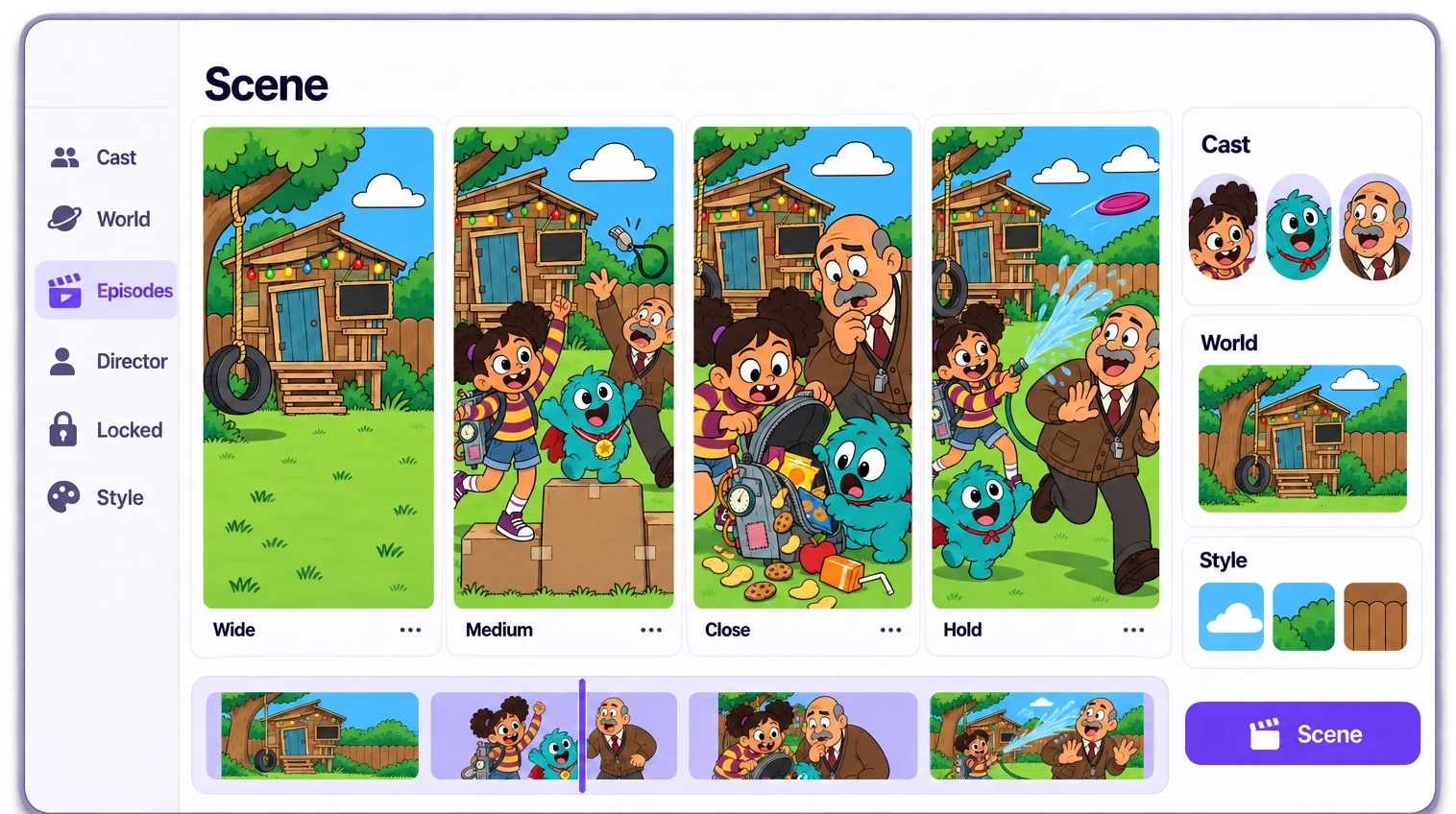
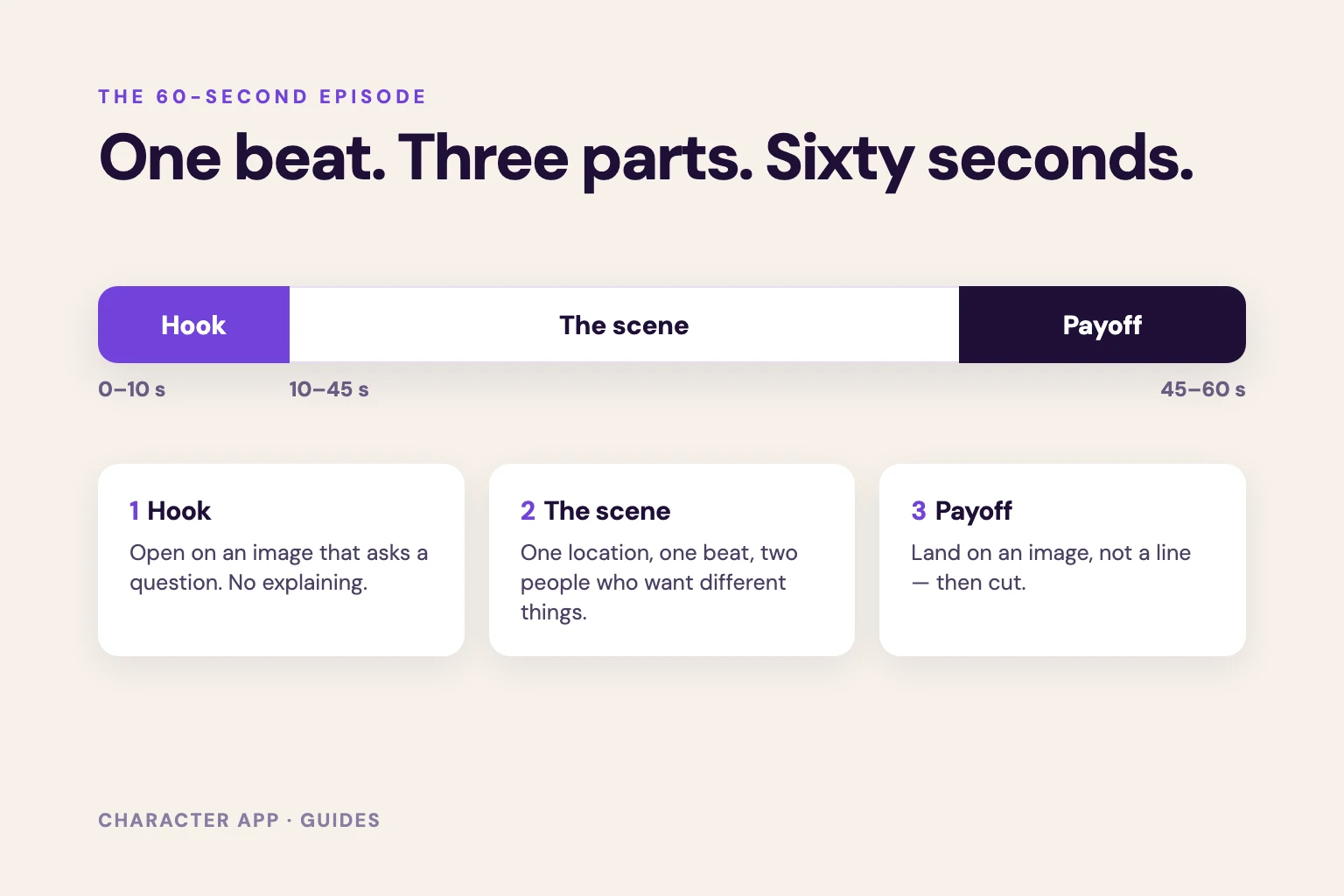
Sixty seconds is a complete episode if you stop treating it like a short film. The structure is three beats — a hook in the first five seconds, one scene doing one thing, and a payoff that either lands the joke or opens a loop — plus roughly eight shots of seven seconds each. You need a premise and one page of notes; the Studio handles shots and timing. A finished episode takes about thirty minutes.

Time to first result
~30 min
Difficulty
Beginner
You need
A premise + a Cast
Studio surface
Director · Scene Planner
A 60-second episode timeline split into three labeled blocks — hook at 0–5s, scene at 5–45s, payoff at 45–60s.
The whole episode, on one timeline: hook, scene, payoff.

Made this way

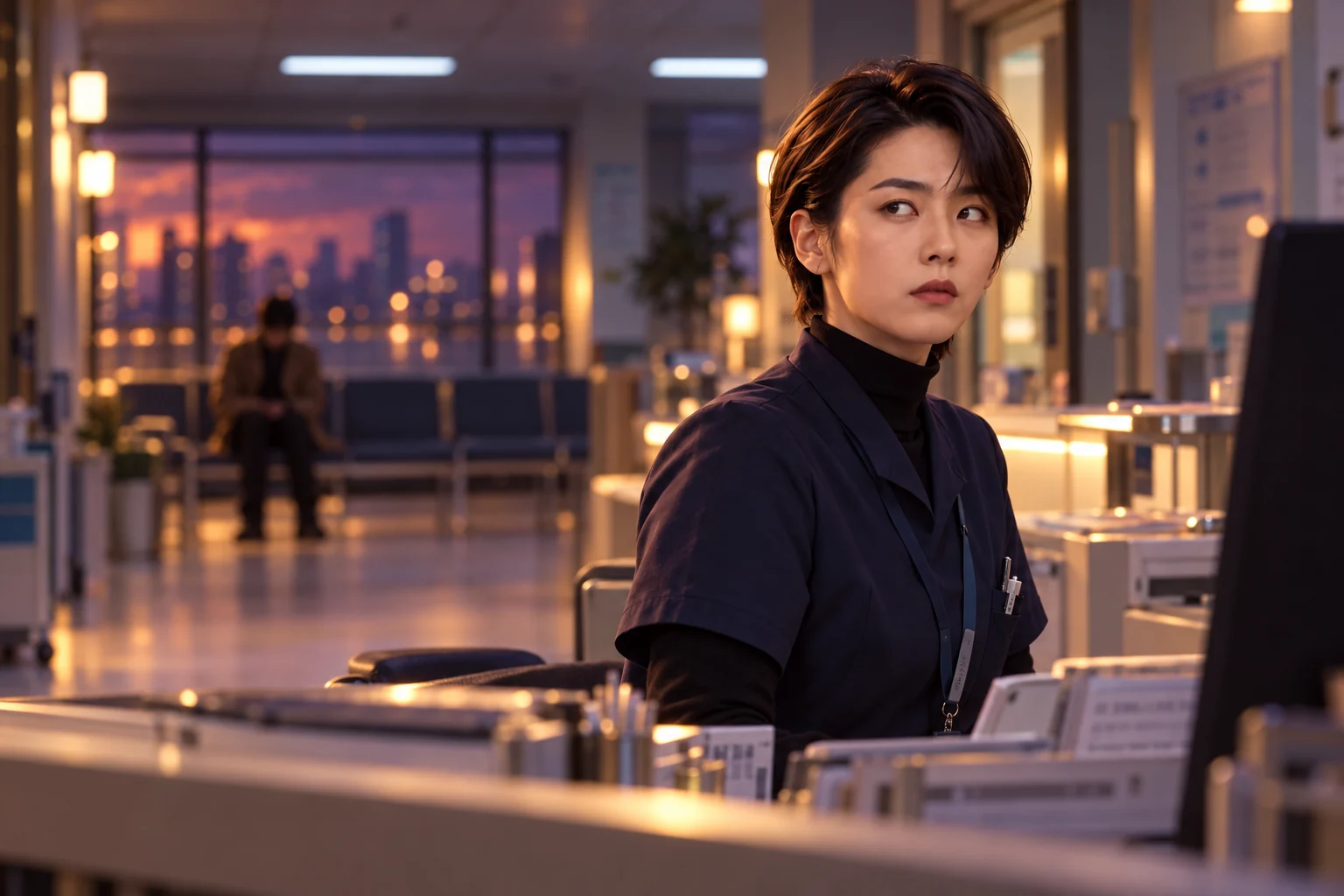
  • Episode still — Ozzy stopping mid-stride to fix a stranger’s dropped bag, the plaza crowd passing him.
    A payoff that’s pure character — the loop stays open.
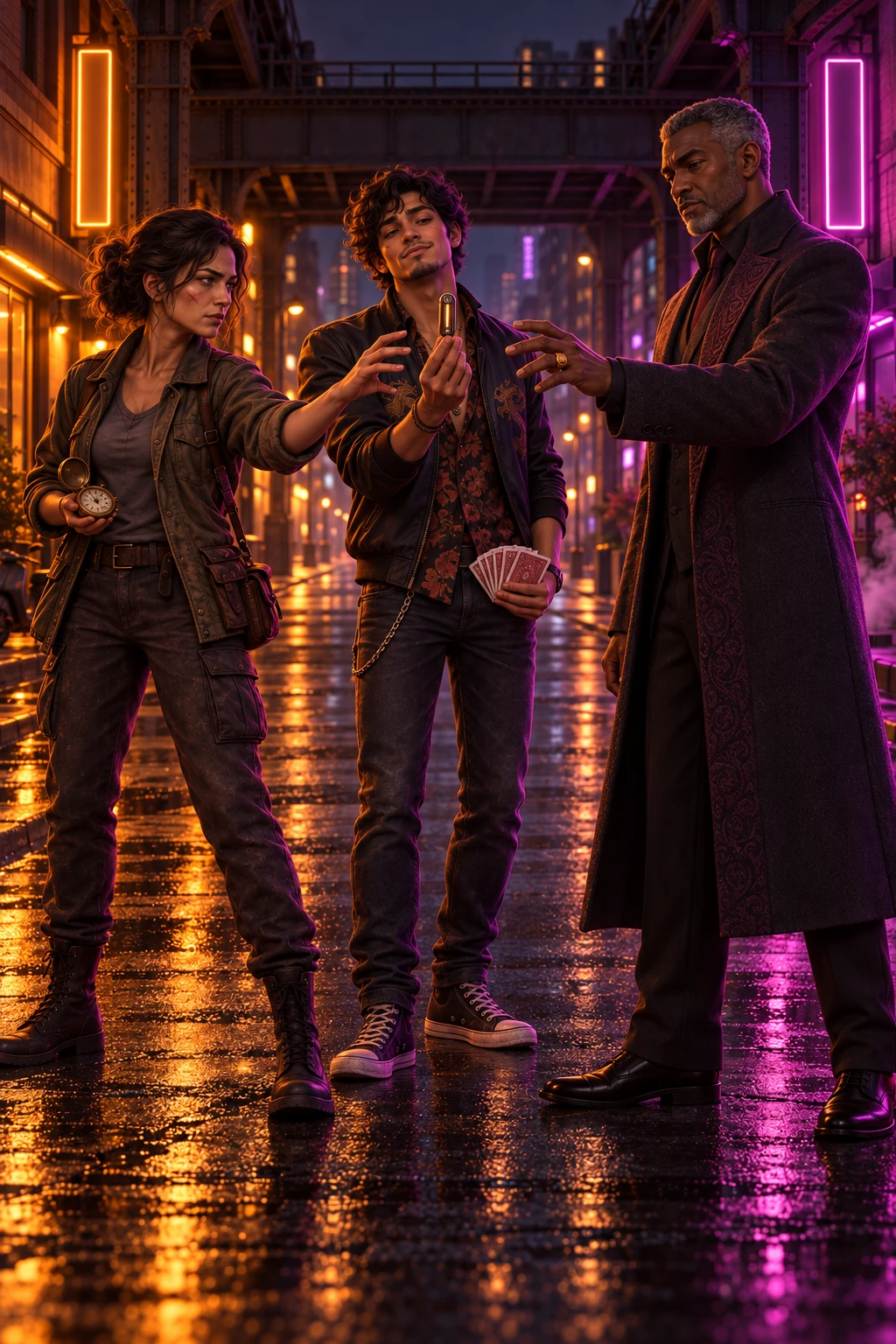
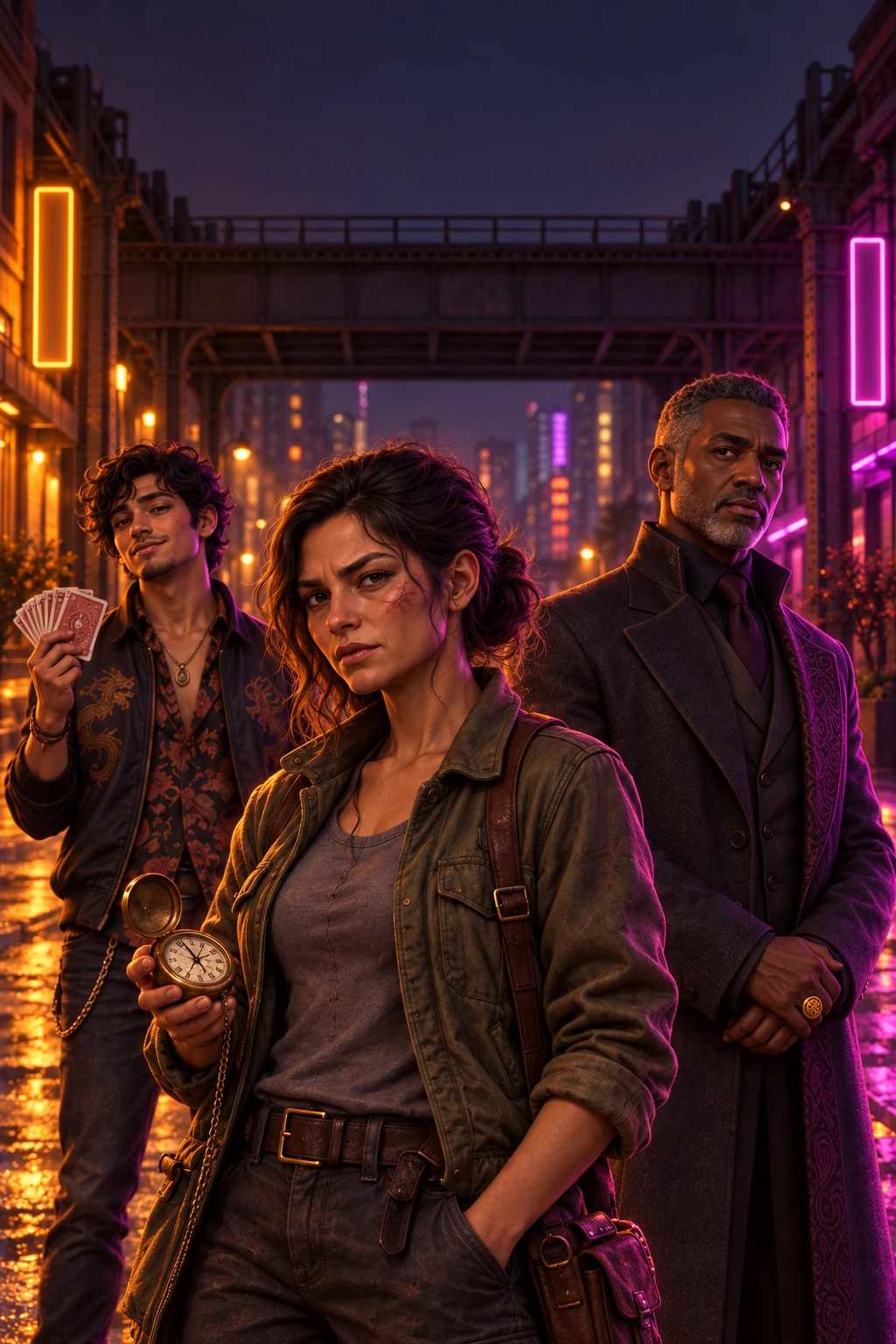
  • Season poster — the three leads on the transit plaza under station lights, each framed in their own space.
    Substrate Row — a season built one minute at a time.
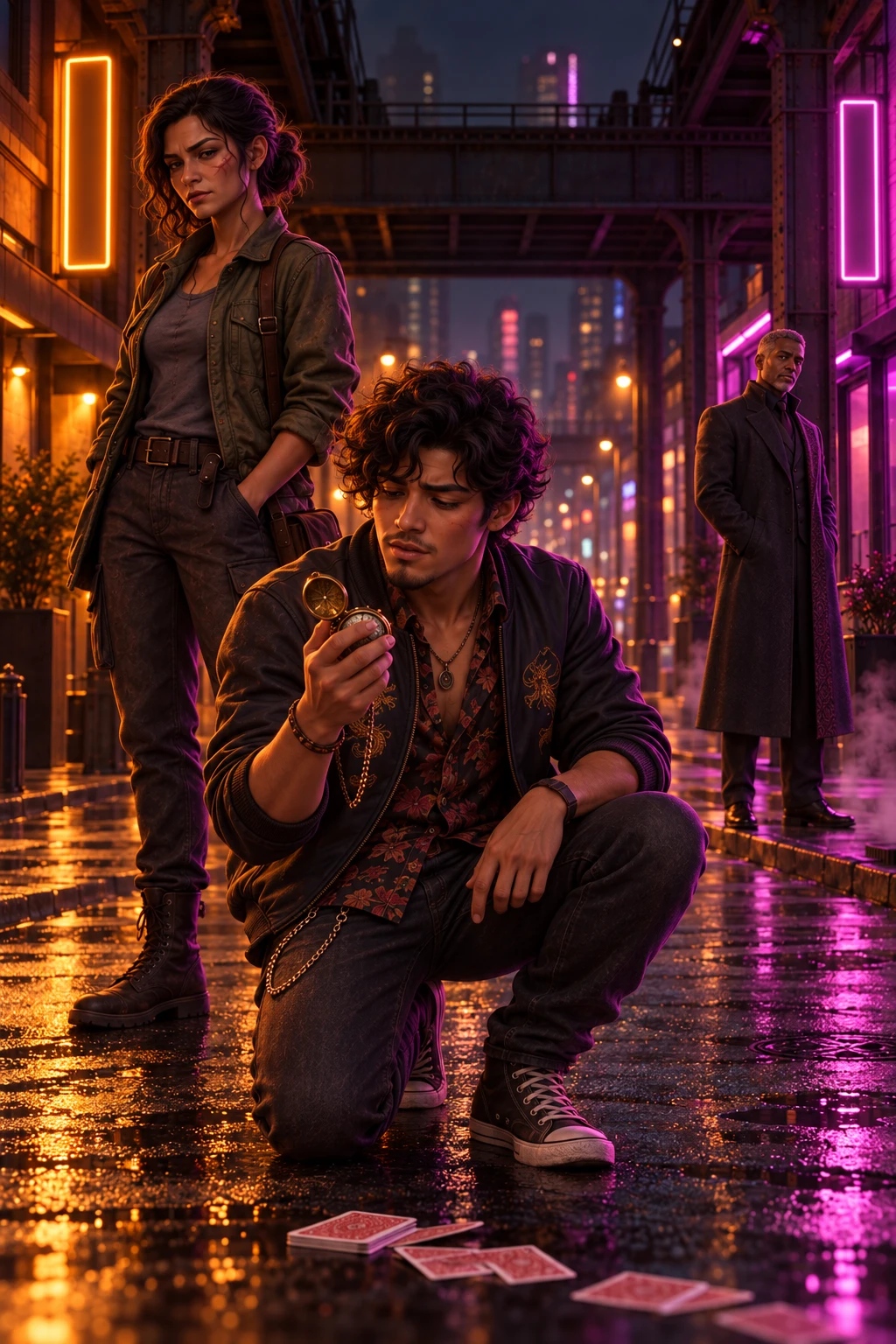
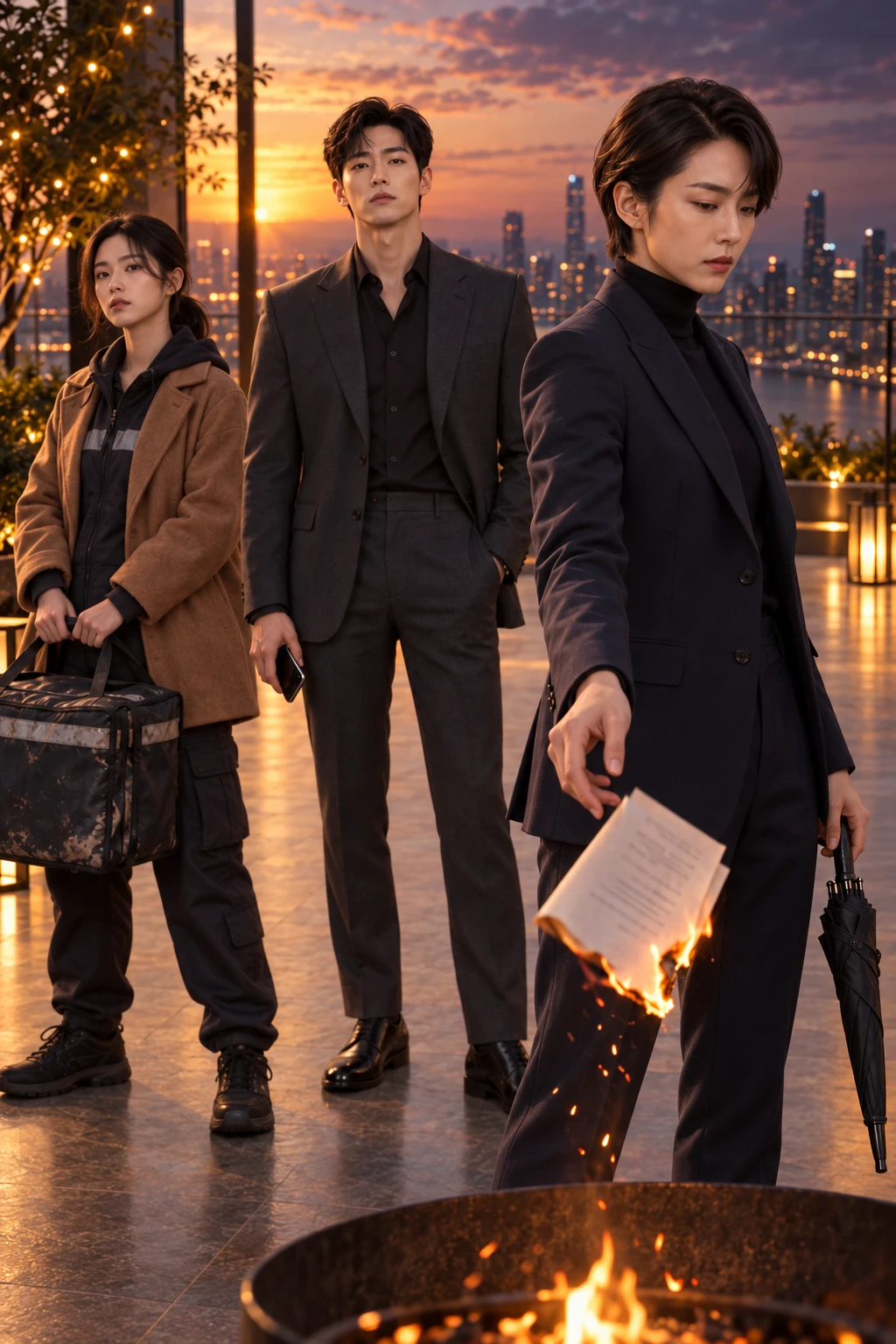
  • Episode still — the lead taking a call alone on the penthouse terrace, city lights below.
    Same three beats in vertical drama — hook, one scene, sting.
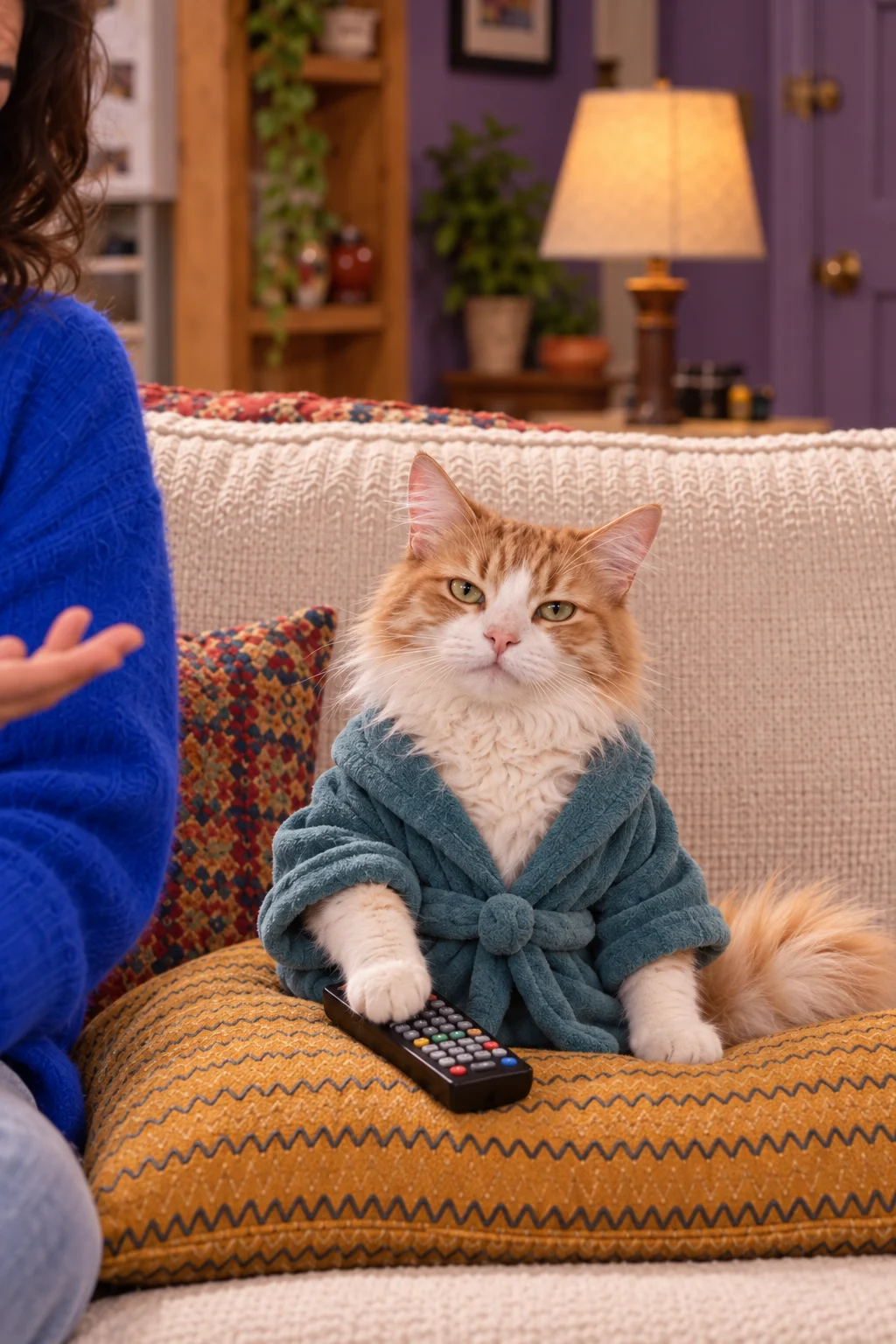
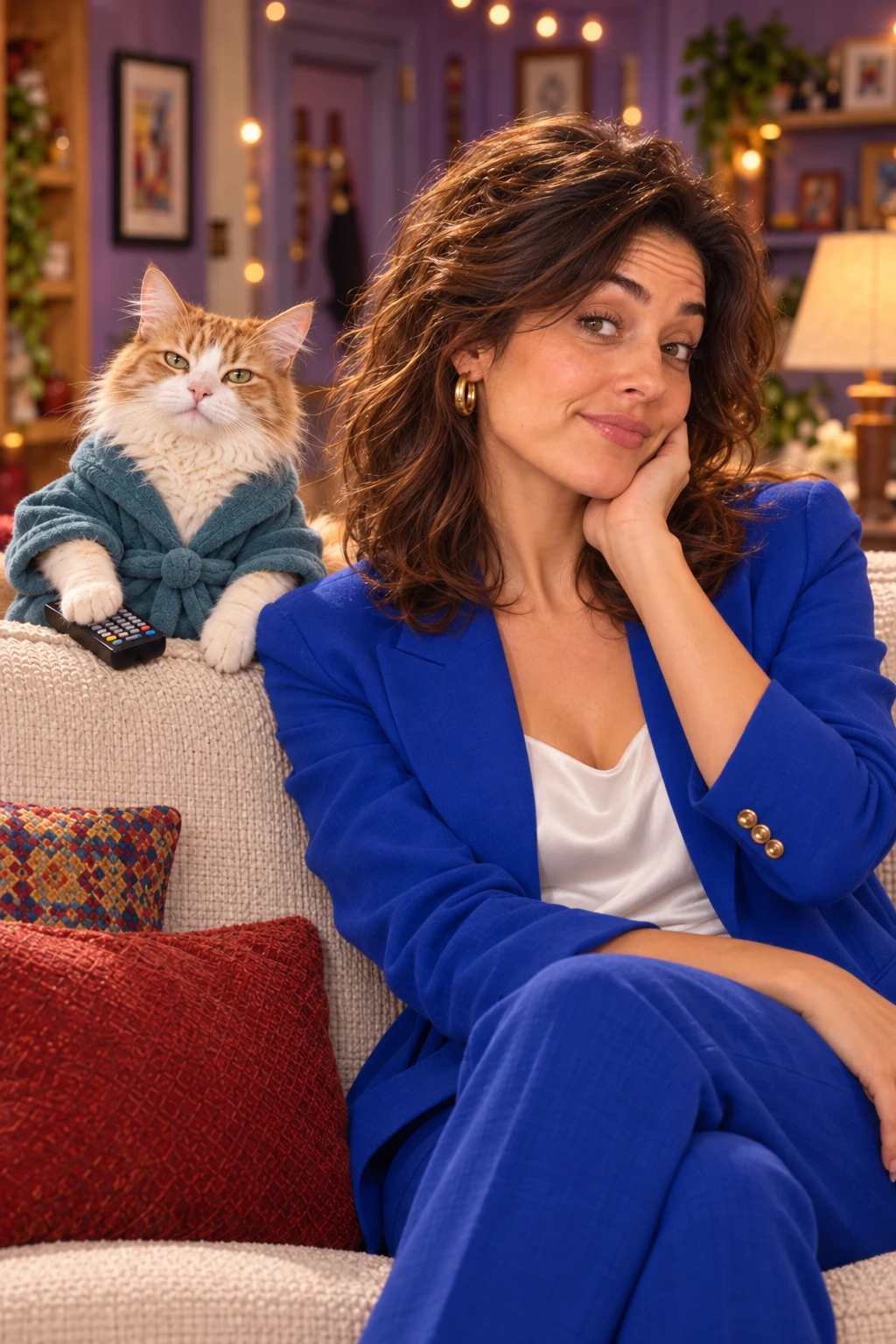
  • Episode still — the cat in his armchair while the leads sit on the floor cushion below him.
    A comedy payoff — same structure, faster laugh.

Generated in Character App · example stills, not a live product demo

Common mistakes

  1. Two plots in sixty seconds. A minute holds one escalation — a B-plot is episode two wearing episode one’s clothes.

  2. A hook that’s a title card or establishing shot. If nothing is wrong yet, nobody is watching yet — open mid-wrongness.

  3. An ending that explains itself. The payoff is the image; dialogue can set it up but the last frame has to carry it.

  4. Ten shots in a minute. Overcutting reads as panic — eight shots of seven seconds breathe; twelve shots of five seconds blur.

Questions

Is 60 seconds really enough for a story?

Yes, if it’s one story. A minute can’t hold a subplot, but it holds a complete hook–escalation–payoff — which is all an episode has ever been.

How many shots should a 60-second episode have?

Around eight, averaging seven seconds each. Fewer reads as static, more reads as panicked — and every shot should change what the viewer knows.

Should every episode end on a cliffhanger?

No — rotate the payoff. Laugh, sting, and open loop all work; six identical cliffhangers in a row trains viewers to expect the trick. The cliffhanger guide has the six types.

What if my idea needs more than a minute?

Split it at the turns, not the middle. If the story has three escalations, that’s three episodes — each with its own hook and payoff.

Do I need dialogue?

No. Plenty of minute-long episodes run on action and reaction alone — if the payoff is an image, the episode never needed words.

Your nextScene startswith you.

Make something you’ve always wanted to be in.

TRY THIS

Explore plans & Credits