01
Start with tailoring someone could actually wear
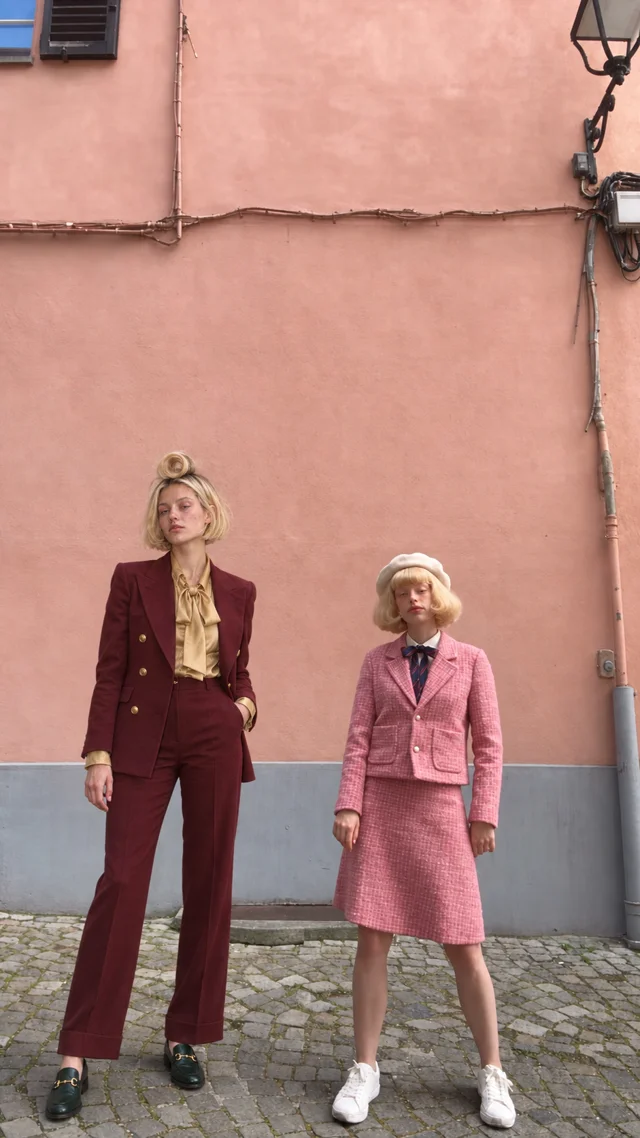
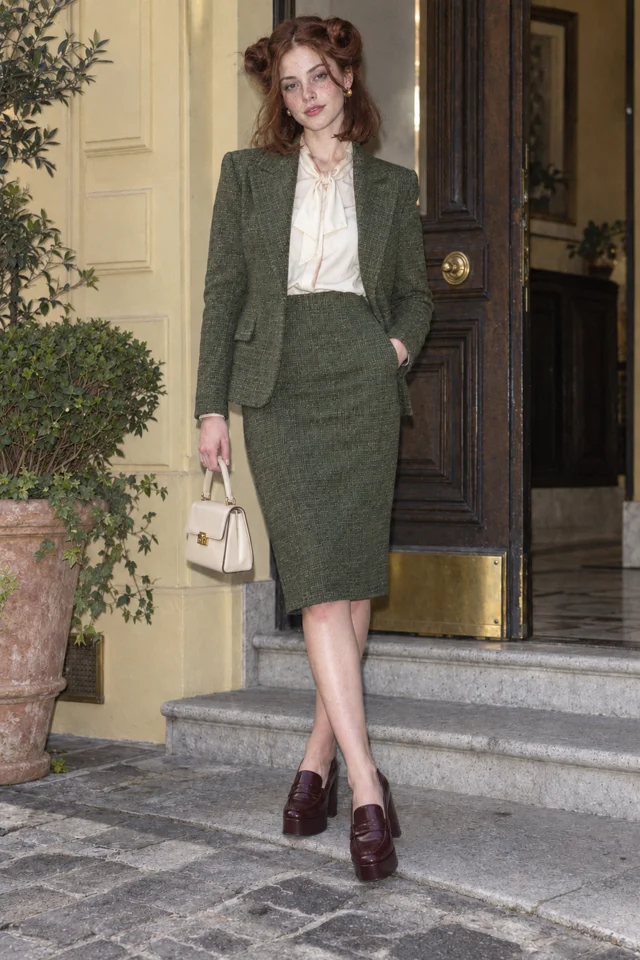
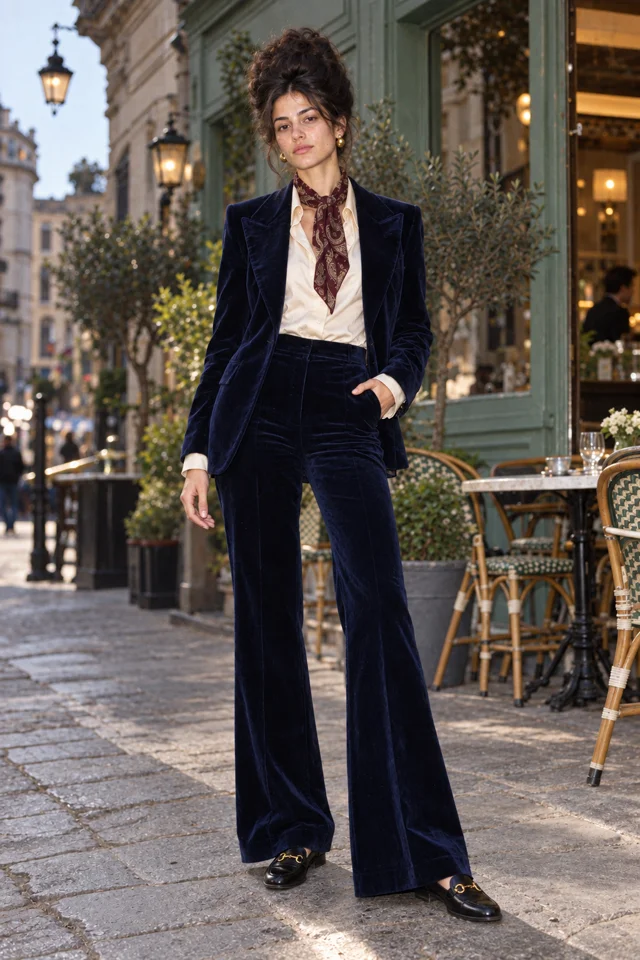
Begin with a jacket, trousers or skirt, a blouse and a pair of shoes. Lucie Loop’s oxblood double-breasted suit gives her a clear shape without needing an elaborate costume. Ines Brume uses a moss-green tweed skirt and jacket; Sofia Velluto uses a midnight-blue velvet suit. Each is a different original outfit rather than a uniform for an entire continent.
Write the cut before the decoration: structured shoulders, a fitted jacket, straight trousers or a knee-length skirt. Then add the material. The image should show a person who could walk into a café or station wearing these clothes. Keep the deliberately unusual detail for the hair, posture or behavior.
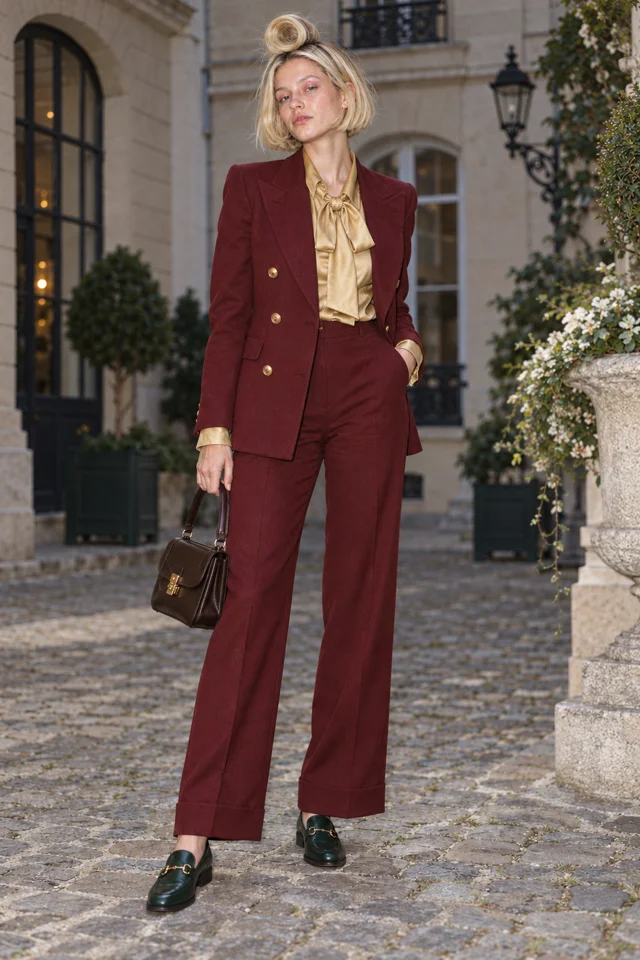
The artwork is our concept example. Your edited brief opens the real Character form; no drawing starts here.
02
Build the palette around the largest clothing shape
Lucie’s main color is oxblood. A gold silk bow and emerald loafers provide small accents. The suit remains the dominant shape, so the extras have a job instead of competing for attention. For Ines, the green tweed carries the outfit; her cream blouse and burgundy shoes separate the face and feet from that larger block.
Put the color words beside the garment words in your brief. “Oxblood jacket and trousers, gold silk bow, emerald loafers” is easier to review than “a rich European palette.” Inspect the first full-body Image at a small size: can you still tell which outfit belongs to which Character? Simplify the accents if the clothing loses its hierarchy.
Every entrance is a runway.
Live action selected for this walkthrough. Choose your Look in the app; this inspector keeps the original reference artwork.
03
Give the hair exactly one unexpected design choice
Lucie’s blonde arched-loop bob is the visual surprise. The rest of the brief stays comparatively controlled: a serious face, a structured suit and a neat stance. Ines has symmetrical oversized pin curls; Sofia has a sculptural bouffant. These are three separate directions, not three details to pile onto one head.
Pick one shape you can describe in a short phrase. Check its outline against a simple background and make sure it leaves the face readable. Hair volume should feel intentionally styled rather than accidentally tangled. If the result adds several unrelated curls, reduce the prompt to the one contour that matters. The hairstyle guide goes deeper into this comparison.
Every entrance is a runway.
Live action selected for this walkthrough. Choose your Look in the app; this inspector keeps the original reference artwork.
04
Connect the polished outfit to an ordinary problem
A strong outfit becomes a Character when it changes how the person behaves. Lucie treats a café reservation like an international summit. She approaches the empty table, checks a folded list and waits for someone to announce her. Her seriousness supplies the contrast; the café supplies a situation viewers can understand immediately.
Write three places that test the same attitude: a café queue, a train platform and a revolving door. Keep the Character reference, outfit and emotional rule. Change the problem around her. You do not need a different costume for every Clip, and you do not need a long fictional biography before the first physical bit works.
CLIP DIRECTION PREVIEW
Give Lucie one clear action.
Keep this direction for Playground. This artwork is a Character reference, not a Clip generated from your text.
Open Playground ↗05
Create the reference, then direct one clean moment
Open Lucie’s editable Character brief through the link below. The real New Character form accepts her name and written description. Pick a Look for a standalone Character; inside a World, the World supplies the Look. Draw a result, compare the hair, suit and expression with the brief, and keep the version you want to build on.
Then open Playground and use a supported Character reference for one Image or Clip. Direct only the café arrival first: “Lucie reaches an empty reserved table, checks her folded list and waits with a serious face. Full-body view, steady framing.” Read the current price on the press before making it. Review the result before developing the next situation.
SCENE 1An entrance
Lucie Loop makes a perfectly serious entrance.
 SCENE 2
A complication
Ines Brume has already claimed the good chair.
 SCENE 3
A next episode
Sofia Velluto turns a small errand into a new episode.
Original artwork and illustrative Scene cards · not generated Film frames.
Start my World ↗Keep it sharp.
- Adding several eccentric accessories before the main outfit has a clear silhouette.
- Treating a geographic style label as a substitute for visible garment details.
- Changing the Character, clothes and action together before you know which choice needs revision.
Things you’re wondering.
What does European-inspired fashion mean here?
It is a broad creative direction: retro tailoring, deliberate fabrics and a controlled outfit palette. Europe has many fashion traditions; this guide designs three original fictional Characters rather than claiming one universal look.
Does the outfit have to be couture?
No. Start with wearable pieces and a clear cut. One unusual hairstyle or behavior can provide the character energy while the clothes remain believable.
Can I create this Character from words?
Yes. Enter a name and written description in New Character; a photo is optional. The editable brief links on this page open the actual form without starting a draw.
How do I keep the outfit useful across Clips?
Keep the chosen Character reference and review the important garment shapes and colors in each new result. Change the situation deliberately rather than rewriting the entire outfit every time.
What should I make after the portrait?
Make one short physical moment with a clear beginning and ending. Add a World when the recurring cast, places and conflict need a shared home.
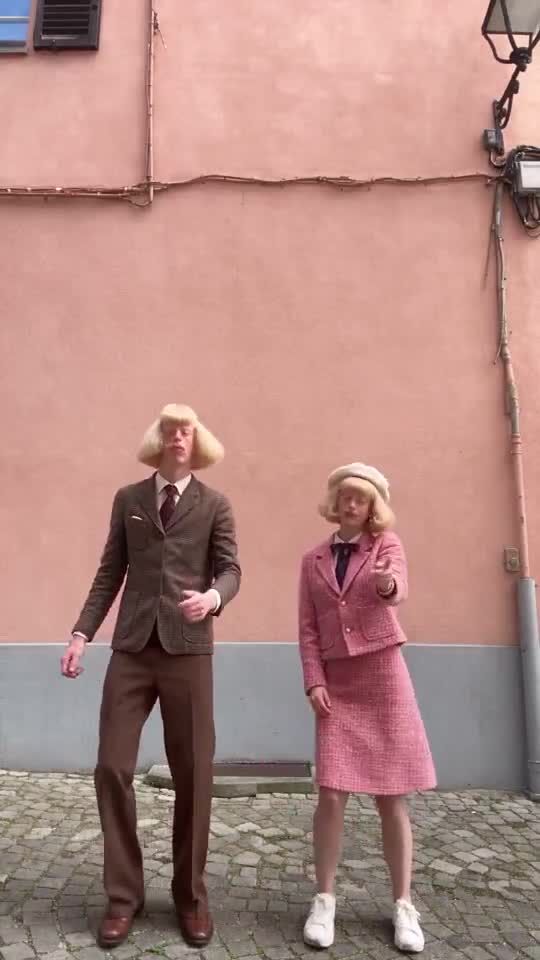
How do I compare a real reference clip and a recorded output?
Watch the actual source and its paired recorded result. Check the face, hair, clothing and physical action, not only the lighting. The portraits here are identity concepts; they do not establish a live in-app character-swap capability.