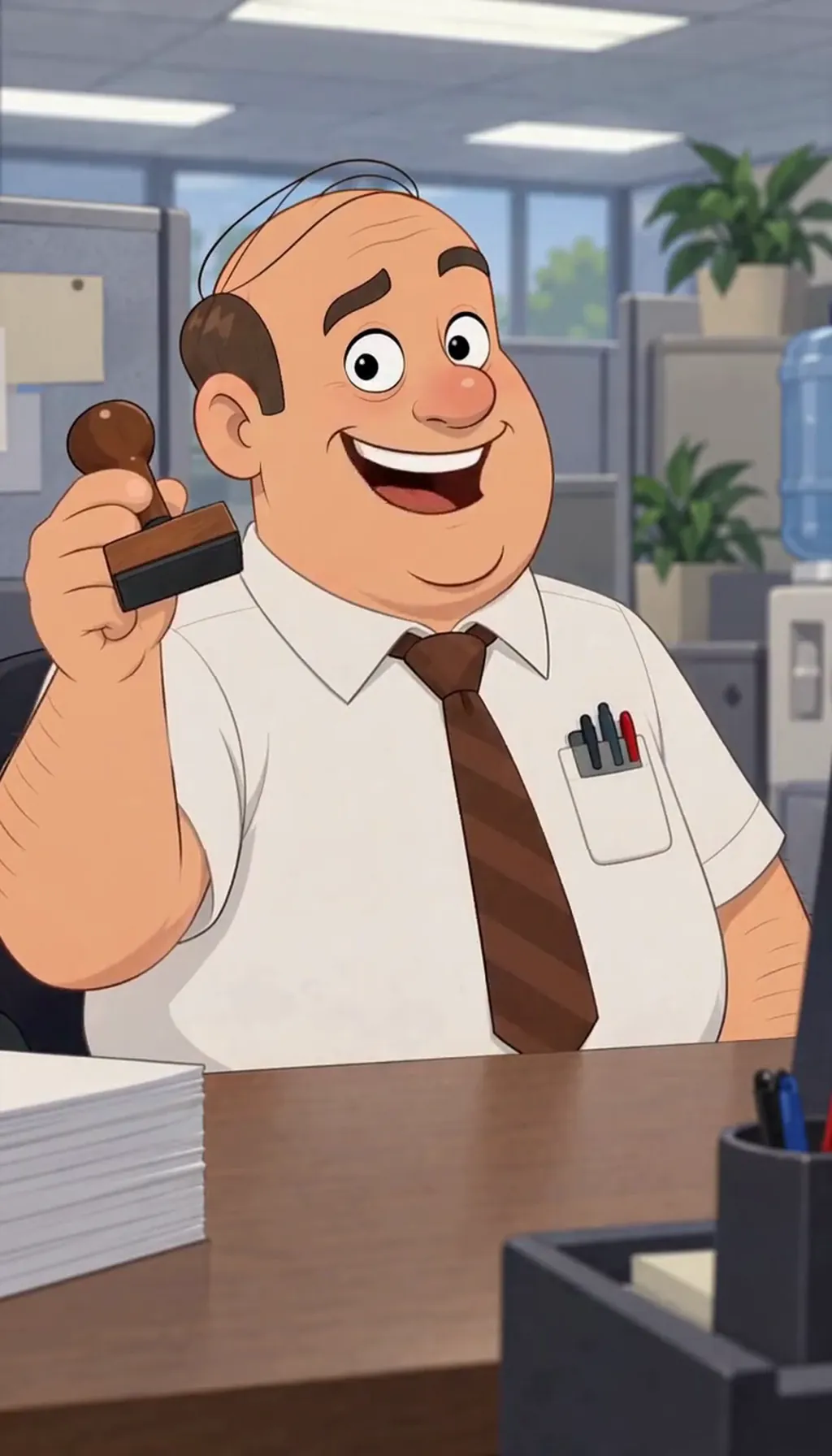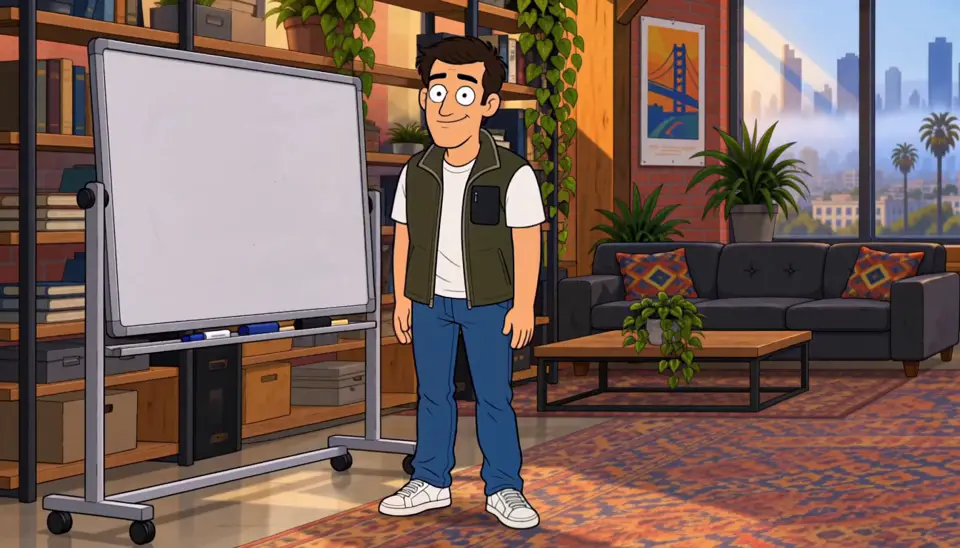
Name the target — a world, not a person
Satire aims at systems, not faces. The strongest targets are worlds you know from the inside: the startup that ships decks instead of products, the group chat that runs a neighborhood, the industry that invented a word for everything except honesty.
Write it as one line: “a startup founder who raised a Series A on a lie.” The target carries the premise — the lie is the engine, and every episode is a new way it almost gets exposed. Aim at archetypes and situations; a real person’s likeness needs their consent, and the app enforces that.
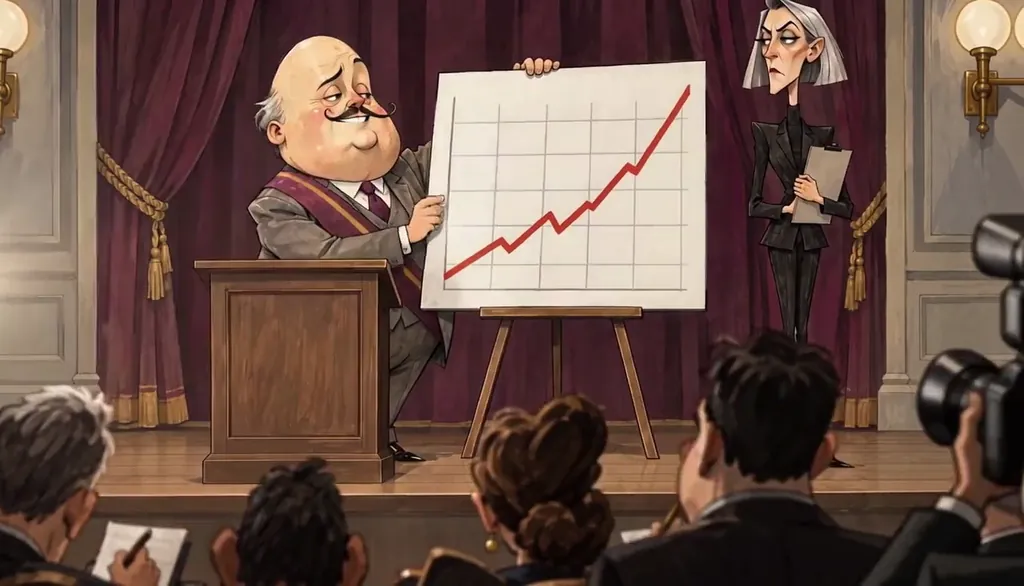
The Honourable Mess · The chart. Made with H3 Turbo, the Clip model in Character App · fictional sample series Cast the archetypes, not the jokes
A satire cast is a small machine for generating hypocrisy. You need the visionary who believes the pitch, the realist who sees the cliff, and the wild card who detonates both — in Rate Limited that’s Miles (founder), Dev (builder), and Wiz (the printer-adjacent chaos).
Give each one a silhouette and a flaw you could spot from across the room. The Cast holds them on-model in every episode, so the fifth episode’s joke can call back to the first’s — that’s what separates a show from a meme.
The line it came from: Three friends, one AI startup, one rate limit.
 MilesFounder
 DevEngineer
 WizProdigy
Rate Limited · one line, and the Cast it drew: three Characters who keep their faces in every Episode. Our own fictional sample series, made in Character App. Keep the look flat and the delivery deadpan
Adult satire lives or dies on deadpan — the art should underreact so the writing can overreact. A flat 2D style with muted color keeps every frame dry; if the drawing is doing pratfalls, the jokes have competition. The loft’s beige-and-grey palette is doing real work: nothing on screen is laughing, so the audience has to.
Lock the style once, at the World level, and let it carry every episode. The lineart pass under the finished loft is the same room each week — the audience should recognize the set faster than the gag.
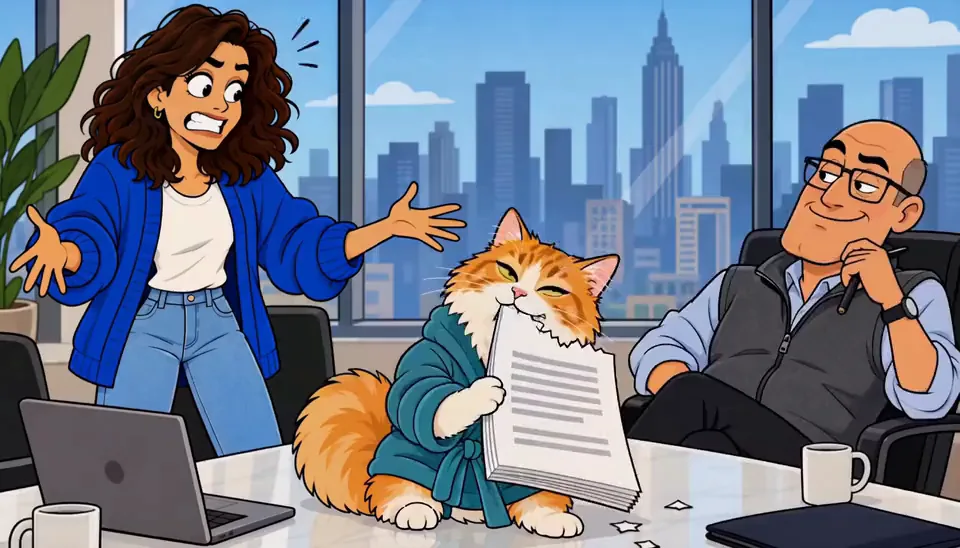
Stealth Mode · The term sheet. Made with H3 Turbo, the Clip model in Character App · fictional sample series Build the weekly engine
Satire is a format, not a film — the trick is a slot the news of your world keeps filling. Rate Limited’s engine is “this week’s way to almost make it”: the demo, the reset, the pivot. Every episode is the same room, same founders, new delusion.
Write the engine as a sentence you can reuse: “every week, [target] does [predictable absurdity] and [character] pays for it.” When the sentence is true, you have a season, not an episode — and next week’s headline writes episode two for you.

Rate Limited · We hit the limit. Made with H3 Turbo · founder-owned fictional cast Lock the Cast, then air the first episode
Before episode one, freeze the Cast — names, looks, and the one detail each character never loses. Locked references are what keep the satire’s faces identical from the pilot to the takedown of the week twelve gags later.
Then direct the first episode like any show here: a direction line per Scene, keep the take where the joke lands hardest, cut on the punchline. The Studio holds the continuity — the World remembers what the founders lied about last week.
Common mistakes
Aiming at a person instead of a situation. The sharpest satire roasts the machine — the industry, the ritual, the delusion. Fictional archetypes are fair game and funnier anyway; a real person’s face requires consent.
Casting jokes instead of characters. A cast member who exists to deliver one gag is spent by episode two. Cast the flaw — the flaw generates the jokes forever.
Letting the style get busy. Satire is deadpan; if every frame is doing cartwheels, the writing has competition. Flat art, sharp lines.
A new world every episode. The loft is the joke’s home field — a satire that keeps rebuilding its set never accumulates the grudges and callbacks that make it a show.
Questions
Can I satirize a real company or person?
Aim at the archetype and the situation — the fictional founder, the invented industry — which is both safer and usually funnier. Putting a real person’s likeness in a show needs their consent, and the app enforces that.
How is this different from the cartoon show?
Cartoon show is warm adult comedy about your own life; satire is dry adult comedy pointed at a target. The Cast-persistence machinery is the same — the tone dial is what changes.
Do I need to be a comedy writer?
You need to know your target, not the craft. One honest premise — the lie, the ritual, the hypocrisy — generates the episodes; the directing guides cover the per-scene technique.
What makes it “adult”?
Attitude, not explicitness — deadpan delivery, real stakes, jokes about things adults actually argue about. The flat 2D look signals it before a word is spoken.
Can the same cast run a different target later?
That’s the machine working — the ensemble stays, the absurdity rotates. Same founders, new delusion is the whole engine.