Read one filmed scene as a script
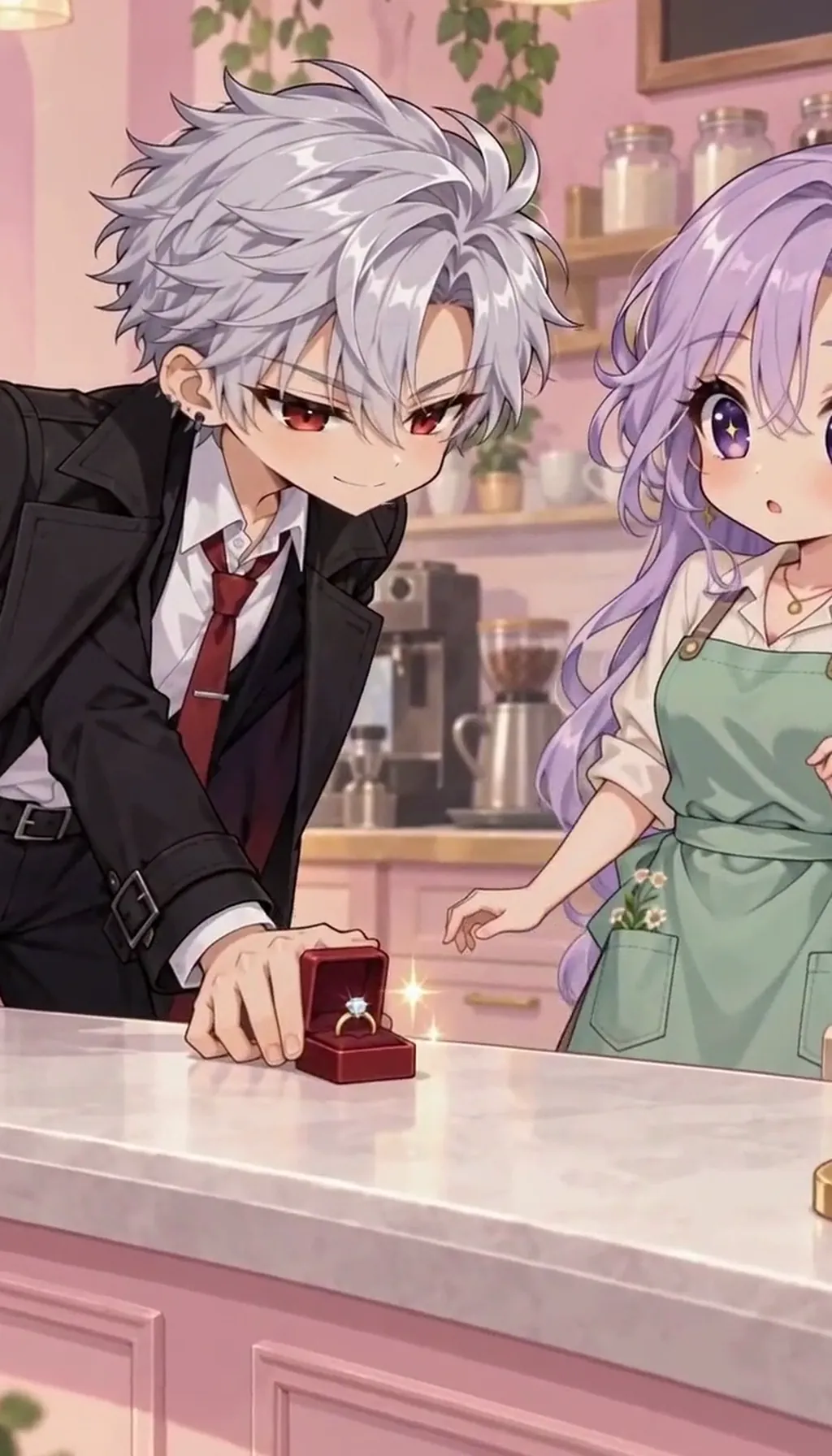
Play the café scene and read its transcript. Kaito sets an open ring box on the counter. The camera pushes toward it and his grin. Suri, the café owner, slips out of frame. His line is “Marry me, or I buy this café.” The ring suggests a proposal before the last words turn it into a threat.
Write those events on separate lines under action, dialogue and staging. They happen in one continuous take. Four lines on your script page can give the artist four decisions without requiring four cuts.
Write an action another person can draw
Try writing “Mina senses that the parcel is meant for her.” An artist could draw worry, recognition or surprise and satisfy that sentence. Now write “Her stamp stops above her own name on the label.” The artist knows which hand, which object and what the audience needs to read. The same decision gives an editor a place to cut.
Copy the blank three-scene script and use the first row above as a starting point. Substitute one object tied to your lead’s job or daily routine. Make its ordinary use clear before anything goes wrong with it.
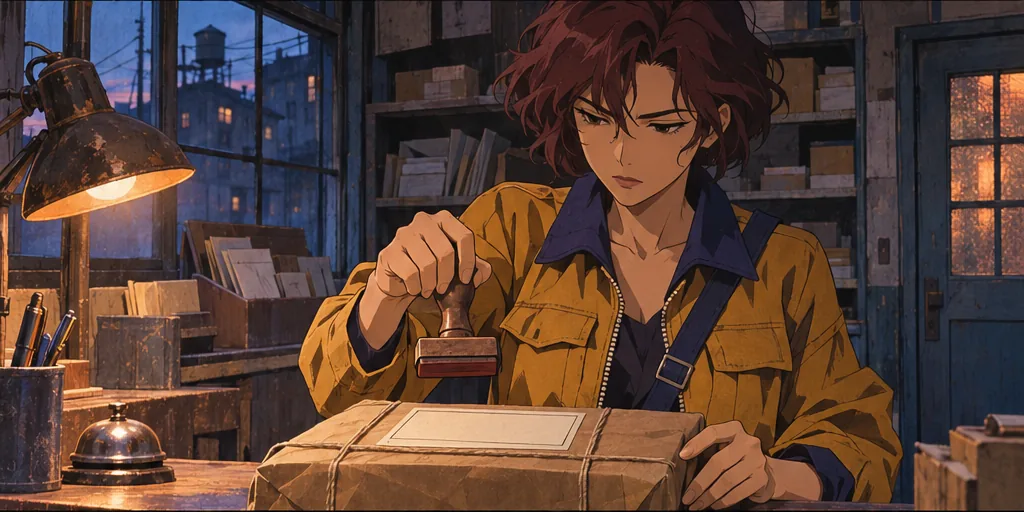
Scene 1, illustrated. The space between the stamp and the parcel makes Mina’s hesitation visible. Give dialogue a job the image cannot already do
The cassette rolling out of the parcel already tells us Mina found something. A line like “There’s a tape inside” asks the audience to process that discovery twice. Hearing her own voice give an order tells us something the image cannot. Read the line aloud while tapping the pause where Mina recognizes the voice. If the timing feels rushed, leave room for the pause before adding another line.
For a silent version, move the instruction onto the tape label in Mina’s handwriting. Now the board needs a readable insert and her reaction.
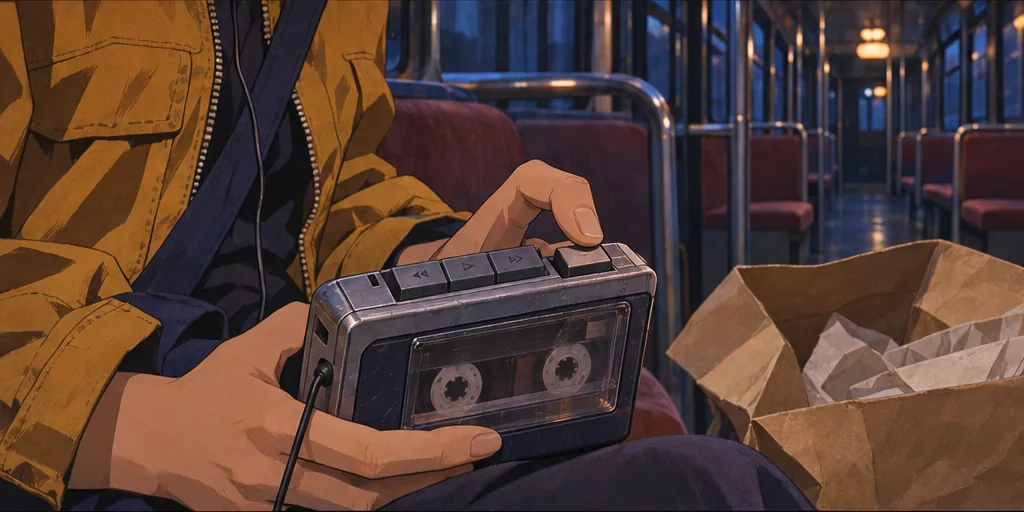
Scene 2, illustrated. The recording gives the instruction. The hovering thumb leaves the decision open. Hand the storyboard artist one cut they can test
For the tram scene, put the player and Mina’s hand in the same panel. Her thumb reaches STOP and hangs there. Put the platform in the next panel. Has she obeyed? The cassette in her hand answers that question before anyone speaks. That object is the continuity note the artist needs.
If you prefer a different ending, change the object placement in both panels. Leave the cassette on the tram and let the second courier play the same recording aloud. The opening can stay exactly as written.
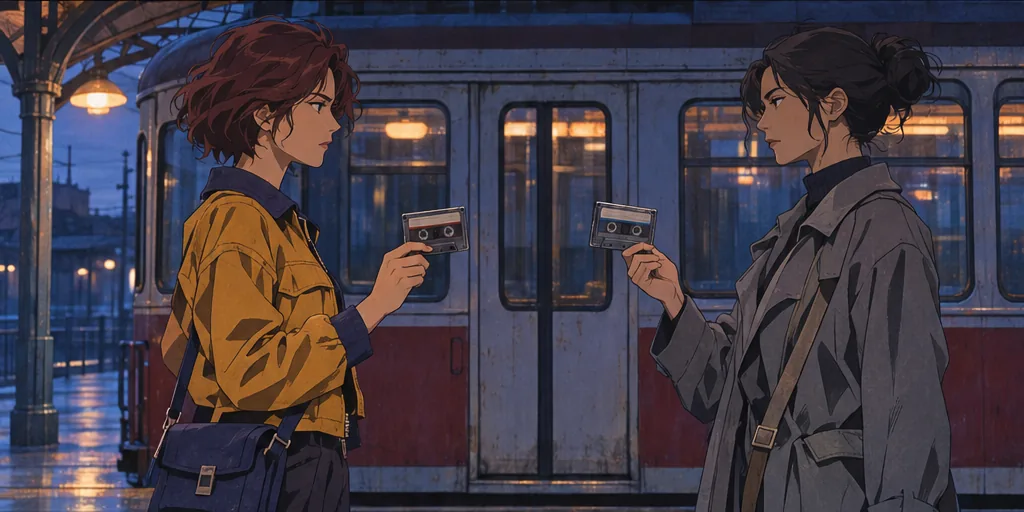
Scene 3, illustrated. Mina took the tape off the train. The other courier’s matching tape sets up the next episode. Use the first scene to start your anime
Read the three rows without their column headings. You should still be able to tell where Mina is, what she wants and which choice carries us into the next location. Read only the dialogue next. If the plot disappears completely without the pictures, check that each line is clear in context. The expressions and holds can carry the rest.
Take the opening scene into the anime maker. Describe your lead and the first visible action in your own words. Keep the remaining rows beside you as direction when you plan subsequent scenes.
Common mistakes
Writing “she looks nervous” without giving the artist an action. Show which familiar task she leaves unfinished.
Giving an off-screen voice a line before the viewer can identify its source. Let the tape click into the player first.
Cutting away before the choice is visible. Carry the cassette into the platform shot so the viewer can see what Mina decided.
Questions
Is the courier episode available to watch?
The Last Delivery is a written pilot exercise with three original illustrations. The playable example is Latte & Lies, with its original cast and transcript on the clip page.
Do I need to put a camera move on every line?
Use one when it changes the information the audience gets. In the café, a push-in keeps attention on the ring and Kaito. On the tram, a held view of Mina’s hand can carry the decision.
How does a script differ from a storyboard?
The script records the action, words and changes the audience must understand. A storyboard turns those decisions into framed pictures and tests the order of the cuts.
How do I adapt this for a continuing series?
Finish the immediate choice and save its consequence. Mina decides to keep the tape. The matching tape gives the next episode a new relationship to follow.