Choose a want you can put on screen
Write the name of one object, one person and one deadline. For Nia they are the brass bell, Ivo and the last train. These three details give her an opening scene you can draw. She can leave the workshop with the bell, stay to fix it or turn up at the platform empty-handed. A sentence like “Nia wants to be a better friend” becomes more useful once you know which of those actions would count as trying.
In your blank profile, fill the immediate-want row before writing the backstory. Read it aloud and picture the moment time runs out.
Give a strength a real downside
Nia is good at fixing things. At work, that earns trust. With Ivo’s bell, the same instinct makes her reach for a screwdriver before asking him. Now one character trait supports two believable choices. She can repair the bell as a present or protect the scratches its owner remembers. Both choices cost something once the train is due.
Write a generous version of your OC’s habit, then put it in a setting where someone else would find it inconvenient. The disagreement gives you a character interaction you can use more than once.
Keep appearance and personality in separate rows
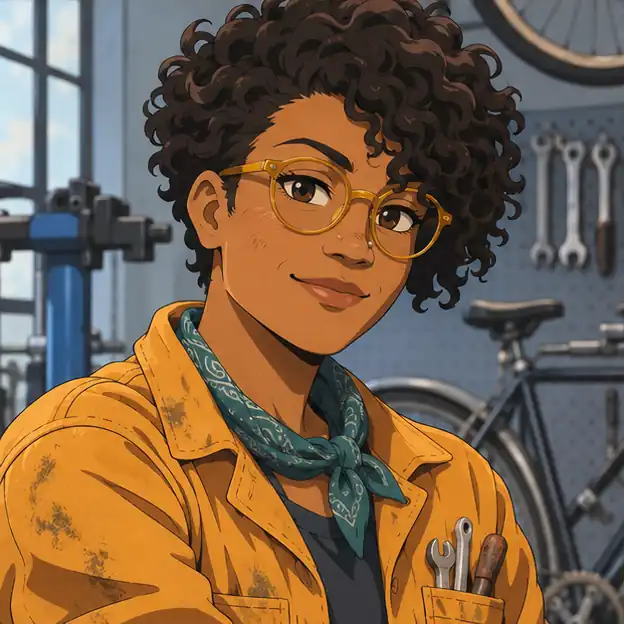
Look at Nia at the bench and on the station platform. The glasses and sweep of curls can help a reader recognize the same person after a wardrobe change. Those details cannot tell you whether she is considerate, impatient or reliable. Let her decision about the bell supply that evidence.
For an anime OC, pick two visual anchors you could still draw from memory tomorrow. Then cover the appearance row. If the rest of the bio could describe anyone in your cast, add a more specific promise or contradiction. You can build a front and side reference later.
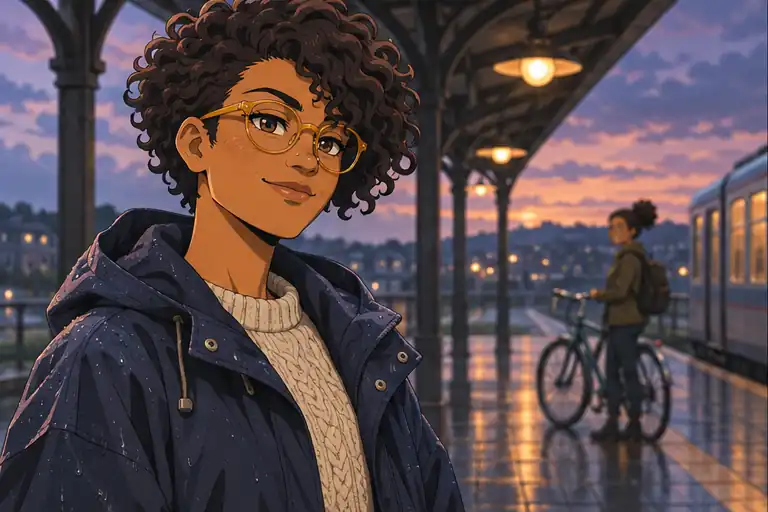
The coat changes. The glasses and the sweep of the curls give the artist two useful identifiers. Test the profile against three possible openings
Try the same premise three ways. In the first, Nia locks the shop and runs with the silent bell. In the second, she leaves the door open and tries one final adjustment. In the third, she calls Ivo and lets him choose. Each opening puts the same promise under pressure. Only the third asks her to give up control before she sees his face.
Choose the opening your current bio supports. For the worked version, Nia first tries the repair, then carries the bell onto the train. Keep the other possibilities in your notes. One can become the choice she finally makes later.
Turn the last bio row into a scene
Give the first shot a verb. Nia turns the bell over in her palm. Write the next beat as an interruption. The departure warning sounds before she can reach for the screwdriver. Then give the final beat to her choice. She holds out the silent bell and tells Ivo she opened it. These actions give a reader something concrete to stage or revise.
Ask a second reader which line of the bio explains her hesitation. If they point to her habit of repairing things, the page did its job. If they need a paragraph of family history to understand the exchange, bring one necessary detail into the scene.
Common mistakes
Giving every character the same goal. Name one person who wants a different outcome in this scene.
Listing adjectives without a decision. Give a helpful habit a moment where it causes friction.
Treating every costume as a fixed part of the character. Separate repeatable visual anchors from the outfit this scene needs.
Questions
What does OC mean?
OC stands for original character. A bio records the traits, relationships and choices that make that character yours.
What should an OC bio include?
Include a name and role, two recognizable visual details, a current want, a contradiction, a relationship and a first choice with a consequence. Add background when it changes one of those decisions.
What is the difference between a bio and a reference sheet?
A bio helps a writer choose what the character does. A visual reference sheet helps an artist draw them consistently across angles and outfits. Nia’s glasses belong on both. Her promise to Ivo belongs in the bio.
Does an anime OC need a long backstory?
Write enough history to explain the present choice. For Nia, knowing whose bell she holds and what she promised is enough to write the platform scene. More history can emerge when a later decision needs it.