Write the second pilot before drawing the first
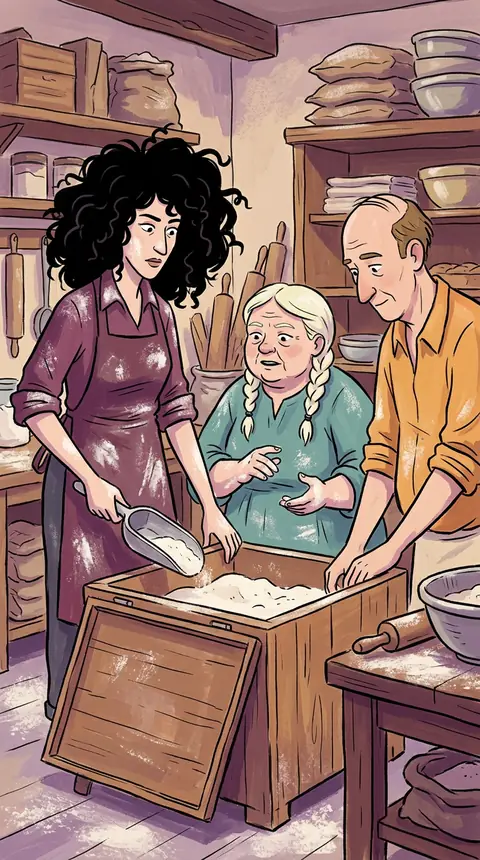
At the flour counter, Ada cares about the shape of the bread, Jo will sell anything that rises and Len has to handle the customers. In the pilot, a customer rings a bell-shaped loaf. Ada has to decide whether to sell the bell. In the follow-up Jo hides an over-risen loaf under a copper dome. Who will lift it?
Try writing several premises around the same disagreement. If every ending is “the bread explodes,” give a different baker the decision or change what a sale would cost them.
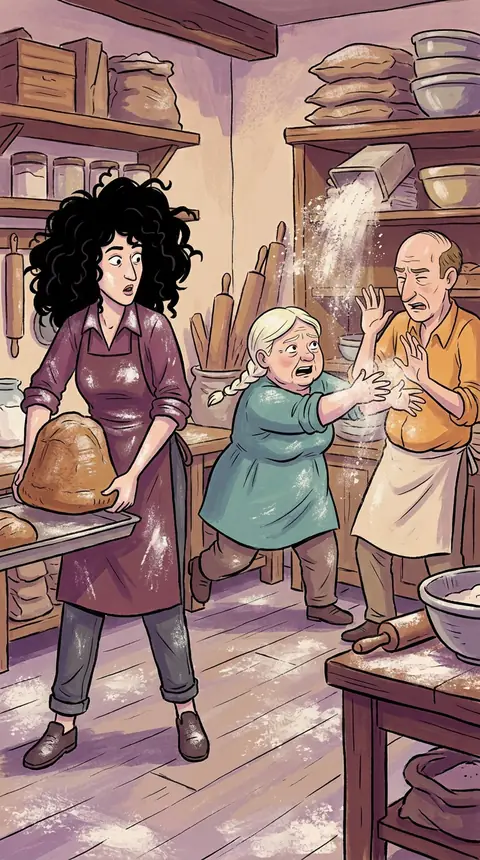
Pilot one opens when a customer rings what turns out to be a loaf. Keep the counter and rotate the lead
Set one Art style for the World. Give each recurring Character a silhouette that reads on a phone: Ada’s tall curls and plum apron, Jo’s pale braids and teal smock, Len’s saffron sleeves. Reuse the counter to orient the viewer before cutting close.
A returning room saves explanation. It also makes variations legible: a dome where yesterday’s bell sat can start the next Episode before anyone speaks.
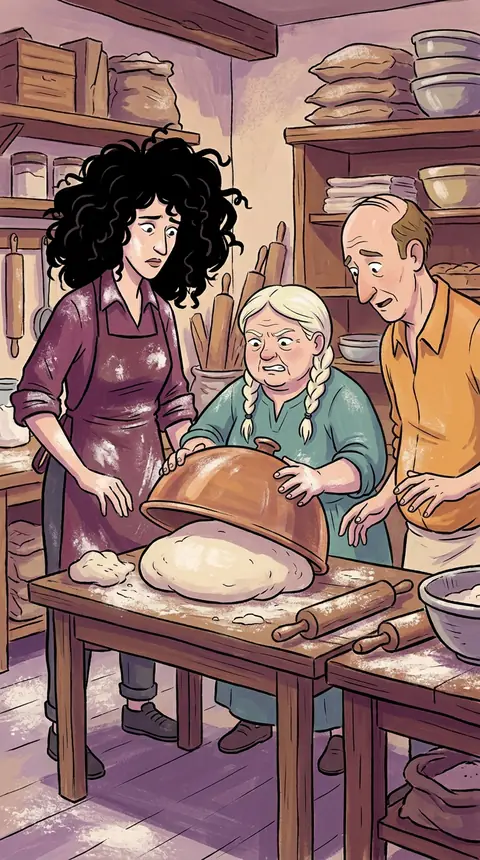
Pilot two gives Jo the decision and brings back the same counter. Test the joke as pictures and price the filming separately
A narrated Slideshow costs 40 Credits for up to 5 slides. Put the dome lift on the last slide and listen for the pause. If the joke depends on how slowly the dome tilts, that moment has earned a filmed take.
For an image-to-video Story on HG H3 Max, six five-second Scenes plus six drawings cost 186 Credits. A reference-to-video Story can film from saved references without the Scene pictures. Include fresh takes in the monthly schedule.
How many six-Scene Stories can you film in a month? Calculated on HG H3 Max (186 Credits per 30 s Story on US web plans, with one drawn Start Image per Scene for image-to-video, 2026-11-15).
- Starter ($19.99)4
- Creator ($49.99)12
- Pro ($99.99)32
- Starter ($19.99)
Give each release an editorial reason to exist
Change what the audience learns in each Episode. A recurring cast and setting can support original scripts. Repeating the same sequence with a new bread color gives a viewer little reason to watch again. Keep your drafts and publish distinct performances, dialogue and endings.
Check the YouTube originality guide and TikTok Creator Rewards rules for the platform and format you use. Label realistic synthetic media where required.
Choose a cadence the monthly balance can cover
Four 30-second Story Films with Scene pictures consume 744 Credits before retakes. On US web Starter that leaves 56 Credits. Divide that remainder by the cost of a shot before promising a second version of every Episode.
TikTok’s one-minute threshold is only one Creator Rewards condition. Qualified views and account eligibility also matter. Use the payout calculator’s estimates as scenarios when budgeting a month.
Common mistakes
Changing art styles every episode — viewers cannot spot your show in a fast feed without visual consistency.
Counting a 15-second pilot toward Creator Rewards. The US terms checked on 16 November 2026 call for videos of at least one minute, alongside account and qualified-view requirements.
Repeating the same script with a different loaf each week. YouTube’s policy, checked on 16 November 2026, considers the whole channel. Repetitive or mass-produced videos can make a channel ineligible to earn.
Questions
Can an original AI cartoon earn money on YouTube?
Original scripted animation can qualify if the channel meets the program rules. Repetitive mass-produced material can fail review. Keep recognizable characters and give each release its own story.
How many one-minute image-to-video Stories does Creator cover?
With twelve drawn Scene Images and twelve five-second HG H3 Max takes, each minute costs 372 Credits. The US web Creator balance of 2,400 covers 6 before retakes.
Should the pilot run 30 or 60 seconds?
Give the joke the time it needs. Six five-second Scenes are enough to stage the counter, the mistaken bell and the response. A separate one-minute cut needs another story turn, as well as the extra running time.