Design the Face That Owns the Next Cliffhanger
Build for phone close-ups: one recognizable silhouette, stable wardrobe cues, a readable reaction range, and relationships that can produce the next Turn.
The strongest vertical-drama character is not the most detailed. It is the one viewers recognize before they scroll.
Build the character around the Story job
Choose the role
Lead, rival, confidant, boss, or wildcard: each role needs a different reaction language.
Choose the look
Use grounded 2D satire or stylized 3D depending on the tone of the series.
Plan the episode
Put the character inside hooks, reversals, and a final cliffhanger.
How to make a vertical-drama character
Design for recognition, performance, and repeatable episode pressure.
Give the character a pressure point
Define what they want, what they hide, and who can expose it. Appearance choices should support that tension.
Build the phone-screen look
Choose a clear hair shape, wardrobe color, posture, and close-up expression range that reads in 9:16.
Test three Scenes
Try the arrival, confrontation, and cliffhanger. Keep the reference only after it survives all three jobs.
Design from the face outward.
Vertical drama lives on reactions. A readable brow, eye line, mouth shape, and posture often matter more than intricate clothing detail.
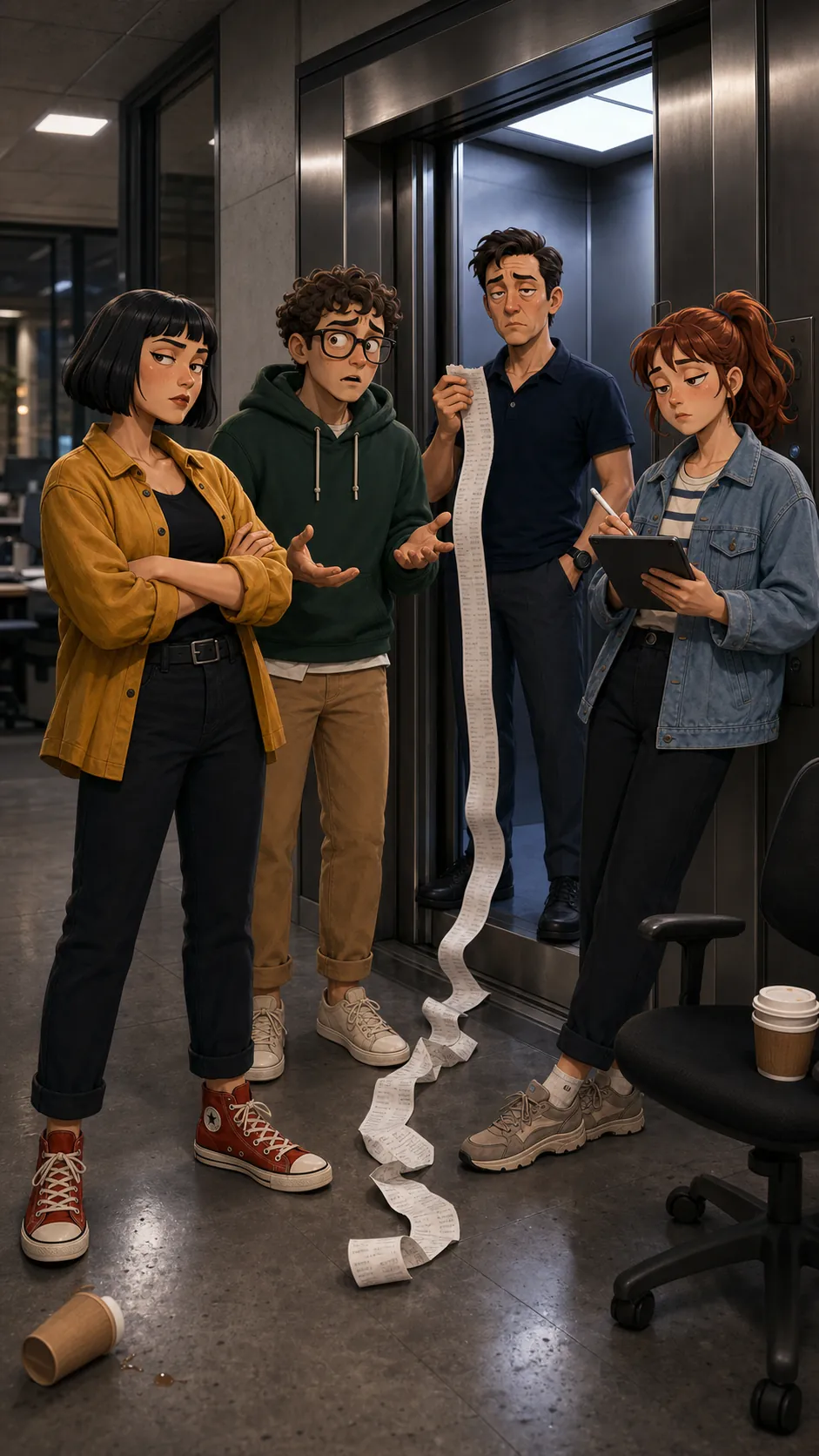
Use the portrait Scene above as the real test: can the viewer identify each person and understand the social pressure without reading an explanation?
Give the audience three things to remember.
A stable hair silhouette, a wardrobe color, and one behavioral cue can carry recognition across locations. Keep those cues attached to the Cast reference and the Bible.
A lead becomes interesting when another character pushes back.
Plan relationship contrast early. The anxious writer, dry creative director, exhausted producer, and deadpan animator above create different pressures without relying on fantasy archetypes.
FAQ
- What makes a good vertical-drama character?
- A clear want, a visible pressure point, a recognizable phone-screen appearance, and relationships that can create hooks and reversals across short Scenes.
- Should I make the character in 2D or 3D?
- Choose the direction that matches the series tone. Grounded 2D works well for satire and fast visual comedy; stylized 3D can add cinematic depth to intimate drama and heightened reactions.
- How many characters should a short episode use?
- Use only the Cast the episode can make legible. A lead plus one or two pressure characters is often easier to read than a crowded phone frame.
- Can I make both 2D and 3D characters?
- Yes. Choose a grounded 2D cartoon direction, a stylized 3D direction, or another current World Look. Keep one approved Cast reference as the visual anchor for later Scenes.
- Will the character look identical in every Scene?
- No visual model can promise an identical result every time. A clear reference, stable wardrobe notes, and consistent World direction can reduce drift; review every Image and Clip before keeping it.
- Can I use the character in a vertical drama?
- Yes. Build the Cast member first, plan a 9:16 Story, then reuse the approved reference while directing each Scene. Close-ups, wardrobe continuity, and readable expressions matter most on a phone screen.